

Daily Dose Of Jazz…
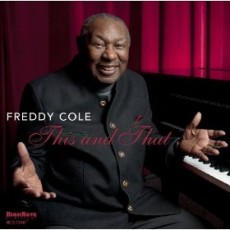
Freddy Cole was born Lionel Frederick Cole on October 15, 1931, to Edward and Paulina Nancy Cole and is the youngest sibling of musicians Eddie, Ike and Nat. Growing up in Chicago he began playing piano at age six, Cole hoped for a career with the NFL. But a hand injury ended his dream and the teenager began playing and singing in Chicago clubs. Although he was ready to hit the road at 18, his mother intervened and he continued his musical education at Chicago’s Roosevelt Institute before moving to New York City in 1951. While in New York, Cole studied at the Juilliard School of Music and went on to get a master’s degree at the New England Conservatory of Music.
The small Chicago-based label, Topper Records, released Freddy’s first single, “The Joke’s On Me” in 1952. A sophomore single, “Whispering Grass” on the OKeh label, was a moderate hit in 1953. He later spent several months on the road with Johnny Coles and Benny Golson in the Earl Bostic band before returning to hone his skills in the bistros of New York. He went on to work with Grover Washington, Jr. and to record jingles for various companies, including Turner Classic Movies.
During the 1970s, Cole recorded several albums for European and English based labels. He was the subject of the 2006 documentary “The Cole Nobody Knows” by filmmaker Clay Walker and is a member of the Steinway Artist roster. He has been inducted into the Georgia Music Hall of Fame in 2007.
Freddy cites his influences as John Lewis, Oscar Peterson, Teddy Wilson and Billy Eckstine, the latter being the subject of his release, “Freddy Cole Sings Mr. B”, that was nominated for a Grammy Award. When speaking of Eckstine, Cole recalled, “He was a fantastic entertainer. I learned so much from just watching and being around him.”
With over two-dozen albums as a leader and numerous collaborations, jazz pianist and vocalist Freddy Cole leads his quartet that holds down a rigorous schedule that continually tours the United States, Europe, South America and the Far East.
Daily Dose Of Jazz…
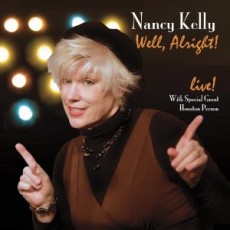
Nancy Kelly was born on October 12, 1950 in Rochester, New York and at the age of four began studying piano, clarinet, drama and dance with private instructors, and voice at the Eastman School of Music. By sixteen she formed a combo and performed in clubs around Rochester.
The early Seventies saw her joining a rock band as lead singer and touring the East coast and Midwest. She enjoyed the freedom of improvising and soon gravitated to jazz, once again forming her own group. Gaining a reputation she began performing on the West coast, the Far East and Europe and regularly performs in New York City at the Blue Note, Birdland and Dizzy’s Club Coca-Cola at Lincoln Center.
Nancy has appeared on the stages of numerous jazz festivals, sung with symphony orchestras, and has been named “Best Female Jazz Vocalist” twice in the Down Beat Readers’ Poll. He debut cd “Live Jazz” reached #11 on the Billboard charts, followed by three ore with “Born To Swing” and “Well Alright” featuring tenor saxophonist Houston Person.
A four-year stint at Jewels Jazz club in Philadelphia between 1982 – 86 helped to revitalize jazz in Philadelphia, Pennsylvania. Subsequently jazz musicians Al Cohn, Jack McDuff, Etta Jones, Shirley Scott and Joey DeFrancesco became favorites of audiences bringing together students and professional people.
Nancy Kelly continues to perform and swing with her signature smoky, take-no-prisoner, back to the roots style delivering authentic expression of real emotion.
More Posts: vocal
Daily Dose Of Jazz…
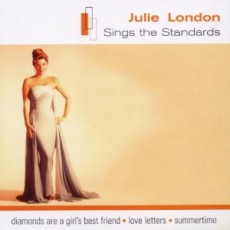
Julie London was born Gayle Peck in Santa Rosa, California on September 26, 1926 to a vaudeville song-and-dance team. At 14, her family moved to Los Angeles and shortly after she bean appearing in movies she graduated from the Hollywood Professional School in 1945.
The pin-up girl of WWII met and married the streetwise technique of actor Jack Webb in 1947, an unlikely union arising out of their love for jazz but only lasted until 1954. Becoming somewhat reclusive following the divorce she met jazz composer and musician Bobby Troup and although her career really took off in 1955, Julie had been singing in her teens long before she began acting.
London’s career began in 1955 with a live performance at the 881 Club in Los Angeles. Billboard named her the “Most Popular Female Vocalist” for 1955, 1956, and 1957 and she was the subject of a 1957 Life cover article in which she was quoted as saying, “It’s only a thimbleful of a voice, and I have to use it close to the microphone. But it is a kind of over-smoked voice, and it automatically sounds intimate.”
Julie London’s debut recordings were for the Bethlehem Record label but while shopping for the record deal, she recorded 4 tracks backed by Troup, “Don’t Worry About Me”, “Motherless Child”, “A Foggy Day” and “You’re Blasé”, that would later be included on the compilation albums “Bethlehem’s Girlfriends” in 1955. London’s most famous single, “Cry Me A River”, written by her high-school classmate Arthur Hamilton would become a million-seller after its release in December 1955. Throughout her singing career she recorded thirty-two albums with her last recording of “MY Funny Valentine” was produced for the soundtrack of the 1981 Burt Reynolds film Sharkey’s Machine.
She went on to have a prolific acting career on the stage, television and film that lasted 35 years concluding with the role of Dixie McCall on the tv series Emergency, executive produced by Jack Webb, and costarred her then husband Bobby Troup, a marriage that lasted until her death from poor health due to her long-term cigarette habit on October 18, 2000 in Encino, California at the age of 74.
More Posts: vocal

Daily Dose Of Jazz…
Marlena Shaw was born Marlina Burgess on September 22, 1942 in New Rochelle, New York and was first introduced to music by her jazz trumpet player uncle Jimmy Burgess. She cites Dizzy Gillespie, Miles Davis, Al Hibbler and lots of gospel as her teaching tools.
In 1952, Burgess brought her on stage at Harlem’s Apollo Theatre to sing with him and his band. Shaw’s mother did not want her daughter to go on tour with her uncle at such a young age. Instead, she enrolled Shaw into the New York State Teachers College in Potsdam to study music. She later dropped out, got married, had five children but never gave up on her singing career.
Shaw began making appearances in jazz clubs whenever she could spare the time. This most notable of these appearances was in 1963 when she worked with jazz trumpeter Howard McGhee. That same year, she had an unsuccessful audition due to nervousness with Columbia Records but continued to play at small clubs in 1964 until 1966 when her career took off after landing a gig with the Playboy Club chain in Chicago. It was through this gig that she met with Chess Records, inked a deal, released her first two albums on their subsidiary Cadet and moved to Blue Note by 1972.
With the onset of disco in the 70s, she reinvented herself and recorded “Go Away Little Boy” and one of the era’s biggest hits remaking “Touch Me In The Morning” for Columbia. Her career has touched all forms of music even being sampled by hip-hop artists and commercials. Vocalist Marlena Shaw has continued to record, toured and consistently performing at club dates and festivals like the North Sea Jazz Festival in the Netherlands.
Daily Dose Of Jazz…
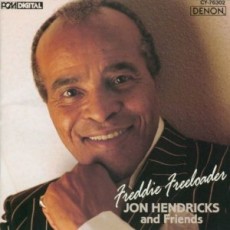
Jon Hendricks was born John Carl Hendricks on September 16, 1921 in Newark, Ohio and along with his 14 siblings moved around a lot until his A.M.E. pastor father settled in Toledo. As a teenager, Jon’s first interest was in the drums, but before long he was singing on the radio regularly with another Toledo native, pianist Art Tatum. Out of high school Jon served in the Army during WWII and after his discharge entered pre-law at the University of Toledo but stop at the graduate level because his G.I. benefits ran out. Charting a new course on the advice and encouragement given him by Charlie Parker, he moved to New York and began his singing career.
In 1957, he teamed with Dave Lambert and Annie Ross to form the legendary vocal trio Lambert, Hendricks & Ross. With Jon as lyricist, the trio perfected the art of vocalese and took it around the world, earning them the designation of the “Number One Vocal Group in the World” for five years in a row from Melody Maker magazine. After six years the trio disbanded for solo careers but not before leaving behind a catalog of legendary recordings, most of which have never gone out of print.
Pursuing a solo career, Hendricks moved his young family to London, England in 1968, toured Europe and Africa, performed frequently on British television, and appeared in British and French films and his sold-out club dates drew fans such as the Rolling Stones and the Beatles. Five years later the Hendricks settled in California, worked as the jazz critic for the San Francisco Chronicle, and taught classes at California State University, Sonoma and the University of California, Berkeley.
Over the course of his career Hendricks wrote a stage piece about the history of jazz, “Evolution of the Blues” that ran an unprecedented five years at the Off-Broadway Theatre in San Francisco and another year in Los Angeles; and his television documentary, “Somewhere to Lay My Weary Head” received an Emmy, Iris and Peabody awards; has recorded several critically-acclaimed albums on his own, collaborated with his wife and daughters, with the Manhattan Transfer on 7 Grammy winning “Vocalese”, has served on the Kennedy Center Honors committee under Presidents Carter, Reagan, and Clinton; has been appointed distinguished Professor of Jazz Studies at the University of Toledo; selected as the first American jazz artist to lecture at the Sorbonne in Paris.
Jon has toured worldwide with the “Four Brothers” comprised of Kurt Elling, Mark Murphy and Kevin Mahogany as well as working with his 15 member vocal group Vocalstra. Countless of singers and critics cite him as the one of the originators of vocalese and he has influenced just as many from Van Morrison and Al Jarreau to Bobby McFerrin and Georgie Fame. Time Magazine dubbed him the “James Joyce of Jive” while Leonard Feather called him the “Poet Laureate of Jazz”.
Vocalist Jon Hendricks endlessly performed, toured and recorded until he transitioned on November 22, 2017 in Manhattan, New York City, at age 96.
More Posts: vocal