

Daily Dose Of Jazz…
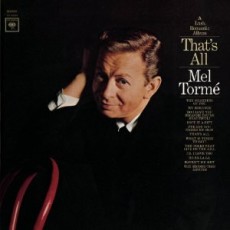
Melvin Howard Tormé was born on September 13, 1925 in Chicago, Illinois to Russian-Jewish parents whose surname was Torma but was changed to Torme as they came through Ellis Island. A child prodigy, his first professional engagement was singing “You’re Driving Me Crazy” with the Coon-Sanders Orchestra at the Blackhawk at age 4. Between 1933 and 1941, he acted in the network radio serials “The Romance of Helen Trent” and “Jack Armstrong, the All-American Boy”.
Mel wrote his first song at 13, and three years later, his first published song, “Lament to Love,” became a hit recording for Harry James. He played drums in Chicago’s Shakespeare Elementary School drum and bugle corps in his early teens. While a teenager, he sang, arranged, and played drums in a band led by Chico Marx of the Marx Brothers. His formal education ended in 1944 with his graduation from Chicago’s Hyde Park High School.
In 1943, Tormé made his movie debut in Sinatra’s first film, the musical “Higher and Higher” and an appearance in the 1947 film musical “Good News” made him a teen idol for a few years. He went on to sing and act in many films and television episodes throughout his career, even hosting his own television show in 1951–52.
In 1944 he formed one of the first jazz-influenced vocal groups, a quintet called “Mel Tormé and His Mel-Tones.” They had several hits on his own and fronting Artie Shaw’s band and blazed a path that was later followed by the Hi-Lo’s, The Four Freshman and The Manhattan Transfer. A solo act by 1947, Mel hit New York’s Copacabana and a local disc jockey in the audience, Fred Robbins, gave him the nickname “The Velvet Fog” for his smooth vocals and high tenor, a name detested by Tormé.
Mel went on to have a long and prosperous career recording for Decca, Musicraft, Capitol and Bethlehem; worked with Marty Paich in the fifties; “Blue Moon” became his signature tune; helped pioneer cool jazz; in the 60s wrote songs and musical arrangements for Judy Garland; co-wrote “The Christmas Song” with Bob Wells; and weathered the drought of vocal jazz until fertile ground reappeared in the 70s, a period that for him, lasted nearly to the end of his life.
Mel Tormé, vocalist, drummer, actor, author, composer and arranger passed away after suffering a stroke on June 5, 1999.
Daily Dose Of Jazz…
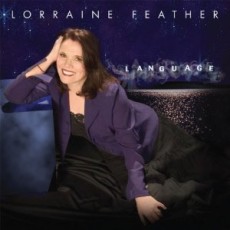
Lorraine Feather was born Billie Lorraine Feather in Manhattan on September 10, 1948 to jazz writer Leonard and Jane, a big band singer. Named after her godmother Billie Holiday, she began using her middle name in grade school.
Lorraine began working in television as a lyricist in 1992 and has received seven Emmy nominations. Her lyrics for children include work for ABC, PBS, Disney and MGM films; with composer Mark Watters wrote for Jessye Norman’s 1996 Olympic performance, and with Larry Grossman composed for Julie Andrews.
Feather’s work has been heard on numerous records covered extensively by artists such as Phyllis Hyman, Kenny Rankin, Patti Austin, Diane Schuur and Cleo Laine. Many of her own solo projects have featured contemporary lyrics to formerly instrumental pieces written by Duke Ellington, Fats Waller and other pre-bop composers. Feather’s recordings have received glowing reviews in every major jazz magazine including Down Beat and Jazz Times.
Loraine has gone on to lyric theatrical work, musical and the American Opera Projects presented excerpts of her work. Her latest release, titled “Attachments” has her penning twelve new sets of lyrics with musicians such as Dave Grusin, Joey Calderazzo, Russell Ferrante, Shelly Berg and Eddie Arkin composing the music. She continues to write, record and perform.
Daily Dose Of Jazz…
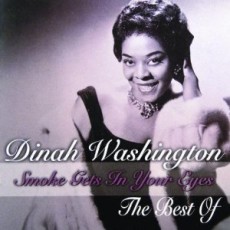
Dinah Washington was born Ruth Lee Jones on August 29, 1924 in Tuscaloosa, Alabama. A blues, R&B and jazz singer, Dinah gained an early reputation for singing torch songs. In 1962 she hired a trio of musicians and vocalists that called themselves the Allegros, consisting of Jimmy Thomas on drums, Earl Edwards on sax, and Jimmy Sigler on organ and their vocals created “effective choruses”.
Garnering the title “Queen of the Blues”, over the course of her career Dinah recorded for Keynote, Mercury, EmArcy and Roulette Records, winning a Grammy for “What A Difference A Day Makes”. She was inducted into the Alabama Jazz Hall of Fame, with her recordings inducted into the Grammy, Big Band, Jazz and the Rock and Roll Halls of Fame. She had a U.S. Postal commemorative stamp; had a street in Tuscaloosa and a park in Chicago named in her honor.
Known for her amorous personality, Washington was married eight times and divorced seven times, while having several lovers in between marriages. However, it was very early on the morning of December 14, 1963, that Dinah Washington passed away from a lethal combination of secobarbital and amobarbital. Her eighth and final husband NFL player Dick “Night Train” Lane discovered her body. She was 39.
More Posts: vocal
Daily Dose Of Jazz…
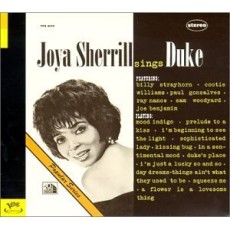
Joya Sherrill was born on August 20, 1924 in Bayonne, New Jersey and originally aspired to be a writer. While still in high school her father arranged for an introduction with Duke Ellington in 1942, aged 17. Six months later she joined the orchestra fronting the band as his vocalist. Leaving briefly to attend Wilberforce University, she returned to the group from 1944 to 1946. She had a hit with Ellington’s tune “I’m Beginning to See the Light”.
Subsequently, she worked as a soloist, performing with Rex Stewart, Ray Nance and others into the 1960s. She returned to Ellington for 1959’s A Drum Is A Woman. She toured the U.S. in 1959 and then took a role in the Broadway show “The Long Dream”. She toured with Benny Goodman in the USSR in 1962 and then returned to sing with Ellington in 1963.
One of the first Blacks to host a television program, from 1970 to 1982 she had a children’s television show, “Time for Joya”, later called “Joya’s Fun School. Although she only taped a few years worth of original episodes, the show would be seen in reruns for twelve years. Late in the 1980s she hosted a children’s show in the Middle East.
Joya Sherrill, jazz vocalist, died of complications from leukemia on June 28, 2010 in Great Neck, New York at the age of 85.
More Posts: vocal
Daily Dose of Jazz…
Mary Stallings was born August 16, 1939 in San Francisco, California, one of the eldest of 11 children growing up in the Laurel Heights district, where she still lives, starting as a gospel singer at the First AME Church. Her professional singing career began before she graduated from Lowell High School. Encouraged by her uncle, saxophonist Orlando Stallings, she listened closely to the great jazz singers.
As a teenager, Stallings was appearing in Bay Area nightclubs performing with Ben Webster, Cal Tjader, Earl Hines, Red Mitchell, Teddy Edwards and the Montgomery brothers. Before graduation from high school she joined R&B pioneer Louis Jordan’s Tympani Five. One night in the early Sixties at San Francisco’s Black Hawk nightclub, Dizzy Gillespie invited Ms. Stallings out of the audience and onto his bandstand to sing. By the time she was 26, Mary was playing the legendary Monterey Jazz Festival together with Gillespie in 1965.
The vocalist is perhaps best known for her 1961 collaboration with vibraphonist Cal Tjader on Cal Tjader Plays, Mary Stallings Sings on Fantasy, however, she went on to tour Asia, South America and perform stateside sharing billing with Billy Eckstine, Joe Williams, Tony Bennett and Ella Fitzgerald. From 1969 – ’72 she held a three-year residency as the Count Basie Orchestra girl singer.
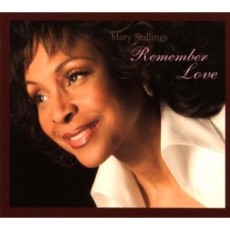
After a short semi-retirement Stallings returned to full-time singing at the end of the eighties and finally came to the attention of the national jazz audience with her 1994 release of the aptly titled “I Waited for You” with the Gene Harris Quartet. She followed with Fine and Mellow, Spectrum, Manhattan Moods, Live at the Village Vanguard and Remember Love.
Over the years Mary has worked with jazz luminaries Monty Alexander, Paul Humphries, Ron Eschete, Hendrik Meurkens, Dick Oatts, Geri Allen, Ben Wolfe and Andy Simpkins. She has performed at major festivals being backed by the likes of Marcus Shelby’s Jazz Orchestra, Eric Reed Trio and Wycliffe Gordon and is the recipient of San Francisco’s SF Jazz Beacon Award. She continues to perform, tour and record.
More Posts: vocal