

Jazz In Film
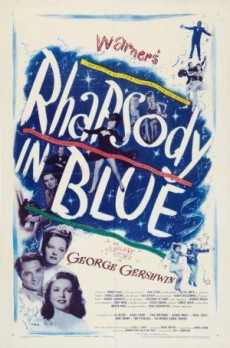
Rhapsody in Blue (1945): Hollywood’s Glamorous Portrait of Gershwin
Directed by Irving Rapper and starring Robert Alda, Joan Leslie, and Alexis Smith, Rhapsody in Blue is Hollywood’s lavish 1945 attempt to capture the life and genius of George Gershwin—one of America’s most beloved composers, who died tragically young at just 38 years old in 1937.
The Hollywood Treatment
As with most biopics of the era, the film takes considerable liberties with historical fact. The story centers on Gershwin as a driven, ambitious composer whose relentless need to succeed comes at a steep personal cost—destroying his relationships with a fictional singer named Julie Adams (Joan Leslie) and an equally fictional socialite Christine Gilbert (Alexis Smith).
These romantic subplots are pure Hollywood invention, designed to give audiences the kind of emotional drama they expected from a major studio production. The real George Gershwin’s personal life was more complex and less cinematically tidy, but Warner Bros. wasn’t particularly interested in documentary accuracy, they wanted a story of artistic genius struggling between ambition and love.
The Music Is the Real Star
What the film does deliver magnificently is Gershwin’s extraordinary music. The soundtrack features selections from his remarkable catalog: the jazz-inflected concert works like the titular “Rhapsody in Blue” and “An American in Paris,” beloved songs from his Broadway shows and Hollywood films, and glimpses of his ambitious opera Porgy and Bess.
Hearing these works performed in a 1945 film, still relatively close to when they were composed, gives the movie a period authenticity that transcends the fictionalized biography. This is what audiences in the 1940s heard when they thought of Gershwin, presented with the full resources of a major Hollywood studio’s orchestra.
Notable Appearances
The film includes memorable appearances by bandleader Paul Whiteman and His Orchestra—significant because Whiteman commissioned and premiered “Rhapsody in Blue” in 1924, making him an actual part of Gershwin’s story rather than Hollywood invention.
Also featured is the remarkable pianist and singer Hazel Scott, one of the few Black performers given significant screen time in a major Hollywood production of that era. Scott was a genuine virtuoso and a pioneering artist who fought against racial stereotyping in Hollywood—her presence adds both musical credibility and historical significance to the film.
Worth Watching Despite the Liberties
Rhapsody in Blue won’t teach you accurate biographical facts about George Gershwin—for that, you’ll need to read a proper biography. But as a celebration of his music and a snapshot of how Hollywood mythologized its cultural heroes in the 1940s, it remains an entertaining, gorgeously photographed production.
Robert Alda, Alan’s dad, brings charm and intensity to his portrayal of Gershwin, even if the script gives him more romantic angst than the real composer likely experienced. And ultimately, any film that introduces audiences to Gershwin’s genius—however fictionalized the surrounding story, serves a valuable purpose.
For anyone who loves Gershwin’s music or classic Hollywood biopics, Rhapsody in Blue delivers the glamour, the drama, and most importantly, the unforgettable melodies that made George Gershwin an American icon.
Just don’t expect historical accuracy—expect beautiful music wrapped in beautiful Hollywood fantasy.
More Posts: film
Requisites
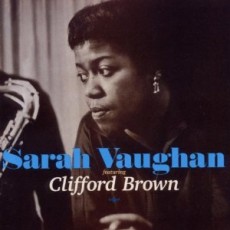
Sarah Vaughan with Clifford Brown: When Two Geniuses Met for One Perfect Album
Sometimes magic happens when the right artists meet at exactly the right moment. Sarah Vaughan with Clifford Brown—originally released simply as Sarah Vaughan in 1954—is one of those rare, lightning-in-a-bottle collaborations that captured two towering talents at their creative peaks.
An Unlikely Pairing That Shouldn’t Have Worked—But Did
On paper, pairing the Grammy Award-winning vocal virtuoso Sarah Vaughan with the brilliant young trumpeter Clifford Brown might have seemed risky. Vaughan’s voice was an instrument unto itself, capable of operatic range, breathtaking improvisation, and emotional depths that could break your heart. Brown, meanwhile, was revolutionizing jazz trumpet with his warm tone, flawless technique, and lyrical approach that suggested both bebop fire and romantic elegance.
Together? Pure alchemy.
A Single Session, An Enduring Legacy
The album was released on the EmArcy label and remains the only collaboration between this extraordinary pair, a tantalizing “what if” for jazz fans who can only imagine what further recordings might have produced. The original release bore only Vaughan’s name, but when reissued, the title was changed to emphasize Brown’s participation, recognizing that this was a true partnership between equals.
Critical Reception and Personal Favorite
The album was well-received upon release, though not without some criticism—as is often the case with ambitious artistic statements that don’t follow predictable formulas. Some critics felt the arrangements were too lush, others wanted more interaction between the two principals. But Vaughan herself had no doubts: this remained her personal favorite among all her recordings through 1980, a remarkable statement from an artist with a discography spanning decades and hundreds of albums.
She knew what she’d captured in that studio—something special, something that transcended the usual vocalist-with-accompaniment formula.
Recognition and Immortality
History has vindicated Vaughan’s judgment. In 1999, the album was inducted into the Grammy Hall of Fame, joining the pantheon of recordings deemed “qualitatively or historically significant” and worthy of permanent preservation.
A Bittersweet Postscript
There’s an inevitable sadness knowing this was the only time these two artists recorded together. Just two years after this session, Clifford Brown died in a car accident at age 25, robbing jazz of one of its most promising voices. This album stands as both a celebration of what Brown achieved in his brief life and a poignant reminder of what was lost.
Why It Still Matters
Sarah Vaughan with Clifford Brown isn’t just a historical artifact or a completist’s curiosity—it’s a masterclass in musical communication. Listen to how Brown’s trumpet seems to converse with Vaughan’s voice, how they finish each other’s musical thoughts, how the space between their phrases breathes with meaning.
This is what happens when two artists at the top of their game truly listen to each other and respond with honesty, generosity, and brilliance.
For anyone who loves vocal jazz, trumpet playing, or simply the sound of two masters making something beautiful together, this album remains essential—a 1954 gift that keeps giving, seven decades later.
More Posts: collectible,trumpet,vocal
Jazz In Film
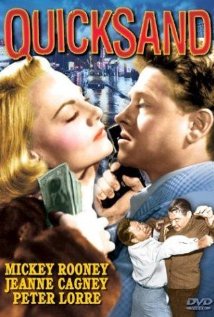
Quicksand (1950): When Twenty Bucks Becomes a Nightmare
Ever made one small, stupid mistake and watched it snowball completely out of control? That’s the premise of Quicksand, a taut 1950 film noir directed by Irving Pichel that proves sometimes the smallest misstep can pull you under.
The Setup
Mickey Rooney stars as an ordinary auto mechanic who makes what seems like a harmless decision: borrowing just $20 from his employer’s cash register, fully intending to pay it back. But this being film noir, nothing stays simple for long. That single impulsive act plunges him into a series of increasingly disastrous circumstances that rapidly spiral beyond his control—each desperate attempt to fix the problem only digging him deeper.
Jeanne Cagney (sister of the legendary James Cagney) and Barbara Bates round out the cast, adding romantic complications and moral dilemmas to an already tense situation.
A Soundtrack Bonus
Jazz fans have an extra reason to seek out Quicksand: it features appearances by the great cornetist Red Nichols and his band, providing an authentic period soundtrack that captures the sound of late-1940s American nightlife.
Why It Still Resonates
What makes Quicksand compelling isn’t just the escalating tension—it’s how believable the descent feels. This isn’t a story about a criminal mastermind or a hardened gangster. It’s about an average guy who makes one bad choice, then compounds it with another, and another, until he’s trapped in quicksand of his own making.
For anyone who loves classic film noir or wants to see Mickey Rooney in a grittier role than his usual fare, Quicksand delivers tight storytelling and a cautionary tale that feels surprisingly modern: sometimes the cover-up is worse than the crime.
And hey, you get some excellent Red Nichols jazz along the way.
More Posts: film
Requisites
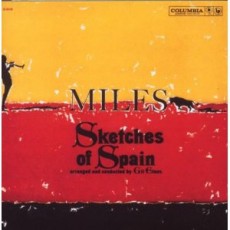
Sketches of Spain: When Miles Davis Went to Andalusia (Without Leaving New York)
What happens when you put Miles Davis‘ trumpet against the backdrop of Spanish classical music and flamenco? You get one of the most daring, gorgeous albums in jazz history.
Sketches of Spain (1960) was the third collaboration between Miles Davis and arranger/conductor Gil Evans, and it remains their most audacious. This isn’t just jazz—it’s a complete reimagining of Spanish music through an American lens, a cultural bridge built in sound. Rolling Stone ranked it #350 on their list of the 500 Greatest Albums of All Time, and once you hear it, you’ll understand why.
Recorded between November 1959 and March 1960 at Columbia’s legendary 30th Street Studio in New York City, the sessions brought together Miles’ core rhythm section—Paul Chambers on bass, Jimmy Cobb on drums, plus the great Elvin Jones adding percussion—with an absolutely massive orchestra. We’re talking French horns, oboes, bassoons, tuba, harp, flutes, and more, featuring stellar musicians like Danny Bank, Bill Barber, Johnny Coles, Bernie Glow, Ernie Royal, and Janet Putnam among many others.
Gil Evans’ arrangements are nothing short of miraculous—lush, evocative, cinematic. He doesn’t just accompany Miles; he creates entire sonic landscapes for that singular trumpet voice to soar over. The album opens with their interpretation of Joaquín Rodrigo’s “Concierto de Aranjuez,” and from the first mournful notes, you’re transported.
Across five tracks—”Concierto de Aranjuez,” “Will O’ the Wisp,” “The Pan Piper,” “Saeta,” and “Solea”—Miles and Gil paint with broader strokes than most jazz albums dare. This is music that breathes, broods, and burns with quiet intensity.
Producers Teo Macero and Irving Townsend captured something timeless when they released this on July 18, 1960. It’s been over six decades, and Sketches of Spain still sounds like nothing else, a masterpiece that proved jazz could go anywhere, be anything, as long as the vision was clear and the artists were fearless.
Put this on, close your eyes, and let Miles take you to Spain.

More Posts: collectible,trumpet
Jazz In Film
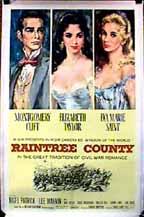
Raintree County: When Love Meets the Storm of History
Sometimes love stories aren’t just about two people—they’re about the forces of history that threaten to tear them apart.
Raintree County (1957), directed by Edward Dmytryk, brings together a powerhouse cast: Montgomery Clift, Elizabeth Taylor, and Eva Marie Saint in a sweeping drama set against America’s most tumultuous era.
The setup is deceptively simple: a poet and teacher, fresh from graduation, falls head over heels for a captivating Southern woman. But this is where things get complicated—because the Civil War is brewing, and she’s carrying secrets from her past that could destroy everything they’re building together.
What elevates this film beyond typical period romance is John Green’s evocative musical score, anchored by “The Song of Raintree County” with lyrics by Paul Francis Webster. On the soundtrack, you’ll hear the unmistakable velvet voice of Nat King Cole bringing the song to life, while George Fields‘ harmonica solos add an earthy, haunting layer to the storytelling.
This is epic filmmaking from Hollywood’s golden age—where personal drama and national tragedy collide, where love has to survive not just misunderstandings but the literal breaking apart of a nation.
More Posts: film