

Daily Dose Of Jazz…
Dave Weckl: The Drummer Who Redefined Fusion
Born on January 8, 1960, in St. Charles, Missouri, Dave Weckl discovered his calling early. During his years at Francis Howell High School, he was already making heads turn behind the drum kit. His passion led him to the University of Bridgeport in Connecticut, where he immersed himself in jazz studies and refined the technical prowess that would soon make him one of the most sought-after drummers in the world.
Conquering the Big Apple
Fresh out of college, Weckl plunged into New York City’s electric fusion scene—and the city immediately took notice. His combination of precision, power, and musicality quickly caught the attention of major artists. Before long, he was laying down grooves for an eclectic mix of superstars: Paul Simon, Madonna, George Benson, Michel Camilo, Robert Plant, and bassist Anthony Jackson. Each collaboration showcased a different facet of his versatility.
The Chick Corea Years
Weckl’s profile skyrocketed when he joined forces with keyboard legend Chick Corea in 1985. Over the next seven years, he became an integral voice in both Corea’s groundbreaking Elektric Band and the more intimate Akoustic Band. These weren’t just gigs—they were masterclasses in contemporary jazz fusion that cemented Weckl’s reputation as a drummer’s drummer.
During this prolific period, Weckl somehow found time to maintain a busy session schedule, appear with the star-studded GRP All-Star Big Band, and record four albums with the Manhattan Jazz Quintet. His calendar was a testament to both his work ethic and his universal appeal.
Finding His Own Voice
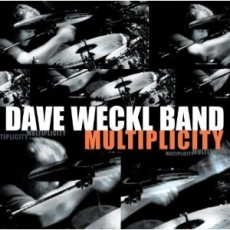
After departing from Corea’s band in the early 1990s, Weckl embarked on new adventures—recording and touring with the brilliant guitarist Mike Stern while simultaneously launching his solo career. Since 1990, he has released ten albums as a leader, seven of them featuring his own Dave Weckl Band, each one pushing the boundaries of contemporary jazz and fusion.
Evolution and Education
Never content to rest on his laurels, Weckl has also shared his knowledge through a popular series of instructional videos that have influenced countless aspiring drummers. But perhaps his most dramatic transformation came around 1996, when his studies with the legendary teacher Freddie Gruber prompted a radical reimagining of both his playing style and drum setup—proof that even masters never stop learning.
Still Behind the Kit
Today, Dave Weckl continues to perform, record, and tour, bringing his distinctive blend of technical brilliance and musical sensitivity to audiences around the world. For anyone who loves the sound of perfectly executed rhythm married to genuine artistry, a Dave Weckl performance remains an essential experience.
More Posts: drums
Daily Dose Of Jazz…
Henry “Red” Allen: The Trumpet Voice That Defined an Era
Born Henry James Allen on January 7, 1906, in the storied Algiers neighborhood of New Orleans, Louisiana, Red Allen grew up surrounded by the very birthplace of jazz. With a trumpet in hand from early childhood, he seemed destined to become one of the instrument’s most distinctive voices.
A New Orleans Beginning
By his late teens, young Henry was already turning heads, performing with Sidney Desvigne’s Southern Syncopators. The education continued: by 1924, he was playing professionally with the legendary Excelsior Brass Band and various jazz dance bands that kept New Orleans swinging. Like so many musicians of his generation, Allen honed his craft aboard the Mississippi riverboats—floating conservatories where the music never stopped and every night brought new challenges.
The Journey North
In 1927, Allen’s talent took him to Chicago, where he joined the great King Oliver and began recording as a sideman with Clarence Williams. But the real prize lay further east. A move to New York City brought him a coveted recording contract with Victor Records—a major breakthrough for any young musician.
The year 1929 marked a pivotal moment: Allen joined Luis Russell’s Orchestra, where he became a featured soloist and remained until 1932. His fiery, inventive playing began appearing on recording sessions with Eddie Condon, and by late 1931, he was making a series of memorable recordings with Don Redman.
A Who’s Who of Jazz Collaborations
From 1933 to 1934, Allen brought his sound to Fletcher Henderson’s celebrated Orchestra. What followed was a dizzying roster of collaborations that reads like a jazz history textbook: he played with the orchestras of Lucky Millinder and Luis Russell, toured Europe with Kid Ory, and worked or recorded with Coleman Hawkins, Tommy Dorsey, Fats Waller, Jelly Roll Morton, Victoria Spivey, and the incomparable Billie Holiday.
Leading from the Front
As a bandleader in his own right, Allen recorded for virtually every major label of the era—ARC, Decca, Okeh, Vocalion, Brunswick, and Apollo. He led his own ensemble at iconic New York venues like the Famous Door and the Metropole Café, toured extensively across the United States and Europe, and even graced television screens with an appearance on “The Sound of Jazz.”
A Courageous Final Chapter
When Allen was diagnosed with pancreatic cancer in late 1966, he faced the news with characteristic determination. Even after surgery, he insisted on one final tour of England—a testament to his lifelong dedication to the music and the audiences who loved him. That tour concluded just six weeks before his death on April 17, 1967, in New York City.
Henry “Red” Allen left behind more than recordings and memories—he left a trumpet legacy marked by innovation, passion, and an unmistakable sound that still resonates through jazz history today.
More Posts: trumpet
Daily Dose Of Jazz…
Chris Laurence: A Master Bassist Bridging Classical and Jazz Worlds
Born in the heart of London on January 6, 1949, Chris Laurence grew up in a city where musical boundaries have always been meant to be crossed. As a double bassist, he drew inspiration from an eclectic mix of visionaries—Keith Jarrett’s lyrical piano explorations, Miroslav Vitous’s revolutionary bass work, Tony Coe’s clarinet mastery, and Chick Corea’s fusion innovations. These diverse influences would shape Laurence into one of Britain’s most versatile and sought-after bassists.
A Career of Creative Collaborations
Laurence first gained significant recognition during the 1980s through his work in various innovative trios with the adventurous drummer Tony Oxley. In 1984, he expanded his musical palette further by joining the prestigious London Bach Orchestra—a move that showcased his ability to move fluidly between the worlds of jazz improvisation and classical precision.
His collaborative spirit has led him to work with a remarkable roster of British jazz luminaries: the atmospheric saxophonist John Surman, the powerful tenor voice of Alan Skidmore, the poetic pianist John Taylor, the lyrical trumpeter Kenny Wheeler, and the versatile percussionist Frank Ricotti. Each partnership revealed a different facet of Laurence’s musical personality.
An Extraordinary Session Legacy
As a sideman, Laurence’s discography reads like a who’s who of contemporary music. He has appeared on some twenty-one albums alongside artists as varied as Pink Floyd’s David Gilmour, minimalist composer Michael Nyman, pianist Gordon Beck, saxophonist Elton Dean, and classical guitarist John Williams. His bass lines have graced recordings on virtually every major label—EMI, CBS, Turtle, ECM, Vinyl, MN, Virgin Venture, Ogun, Sony Classical, and Columbia—testament to his universal appeal and adaptability.
Stepping into the Spotlight
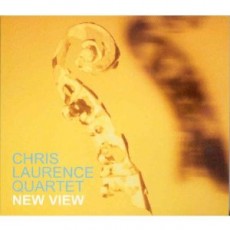
After decades of enriching others’ music, Laurence recently stepped forward as a leader, forming the Chris Laurence Quartet and releasing his debut album “New View.” The title itself seems to acknowledge a career spent supporting others’ visions—now, finally, it’s time for his own perspective to take center stage.
For those who know jazz and classical music in Britain, Chris Laurence’s name represents reliability, creativity, and that rare ability to make every note count—whether behind a bandleader or leading his own ensemble.
More Posts: bass
Requisites
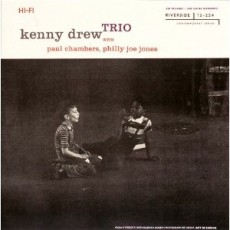
Kenny Drew Trio was his first recording as a leader in 1956. What should have launched him to stardom left him traveling far to find acceptance from America. Fittingly the excellence of the record was recognized in Japan after its release in the early Seventies, winning critical acclaim and becoming a best seller.
Personnel: Kenny Drew – piano, Paul Chambers – bass, Philly Joe Jones – drums
Record Date: New York City – September 20 & 26, 1956
Producers: Orrin Keepnews and Bill Grauer
Cover Photo: Roy De Carava
Songs: Caravan; Come Rain Or Come Shine; Ruby, My Dear; Weird-O; Taking A Chance On Love; When You Wish Upon A Star; Blues For Nica; It’s Only A Paper Moon

More Posts: collectible,piano
Daily Dose Of Jazz…
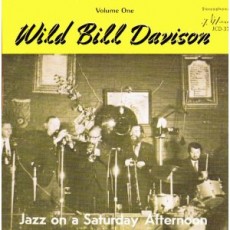
Wild Bill Davison: The Cornetist Who Played by Ear and Lived by Fire
William Edward Davison entered the world on January 5, 1906, in the small town of Defiance, Ohio—a fitting birthplace for a man who would spend his life defying musical conventions. From his earliest days, young Bill displayed both a deep love for music and an uncanny ability to master whatever instrument he touched.
A Musical Prodigy Finds His Voice
His journey began with the mandolin, guitar, and banjo, but Bill had his sights set higher. Ever resourceful, he joined the Boy Scouts specifically to learn the bugle. By age 12, he had graduated to the cornet—the instrument that would become his lifelong companion and voice.
What made Davison truly remarkable wasn’t technical training—his ability to read music remained limited throughout his career. Instead, he possessed something far rarer: a photographic musical ear. After hearing a song just once, he could reproduce its melody with perfect accuracy, then spontaneously weave in complex chord progressions and harmonic improvisations that left audiences spellbound.
From Obscurity to Icon
Though Davison emerged as a fiery jazz cornetist during the roaring 1920s, widespread recognition eluded him for two decades. When it finally arrived in the 1940s, it was explosive. His distinctive sound—marked by tonal distortions, heavy vibrato, and an almost urgent intensity—proved remarkably versatile. Whether playing alongside the mercurial Sidney Bechet or in more traditional settings, Davison’s cornet could adapt while losing none of its power.
His greatest musical partnership came when he joined forces with Eddie Condon. From the mid-1940s through the 1960s, this association produced some of Davison’s finest work, capturing both his hot, powerful attack and his surprisingly delicate melodic sensibility.
The Man Behind the Legend
On the bandstand, Wild Bill cut an unforgettable figure: seated in a chair with legs casually crossed, playing his horn from the side of his mouth with nonchalant mastery. But his colorful nickname didn’t come from his blazing cornet style—it was earned through his equally legendary appetite for whiskey and women, living the jazz life to its fullest and most reckless extent.
Wild Bill Davison brought his distinctive sound to audiences for over six decades before passing away on November 14, 1989, in Santa Barbara, California. He left behind a legacy that proved you don’t need to read music to speak its language fluently—you just need to listen with your whole soul.
More Posts: cornet