


Daily Dose Of Jazz…
Ingrid Jensen: From Subway Platforms to the World’s Greatest Stages
Born on January 12, 1966, in North Vancouver, British Columbia, Ingrid Jensen grew up in nearby Nanaimo, Canada, where she first picked up the trumpet as a child. What began as childhood curiosity blossomed into exceptional talent—so much so that scholarship offers poured in. Jensen made her way through Malaspina University before landing at the prestigious Berklee College of Music, where her distinctive voice on the trumpet truly began to emerge.
Hustle and Heart in the Big Apple
Like so many jazz dreamers before her, Jensen arrived in New York City determined to make her mark. Her early days weren’t glamorous—she played in subway stations, trumpet case open for tips, honing her chops and building confidence one commuter at a time. It was the kind of apprenticeship that forges character as much as skill, and Jensen emerged from it ready to take on the jazz world.
Breaking Through
Her rise to prominence has been both steady and impressive. Jensen has signed with and released albums on respected labels including Enja, Justin Time, Universal, and ArtistShare. Her debut album, Vernal Fields, featuring drumming legend Lenny White, saxophonist George Garzone, and bassist Larry Grenadier, earned her a Juno Award—Canada’s highest musical honor. She’s been nominated for several more since, cementing her status as one of jazz’s essential voices.
A Musical Life in Motion
Today, Jensen divides her time between leading her own projects and serving as a featured soloist with the Grammy Award-winning Maria Schneider Jazz Orchestra—one of the most celebrated large ensembles in contemporary jazz. She’s also a sought-after educator, guest-teaching at prestigious universities around the world, sharing not just technique but the wisdom gained from decades on the bandstand.
Family Harmony
Music runs deep in the Jensen family. Ingrid occasionally collaborates with her sister, the accomplished saxophonist Christine Jensen, creating performances that showcase not just their individual artistry but the intuitive connection that only siblings can share.
A Who’s Who of Collaborators
Jensen’s résumé reads like a jazz encyclopedia. She’s performed with Steve Wilson, Jeff “Tain” Watts, Dr. Lonnie Smith, Gary Bartz, Bob Berg, Terri Lyne Carrington, Geoffrey Keezer, Chris Connor, Clark Terry, Frank Wess, Dr. Billy Taylor, and the DIVA Big Band, among many others. Each collaboration has added another dimension to her musical vocabulary.
Beyond Jazz
Her trumpet has also crossed genre boundaries—she’s performed with British soul singer Corinne Bailey Rae on Saturday Night Live and even backed comedian Denis Leary, proving that great musicianship transcends stylistic borders.
Still Climbing
Ingrid Jensen continues to perform, record, and tour, bringing her warm tone, impeccable technique, and creative spirit to audiences worldwide. From those early days busking in New York subway stations to standing ovations on international stages, her journey is a testament to talent, perseverance, and an unshakeable belief in the power of music.
For anyone who loves the sound of a trumpet played with both virtuosity and soul, Ingrid Jensen is essential listening.
More Posts: bandleader,history,instrumental,jazz,music,trumpet
Daily Dose Of Jazz…
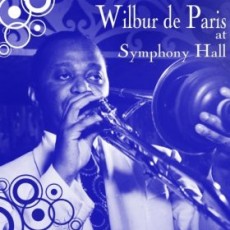
Wilbur de Paris: From Plantation Shows to the World Stage
Born on January 11, 1900, in Crawfordsville, Indiana, Wilbur de Paris grew up in a household where music wasn’t just entertainment—it was the family business. His father was a multi-instrumentalist who played trombone, banjo, and guitar, and he had big plans for his musically gifted son.
A Childhood on the Road
By the autumn of 1906, when little Wilbur was just five years old, he had already begun learning the alto saxophone. A year later—at an age when most children are still in elementary school—he was working professionally in his father’s plantation shows, crisscrossing the South on the Theater Owners Booking Association (TOBA) circuit. It was a grueling apprenticeship, but one that would serve him well.
The Moment Everything Changed
At sixteen, while performing in a summer show at the Lyric Theatre, de Paris heard jazz for the first time. The experience was transformative. Soon after, while playing saxophone at the legendary Tom Anderson’s Cafe with A. J. Piron’s band, he met a young trumpet player who would change music history: Louis Armstrong. These encounters lit a fire that would burn for the rest of de Paris’s life.
Building His Own Sound
After high school, de Paris continued working with his father before joining various traveling shows in the East. In the early 1920s, he made his way to Philadelphia and took a bold step—forming his first band, Wilbur de Paris and his Cottonpickers. He was building something of his own.
Surviving the Crash, Finding New York
When the Wall Street Crash of 1929 devastated the entertainment industry, de Paris disbanded his second group and made the move that would define his career: he headed to New York City. There, he spent years playing and recording with jazz royalty, absorbing every influence and honing his distinctive approach to the trombone.
The New New Orleans Sound
In the late 1940s, Wilbur teamed up with his brother Sidney to launch an ambitious project: a band called New New Orleans Jazz. The ensemble featured legendary figures including Jelly Roll Morton, drummer Zutty Singleton, and clarinetist Omer Simeon. But this wasn’t mere nostalgia—de Paris had a vision of blending traditional New Orleans jazz with the sophisticated swing that had emerged in the intervening decades.
The concept caught fire. Throughout the 1950s, the band became a beloved institution in New York City, recorded extensively, and toured the world, bringing their unique fusion of old and new to audiences everywhere.
A Legacy of Innovation
Wilbur de Paris passed away on January 3, 1973—just eight days before what would have been his 73rd birthday. He left behind a legacy that proved you could honor tradition while pushing it forward, that New Orleans jazz and swing weren’t competing styles but complementary voices in the grand conversation of American music.
From a five-year-old on the TOBA circuit to an internationally recognized bandleader, Wilbur de Paris lived the full arc of jazz’s golden age—and helped shape its sound every step of the way.
More Posts: bandleader,history,instrumental,jazz,music,trombone
Jazz In Film
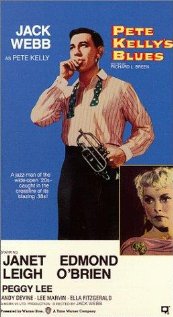
Pete Kelly’s Blues: This 1955 film was directed by and starred Jack Webb with co-stars Janet Leigh, Edmond O’Brien and Lee Marvin. In 1927 Kansas City Pete Kelly and his jazz band play nightly at a speakeasy. A local gangster starts to move in on them and when their drummer is killed Kelly gives in, even though this also means taking the thug’s alcoholic girl as a singer. Kelly soon realizes he has made a big mistake selling out in this way and that rich girl Ivy is now the only decent thing in his life.
The film included roles portrayed by jazz legends Peggy Lee as Rose Hopkins, Ella Fitzgerald as Maggie Jackson and Herb Ellis as Bedido. Pianist Don Abney, bassist Joe Mondragon and drummer Larry Bunker back the vocalists.
Matty Matlock who also sits in the clarinet chair also did the jazz arrangements. The band was comprised of Teddy Buckner on cornet, George Van Epps and Moe Schneider on trombone, Eddie Miller on tenor saxophone, Ray Sherman, piano; Jud de Naut, bass; Nick Fatool on drums, and trumpeters Joe Venuti, Thomas Jefferson, Harper Goff, Perry Bodkin and Dick Cathcart, with the latter dubbing the for Jack Webb.
Musical Numbers: Pete Kelly’s Blues, Sing Me A Rainbow, He Needs ME, Oh Didn’t He Ramble, I Never Knew, Hard-Hearted Hannah, Sugar, Bye Bye Blackbird and Somebody Loves Me.

More Posts: film
Daily Dose Of Jazz…
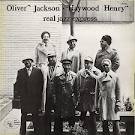
Haywood Henry: The Baritone Voice Behind a Thousand Hits
Born Frank Haywood Henry on January 10, 1913, in Birmingham, Alabama, this future jazz great started his musical journey on clarinet before discovering his true calling in the rich, resonant tones of the baritone saxophone. Though the baritone became his signature voice, Henry never abandoned the clarinet entirely, keeping both instruments close throughout his remarkable six-decade career.
From College Band to the Big Time
In 1930, Henry joined the Bama State Collegians, getting his first taste of professional music-making. When he returned to the group in 1934, now led by the dynamic Erskine Hawkins, it marked the beginning of a musical partnership that would last into the 1950s. Hawkins’ orchestra became Henry’s proving ground, where his big-toned baritone work became an essential part of the band’s sound.
A Journeyman’s Journey
After his years with Hawkins, Henry became one of those invaluable musicians who could fit into any setting. He worked with guitarist Tiny Grimes, saxophonist Julian Dash, and the Fletcher Henderson Reunion Band. Perhaps most notably, he occasionally substituted for the legendary Harry Carney in Duke Ellington’s Orchestra—a testament to his skill, given that Carney was widely considered the greatest baritone saxophonist in jazz history.
The 1960s found Henry in equally distinguished company: Wilbur DeParis, Max Kaminsky, Snub Mosley, Louis Metcalf, Earl Hines, Sy Oliver, and the New York Jazz Repertory Company all benefited from his steady presence and warm sound.
The Secret Session King
Here’s where Henry’s story takes a fascinating turn: during the 1950s and ’60s, he became one of the anonymous giants of the recording industry, playing on over 1,000 rock and roll records. While teenagers danced to the latest hits, few knew that a Birmingham-born jazz baritone saxophonist was helping create the sound they loved. In the 1970s, he brought that same professionalism to Broadway pit orchestras, proving once again his remarkable versatility.
Coming Full Circle
In 1971, Henry joyfully participated in an Erskine Hawkins reunion ensemble—a chance to reconnect with old friends and relive the glory days. He continued performing well into the 1980s, his passion for music undiminished by age.
A Leader at Last
Though Henry spent most of his career supporting others, he did step forward as a leader on three occasions: recording for Davis Records in 1957, Strand in the early 1960s, and finally Uptown in 1983. These albums offer rare glimpses of Henry unchained—his baritone taking center stage rather than anchoring the ensemble.
A Well-Earned Honor
In 1978, Alabama recognized one of its own when Haywood Henry was inducted into the Alabama Jazz Hall of Fame. When he passed away on September 15, 1994, the jazz world lost one of its most reliable, versatile, and underappreciated voices—a master musician who made everyone around him sound better, whether on a jazz bandstand, a rock and roll session, or in a Broadway pit.
Haywood Henry may not be a household name, but his baritone saxophone spoke to millions, often without them ever knowing it. That’s the mark of a true professional.
.
More Posts: clarinet,history,instrumental,jazz,music,saxophone
Daily Dose Of Jazz…
Jimmy Maxwell: The Trumpet Master You’ve Heard a Thousand Times
Born on January 9, 1917, in Stockton, California, Jimmy Maxwell was practically born with a trumpet in hand—he picked up the instrument at the remarkable age of four. Even as a child prodigy, he understood the value of serious training, studying throughout the 1930s with a roster of legendary brass teachers, including the renowned Herbie Clarke.
A Young Gun in the Swing Era
During the vibrant 1930s, Maxwell’s precocious talent found him working alongside some of the biggest names in jazz: Gil Evans, Jimmy Dorsey, vocalist Maxine Sullivan, and bandleader Skinnay Ennis. His big break came when he joined the prestigious Benny Goodman Orchestra—a gig that announced his arrival as a world-class player.
The Golden Age of Television
In 1943, Maxwell transitioned to what would become a legendary three-decade run as a studio musician for NBC. Night after night, his trumpet graced America’s living rooms through The Perry Como Show, The Patti Page Show, The Pat Boone Show, and The Tonight Show. While many musicians might have settled into such comfortable work, Maxwell’s restless talent demanded more.
A Secret Weapon on Countless Sessions
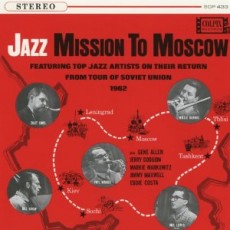
Maxwell’s studio work was merely the foundation. In 1962, he toured the Soviet Union during the height of the Cold War—music as cultural diplomacy. He appeared on hundreds of recordings and commercials, becoming one of those invisible giants whose sound defined an era. As a sideman, he lent his brilliant tone to sessions with Woody Herman, Count Basie, Duke Ellington, Oliver Nelson, Gerry Mulligan, Maynard Ferguson, Quincy Jones, the New York Jazz Repertory Company, and Chuck Israels’ National Jazz Ensemble.
That Haunting Solo
Perhaps Maxwell’s most iconic moment came when he played the unforgettable trumpet solo for The Godfather soundtrack—that lonely, haunting theme that perfectly captured the film’s operatic melancholy. Millions heard it; few knew the master behind it.
Full Circle
Later in life, Maxwell returned to his roots, working with Dixieland jazz and swing ensembles and even reuniting with Benny Goodman for nostalgic performances. In 1977, he finally stepped into the spotlight as a leader, recording a session for Circle Records—a rare glimpse of Maxwell unfiltered.
Though he eventually retired from recording and performing, Maxwell never stopped teaching. From 1950 until 2001—an astonishing fifty-one years—he passed on his knowledge to new generations of brass players. When he passed away on July 20, 2002, the world lost not just a brilliant musician, but a patient mentor who had helped shape the sound of American music for over seven decades.
If you’ve watched television, heard a commercial, or listened to jazz from the mid-20th century, you’ve almost certainly heard Jimmy Maxwell’s trumpet—even if you never knew his name.
More Posts: history,instrumental,jazz,music,trumpet