


Daily Dose Of Jazz…
Buddy Clark was born Samuel Goldberg on July 26, 1912 in Dorchester, Massachusetts, He made his big band singing debut in 1932 as a tenor, with Gus Arnheim’s orchestra, but was not successful. Singing baritone he gained wider notice in 1934 with Benny Goodman on the Let’s Dance radio program. From 1936 to 1938 he performed on the show Your Hit Parade.
In the mid-1930s he signed with Vocalion Records, having a top-20 hit with Spring Is Here. He continued recording, appearing in movies, and dubbing other actors’ voices until he entered the military, but did not have another hit until the late 1940s. In 1946 he signed with Columbia Records, scoring his biggest hit with the song Linda. 1947 saw hits for Clark with How Are Things in Glocca Morra?”, Peg O’ My Heart, An Apple Blossom Wedding, and I’ll Dance at Your Wedding. A duet with Doris Day, Love Somebody, sold a million recordsand reaching #1 on the charts. Through the Forties decade he had nine more chart hits untilhis death.
Vocalist Buddy Clark, who was a popular crooner during the big band era, passed away in a plane crash on Beverly Boulevard in West Los Angeles, California on October 1, 1949.

More Posts: history,instrumental,jazz,music,vocal
Daily Dose Of Jazz…
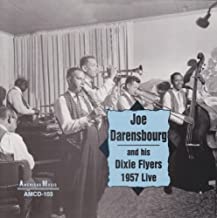
Joe Darensbourg was born in Baton Rouge, Louisiana on July 9, 1906 and in his youth moved out to California where he played gigs where he could find them and appeared in several silent films with these bands. In 1950 Joe appeared in Mahogany Magic with Kid Ory’s Creole Jazz Band. The Sixties saw him playing with Louis Armstrong’s All Stars in The Good Years of Jazz: Louis Armstrong & The All Stars.
In 1958 his Dixie Fliers recording of Yellow Dog Blues hit #43 on the pop charts, and Louis Armstrong’s version of Hello Dolly, which Drensburg played clarinet went to #1 in 1964. By the Sixties he performed on a television special with the All Stars Winter Carnival in Sun Valley, California and a March of Dimes tribute to Louis Armstrong.
He was noted for his work with Buddy Petit, Jelly Roll Morton, Charlie Creath, Fate Marable, Andy Kirk, Johnny Wittwer, Kid Ory, Wingy Manone, Joe Liggins and Louis Armstrong. Clarinetist and saxophonist Joe Darensbourg, who played Dixieland, passed away on May 24, 1985.
More Posts: clarinet,history,instrumental,music,saxophone
The Quarantined Jazz Voyager
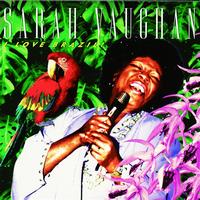
Masking and social distancing are still my mantra in maintaining my health and this pandemic has given me a great opportunity to sit and listen to albums I have’nt in a long time. So as I revisit my music collection this week I place on the turntable the 1977 studio album by Sarah Vaughan titled I Love Brazil! If you love Vaughan’s voice and the music of Brazil, you will want this in your collection.
The session was recorded on October 31 ~ November 7, 1977 and was her first album released on Pablo Records. This was Vaughan’s first but not last foray into Brazilian music, bossa nova and mpb. It was followed by Copacabana in 1979, and Brazilian Romance in 1987.
Track Listing | 54:43- If You Went Away | Preciso Aprender a Ser Só (Ray Gilbert, Marcos Valle, Paulo Sérgio Valle) ~ 4:25
- Triste (Antônio Carlos Jobim) ~ 2:58
- Roses and Roses | Das Rosas (Dorival Caymmi, Gilbert) ~ 3:23
- Empty Faces | Vera Cruz (Lani Hall, Milton Nascimento) ~ 6:26
- I Live to Love You | Morrer de Amor (Oscar Castro-Neves, Luverci Fiorini, Gilbert) ~ 3:54
- The Face I Love | Seu Encanto (Gilbert, Carlos Pingarilho, M. Valle) ~ 3:29
- Courage | Coragem (Nascimento, Cootie Williams) ~ 3:42
- The Day It Rained | Chuva (Pedro Camargo, Durval Ferreira, Gilbert) ~ 4:40
- A Little Tear | Razão de Viver (Deodato, Gilbert, P.S. Valle) ~ 4:07
- Like a Lover | Cantador (Alan and Marilyn Bergman, Dori Caymmi, Nelson Motta) ~ 4:45
- Bridges | Travessia (Nascimento, Fernando Brant, Gene Lees) ~ 4:12
- Someone to Light Up My Life | Se Todos Fossem Iguais a Vocë (Jobim, Vinicius de Moraes, Lees) ~ 3:26
- Sarah Vaughan ~ vocals
- Dorival Caymmi – vocals (3)
- Milton Nascimento – acoustic guitar, vocals (4,7,11)
- Dori Caymmi – acoustic guitar, vocals (10)
- Nelson Angelo – electric guitar (4,7,11)
- Hélio Delmiro – electric guitar (1-3,6,8-9,12)
- Danilo Caymmi – flute (4,7,11)
- Paulo Jobim – flute (4,7,11)
- Mauricio Einhorn – harmonica (8)
- Antônio Carlos Jobim – piano (2,12)
- José Roberto Bertrami – electric piano (1-3,6,8-9), organ (4,7,11)
- Edson Frederico – orchestration (1-3,5-6,8-9,12), piano (5)
- Sergio Barroso – acoustic bass (1-2,6,9,12)
- Claudio Bertrami – acoustic bass (3,8)
- Novelli – electric bass (4,7,11)
- Wilson das Neves – drums (1-3,6,8-9,12)
- Robertinho Silva – (4,7,11)
- Ariovaldo – percussion (1-4,6-7,9,11-12)
- Chico Batera – percussion (1-4,6-7,9,11-12)
- Luna – percussion (12)
- Marçal – percussion (12)
- Durval Ferreira – creative director
- Sheldon Marks – design, layout design
- Norman Granz – design, layout design, liner notes
- Mário Jorge Bruno – engineer
- Tamaki Beck – mastering
- Aloísio de Oliveira – producer
More Posts: adventure,album,club,genius,jazz,museum,music,preserving,restaurant,travel,vocal
Daily Dose Of Jazz..
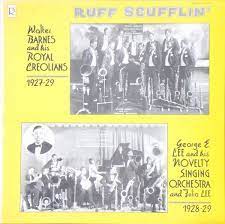
Walter Barnes was born on July 8, 1905 in Vicksburg, Mississippi but grew up in Chicago, Illinois. He studied under Franz Schoepp and attended the Chicago Musical College and the American Conservatory of Music.
Leading his own bands from the early 1920s, he also played with Detroit Shannon and his Royal Creolians. After Shannon’s retinue became dissatisfied with his leadership, Barnes took control of this group as well. He played mostly in Chicago, though the band did hold a residency at the Savoy Ballroom in New York City as well. His band recorded in 1928-29 for Brunswick Records.
He toured the American South in the 1930s to considerable success, touring there yearly and by 1938 the ensemble grew to sixteen members. Around this time, Barnes also worked as a columnist for the Chicago Defender newspaper, and used his position to advertise his own tours and promote other entertainers on the same touring trail to Black audiences. Barnes is thus credited as an early originator of what was known as the “Chitlin’ Circuit”; a network of entertainment venues where it was safe and acceptable for Black entertainers to perform.
Barnes was one of the victims of the Rhythm Club Fire in Natchez, Mississippi, on April 23, 1940. When the club caught fire, he had the group continue playing the song “Marie” in order to keep the crowd from stampeding out of the building. All of the band members except for drummer Walter Brown and bassist Arthur Edward were among the 201 victims of the fire.
Clarinetist, saxophonist and bandleader Walter Barnes, whose death was repeatedly immortalized in song, passed away on April 23, 1940.
More Posts: bandleader,clarinet,history,instrumental,jazz,music,saxophone

Daily Dose Of Jazz…
Charles Redland was born Carl Gustaf Mauritz Nilsson, on July 7, 1911 in Södertälje, Sweden. The son of a musician, he learned several instruments when he was young. By the 1930s he was a member of bands in which he played alto saxophone, clarinet, trumpet, and trombone.
During that decade he doubled as a leader. On clarinet he recorded with Benny Carter in Sweden in 1936. He composed and arranged jazz and popular music, as well as more than eighty films, in addition for radio and television programs.
Saxophonist, composer and bandleader Charles Redland passed away on August 18, 1994 in Stockholm, Sweden.
More Posts: bandleader,composer,history,instrumental,music,saxophone