

Three Wishes
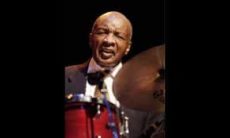
When Ed Thigpen was approached by Nica and asked what his three wishes would be if given he told her: 1. “That there would be love amongst all people in the world~complete, you understand.” 2. “That I always keep my family happy. You know, my wife. It would be nice to say “in sickness and in health.” 3. “I’d like to be a master, or a complete musician. Know music completely, inside out.”
*Excerpt from Three Wishes: An Intimate Look at Jazz Greats ~ Compiled and Photographed by Pannonica de Koenigswarter

More Posts: baroness,drums,history,instrumental,jazz,music,pannonica,three,wishes
Daily Dose Of Jazz…
Born on July 6, 1920 in Abany, New York, Dick Kenney was one of a circle of big-band trombonists influenced by Bill Harris. Anxious to get to the jazz center once his chops were together, cello had been his initial introduction to music, but it was as a trombonist that he got into the Toots Mondello band in the early ’40s.
It was a bandleader named Paul Villepigue who took the budding trombonist from Albany to New York City. From 1946 there ensued two years of education with Johnny Bothwell, then Kenney headed for the West Coast and a return to college studies prior to seriously hitting the big band circuit. His first outing was with Charlie Barnet, then moved to Les Brown in 1957, migrating to Brown’s New England stomping or rather fox-trotting.
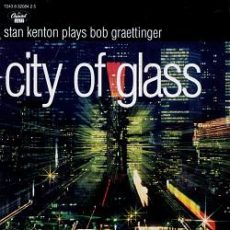
The trombonist’s big band work is well documented having recorded as a featured artist on more than one hundred sides, many in the late ’60s. The list includes Stan Kenton’s visionary City of Glass as well as addresses from forgotten artists, a good example being the Bothwell collection entitled Street of Dreams. Tromonist Dick Kenney, who played in the jazz and pop genres as well as on soundtracks, retired from music.

More Posts: history,instrumental,jazz,music,trombone
Daily Dose Of Jazz…
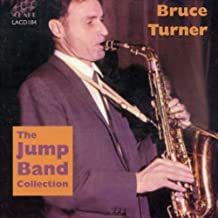
Bruce Turner was born on July 5, 1922 in Saltburn, North Yorkshire, England and educated at Dulwich College. He learned to play the clarinet as a schoolboy and began playing alto saxophone while serving in the Royal Air Force in 1943 during World War II. He played with Freddy Randall from 1948~53 and then worked on the Queen Mary in a dance band and in a quartet with Dill Jones and Peter Ind.
In 1950 he briefly studied under Lee Konitz in New York City. His first period with Humphrey Lyttelton ran from 1953 to 1957. After leaving Lyttelton he led his Jump Band from 1957~65, which was featured along with his arrangements in the 1961 film Living Jazz. In 1961, Turner recorded Jumpin’ at the NFT (National Film Theatre) and the album was issued later that year on Doug Dobell’s 77 Records label, coinciding with the film’s release.
In January 1963, the British music magazine New Musical Express reported that the biggest trad jazz event to be staged in Britain had taken place at Alexandra Palace. The event included George Melly, Diz Disley, Acker Bilk, Chris Barber, Kenny Ball, Ken Colyer, Monty Sunshine, Bob Wallis, Alex Welsh, Mick Mulligan and Turner.
Returning to Randall’s group from 1964 to 1966, he then played with Don Byas and Acker Bilk till 1970. He went on to work with Wally Fawkes, John Chilton, Stan Greig), Alex Welsh, and Dave Green. He led small ensembles in the 1990s until his death. His autobiography Hot Air, Cool Music, published by Quartet Books, appeared in 1984. He wrote a column on jazz for the Daily Worker. Saxophonist, clarinetist, and bandleader Bruce Turner passed away on November 28, 1993 in Newport Pagnell.
More Posts: clarinet,history,instrumental,jazz,music,saxophone
Requisites
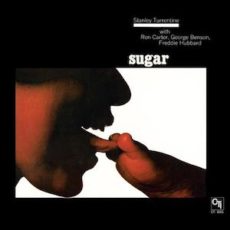
Sugar ~ Stanley Turrentine | By Eddie Carter
The landscape of jazz was changing as it entered the seventies. Miles Davis began pushing the envelope from Hard-Bop and Post-Bop to Jazz Fusion with In A Silent Way (1969), and Bitches Brew (1970) would take it further in that direction. Due to his commercial success with Bitches Brew, some musicians also moved from those styles into Avant-Garde and Free Jazz. Still, others began a journey toward what would eventually be labeled Smooth Jazz. Stanley Turrentine, a veteran Soul-Jazz tenor saxophonist since the fifties had just ended a decade-long association with Blue Note that began with his debut, Look Out (1960), and was looking to build his audience. He signed with CTI Records in 1970, the independent label owned by producer Creed Taylor which originally began as a subsidiary of A&M Records in 1967.
Though no one knew it at the time, Sugar (CTI Records CTI 6005) would become the biggest selling album of Stanley’s career and the title song, a phenomenal hit earning him the nickname, “The Sugar Man”. The record’s success was also instrumental in changing the direction for future CTI releases toward more Jazz-Funk and Funk-Soul albums. Stanley is joined by an impressive supporting cast, label mate Freddie Hubbard on trumpet, Lonnie Liston Smith (track: A1) on electric piano, Butch Cornell (tracks: A2, B1) on organ, George Benson on guitar, Ron Carter on bass, Billy Kaye on drums, and Richard “Pablo” Landrum (tracks: A2, B1) on congas. My copy used in this report is the 2009 Pure Pleasure Records UK Stereo Audiophile reissue (PPAN CTI 6005).
Side One starts with Stanley’s original, Sugar. The rhythm section begins at mid~tempo with an infectious introduction hooking you from the opening notes. The front line presents the melody with a lightly swinging beat. Stanley strides confidently into a danceable lead solo. Freddie settles into a funky groove on the second statement. George tells the next story with some bluesy guitar work and assistance from both horns providing a rhythmic supplement for one chorus. The ensemble reprises the melody and disappears into a slow fade.
Sunshine Alley by Butch Cornell opens with Cornell leading the rhythm section fueled by Kaye’s hypnotic drums and Landrum’s soulful conga. Both horns take it from there on the bluesy theme. Cornell, who I was unfamiliar with before his appearance here, easily holds his own with a convincing lead solo. Benson gives a splendid performance with the rhythm section slipping neatly alongside. Hubbard cooks up something good next, then Turrentine adds some soul food to the final solo that reaches a peak of inspiration preceding the ensemble taking the song out.
The group closes with a vigorous blowing rendition of John Coltrane’s Impressions occupying Side Two. Butch starts the song with a soulful introduction. The front line provides the spark on the main theme to “get this party started” as my wife likes to say. Stanley takes off first at a hard-swinging gallop. Butch comes in next for a vigorous interpretation with both horns humming behind him. Freddie brings an electrically charged dynamism to the third solo with compelling intensity. George adds a bit of excitement to the final reading with some high-voltage licks. Stanley punctuates the closing chorus with final phrases of white heat into an energetic fadeout.
The impeccable rhythm section of Ron Carter, Billy Kaye, and Richard “Pablo” Landrum is the power station behind each soloist, giving the album its depth. The remastering of Rudy Van Gelder’s original recording by Kevin Gray and Steve Hoffman is exemplary. The vinyl is quiet until the music starts, and the LP is a sonic treat for your ears with a spacious soundstage that’s stunning. There’s something for everyone on Sugar by Stanley Turrentine. It’s a Soul-Jazz buffet of his tenor sax, a swinging group, and an irresistible groove that’s sure to make it a favorite in any jazz library!
~ Bitches Brew (Columbia GP 26), In A Silent Way (Columbia CS 9875), Look Out (Blue Note BLP 4039/BST 84039) – Source: Discogs.com © 2021 by Edward Thomas Carter
More Posts: choice,classic,collectible,collector,history,instrumental,jazz,music,saxophone

Daily Dose Of Jazz…
Duncan Lamont was born on July 4, 1931 in Greenock, Scotland and started out as a trumpet player, leading his own band in Scotland, which won recognition in Melody Maker in 1951. Spending time in London, England he played with Kenny Graham’s Afro-Cubists. During the early 1950s he continued to be active in Scotland and when he switched to tenor saxophone and became a jazz studio player.
He worked with numerous popular British dance bands and jazz groups led by Basil and Ivor Kirchin, Ken Mackintosh, Jack Parnell, Geraldo, Eric Delaney and Vic Lewis, with whom he toured the US. During the 1960s he played with Pat Smythe, Kenny Baker and freelanced extensively. Over the years Lamont led his own small bands and played in big bands and studio orchestras led by Kenny Wheeler, Gil Evans, Bobby Lamb and Raymond Premru, Nelson Riddle, Henry Mancini, Benny Carter and Bill Holman.
Lamont has accompanied on tour or studio orchestras with Frank Sinatra, Rosemary Clooney and Paul McCartney. He composed many songs that were recorded by Trudy Kerr, Nancy Marano, Cleo Laine, Joyce Breach and Norma Winstone. He wrote music for children’s television, was nominated for a Grammy, won the John Dankworth Jazz Award, and for more than a decade led a big band to raise money for cancer research. His activities as a composer have long been greatly respected by his professional peers and, at the start of the new century, are starting to receive the wider recognition they so richly deserve.
Tenor saxophonist Duncan Lamont, who gave masterclasses in improvisation and big band sessions at Brunel University, passed away on July 2, 2019 just two day shy of his 88th birthday.
More Posts: bandleader,composer,history,instrumental,jazz,music,saxophone