

Daily Dose Of Jazz…
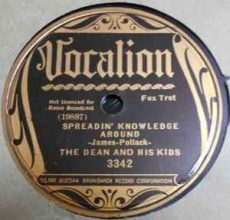
Bruce Willmarth Squires was born on January 21, 1910 in Berkeley, California. From 1935 to 1937 he was a member of the Ben Pollack band. As The Dean and His Kids, they recorded Spreadin’ Knowledge Around/Zoom Zoom Zoom on the Vocalion label in 1936.
Following this Bruce worked with Jimmy Dorsey for a year in 1937, Gene Krupa the following year, Benny Goodman in 1939, and Harry James from 1939 to 1940. From 1940 for the next two years he worked with Freddie Slack and Bob Crosby.
After World War II he was a studio musician and worked in music for the next three decades. Trombonist Bruce Squires, who primarily performed in the swing genre, transitioned on May 8, 1981 in North Hollywood, Los Angeles, California.

More Posts: history,instrumental,jazz,music,trombone
Daily Dose Of Jazz…
The Orphan Who Became Malta’s Jazz Star
Some jazz stories follow a straight line from struggle to success. Juice Wilson’s story? It’s a globe-spanning odyssey that most musicians couldn’t dream up if they tried.
A Child Finding His Voice Through Music
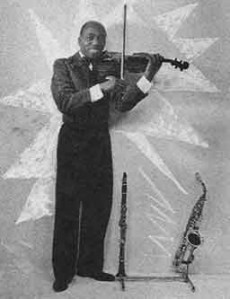
Born January 21, 1904, Wilson was orphaned young and raised by his uncle in Chicago from age three. In a city that could be brutally indifferent to a child without parents, music became his lifeline, his identity, his way forward.
He started on drums with the Chicago Militia Boys Band, then switched to violin at eight—an instrument that would eventually carry him around the world. By twelve, he was already gigging professionally with bandleader Jimmy Wade. At fourteen, he was playing alongside the legendary cornetist Freddie Keppard, one of New Orleans’ pioneering jazz voices.
This wasn’t just prodigious talent—this was a kid who had to grow up fast, and music was both his emotional escape and his economic future.
Building His Reputation, City by City
The 1920s found Wilson working Great Lakes steamboats (those floating conservatories where so many musicians learned their craft), doing residencies with trombonist Jimmy Harrison in Ohio, playing in Erie with pianist Hersal Brassfield, then moving to Buffalo to work with bandleader Eugene Primus and even the Buffalo Junior Symphony Orchestra.
He was building his chops, city by city, gig by gig, learning to navigate both the world of jazz and the world of classical music—a versatility that would serve him well in the years ahead.
New York, Then the World
In 1928, Wilson made the inevitable move to New York City, where he played the legendary Savoy Ballroom with Lloyd Scott’s orchestra—the big time, the room where reputations were made and broken nightly.
But then something remarkable happened: at decade’s end, Wilson toured Europe with Noble Sissle’s celebrated orchestra and made a decision that would define the rest of his life—he decided to stay abroad.
A European Adventure
What followed reads like an adventure novel. Wilson worked in Holland with bandleaders Ed Swayzee and Leon Abbey, performed with the Utica Jubilee Singers, joined the Louis Douglass Revue, played with Little Mike McKendrick’s International Band, and worked with Tom Chase’s ensemble. He traveled to Spain and North Africa, soaking up sounds, languages, and cultures that most American jazz musicians would never experience firsthand.
He was bringing American jazz to audiences who’d only heard it on scratchy recordings, if at all. And he was absorbing Mediterranean and North African musical traditions in return, creating his own unique fusion.
Finding Home in Malta
perhaps Malta discovered him. Wilson became a beloved figure on the sun-drenched Mediterranean island, working throughout the 1940s and 1950s as a multi-instrumentalist and entertainer. He made the island his home base while continuing to tour the region, becoming a bridge between American jazz and European audiences.
Full Circle
Wilson finally returned to the United States in the 1960s, bringing with him decades of stories, experiences, and musical adventures that few of his American contemporaries could match.
A Life Well Traveled
Think about that journey: from an orphaned child in Chicago to a beloved musician on a Mediterranean island halfway around the world, carrying American jazz to corners of the globe that rarely heard it performed live. When Juice Wilson died peacefully on May 22, 1993, he left behind a life that proves jazz was always meant to be a universal language—you just had to be brave enough to speak it anywhere, to anyone who would listen.
Some musicians stay in one city their whole lives, perfecting their craft in familiar surroundings. Juice Wilson chose the harder path—and became living proof that home isn’t where you’re born, but where your music is welcomed and celebrated.
More Posts: violin
Daily Dose Of Jazz…
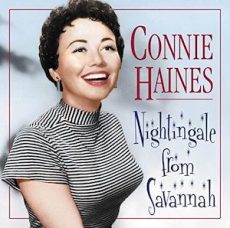
Connie Haines was born Yvonne Marie Antoinette Jasme on January 20, 1921 in Savannah, Georgia. She began performing at age four as a singer in Pick Malone’s Saucy Baby Show in her hometown and by age 9 had a regular radio show performing as Baby Yvonne Marie, the Little Princess of the Air. Her professional debut in New York City came at the Roxy Theatre when she was 14.
After gaining regional successes and winning the Major Bowes contest, she was hired by Harry James, who asked her to change her name. She did and went on to become the lead singer on The Abbott and Costello Show from 1942 to 1946. She later joined Tommy Dorsey, and Haines credited him with further developing her style.
In the early 1950s, Haines had a program, Connie Haines Entertains, did a television show with Frankie Laine, and had her own TV program, the Connie Haines Show. During this period she joined Jane Russell, Beryl Davis and Della Russell to do an impromptu performance of the spiritual Do Lord which led to a recording contract, gospel recordings and appearances of The Colgate Comedy Hour and the Arthur Murray program on television
She became part of Motown Records in 1965 becoming one of the first white singers to record for the label. She recorded 14 songs written by Smokey Robinson, including her 1965 release What’s Easy For Two Is Hard For One previously recorded by Mary Wells, and the first version of For Once in My Life, which wasn’t released until 2015.
In 1969, Haines became hostess of the Prize Movie weekday broadcast on Channel 7 in San Francisco, California. In 1980, she performed on “G.I. Jive,” a television musical special produced by PBS for its fundraising drive. Vocalist Connie Haines, who performed in a number of films, transitioned of myasthenia gravis on September 22, 2008 at age 87.
More Posts: bandleader,history,instrumental,jazz,music,vocal
The Jazz Voyager
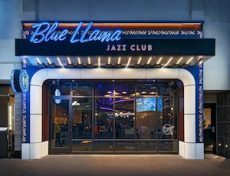
Leaving the cold of the East Coast for the meaner temperatures of the Midwest as the Jazz Voyager heads to Ann Arbor, Michigan to check out a new venue I am not familiar with. It’s called the Blue Llama and is located at 314 S Main Street, 48104. It’s going to be a rush to the airport from the ship but fortunately I travel light with one carry~on bag. I have my Uber waiting for me at the port and hopefully I will make the plane on time.
My good friend, vocalist and guitarist Allan Harris will be in residence for two nights in this stylish lounge that offers inventive cuisine, charcuterie (meats) and great jazz. Two sets each night and if you haven’t ever seen him perform, here’s your opportunity to revel in his magic and understand the genius of the man.
So bundle up and come out for dinner and a show while supporting your local watering and dining spot and keeping the community vibrant. Enjoy the celebration of music!
The club’s number is 734-372-3200. If you want to get more information visit notoriousjazz.com/event/allan-harris-band-2.

More Posts: adventure,album,club,festival,genius,guitar,jazz,museum,music,preserving,restaurant,travel,vocal
Daily Dose Of Jazz…
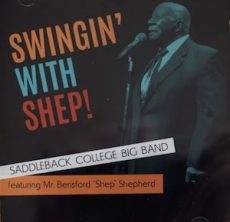
Shep Shepherd was born Berisford Shepherd on January 19, 1917 in Honduras while his mother was enroute from the West Indies to Philadelphia, Pennsylvania. Arriving in the city she first settled and raised him in a Jewish neighborhood before moving to a Black neighborhood.
An early fascination with marching bands he drummed on tables and chairs until his mother bought him a toy drum to save wear and tear on the furniture. He attended the Jules E. Mastbaum Area Conservatory and Vocational School where he trained as a percussionist on timpani, vibraphone, xylophone, snare and bass drums. Students were required to have a secondary instrument, and he chose the trombone.
Initially hoping for a career in the Philadelphia Orchestra, he shifted his interest to jazz. He formed a friendship with drummer Jimmy Crawford, who was able to help his career in New York City. During the Thirties performed with Jimmy Gorham’s band in Philadelphia. In 1941, Benny Carter contacted Shep and he moved to New York City, where he also worked with Artie Shaw the same year. He became heavily in demand and the phrase “Get Shep!” became a phrase among area musicians.
Four years in the Army saw him serving in the entertainment corps, and working there he played trombone and improved his skills as a composer and arranger. He met Billy Butlet and in 1952 after his discharge he began working with Butler as part of Bill Doggett’s group. In 1956, Shepherd helped write Doggett’s signature song, Honky Tonk. He left Doggett’s group in 1959 and returned to New York City where he worked in pit orchestras for Broadway shows, and as a music copyist and arranger.
When the nationwide tour of the Broadway show Here’s Love ended, Shepherd found himself in San Francisco, California and he became a freelance musician there. He continued to play drums through the Sixties and Seventies working with Patti Page, Lionel Hampton, Lena Horne, The Ward Singers, Earl Bostic, Buck Clayton, Odetta, Cab Calloway, Sy Oliver, Big Maybelle, and Erskine Hawkins. At 80 years old, he switched his primary focus from drums to trombone, and with organist Art Harris and drummer Robert Labbe formed the group Blues Fuse.
Drummer, trombonist, vocalist and composer Shep Shepherd, who is listed in The Biographical Encyclopedia of Jazz and Who’s Who Among Black Americans, transitioned on November 25, 2018 at the age of 101.
More Posts: bandleader,drums,history,instrumental,jazz,music,trombone,vocal