

On The Bookshelf
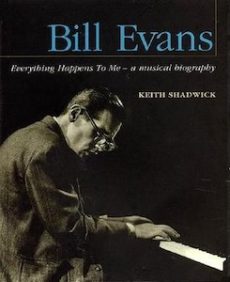
A Grammy winner and pioneer of multi-track jazz recording, Bill Evans was the pianist on Miles Davis’ classic Kind of Blue album and a key figure in the development of modern jazz piano.
This biography details his wide-ranging and absorbing career, from freelance work in the 1950s, through his groundbreaking trios and solo releases, to his relationships with various record labels, to the intense final phase before his death in 1980.
Bill Evans: Everything Happens To Me contains full-page photos along with a selected discography that highlights key recordings throughout his career as a leader, co-leader and sideman.
Author Keith Shadwick has written for several magazines as well as Jazz: Legends of Style and The Illustrated Story of Jazz. He contributed Masters of Jazz Saxophone.

Daily Dose Of Jazz…
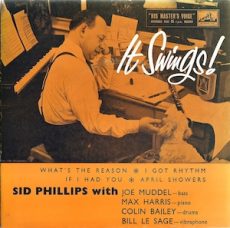
Joseph C Mudele was born on September 30, 1920 and grew up in Downham, South East London. He left school at the age of 14 and began singing and playing in local bands. He began playing double bass at the age of 17 after buying an upright bass in a junk shop. After having served in the war in the Royal Air Force, he studied for a while with principal double bassist James Merritt with the Philharmonia Orchestra.
His professional playing career took off in 1947 with clarinetist Carl Barriteau, accordionist Tito Burns and the Jimmy Macaffer Band. He toured with Hoagy Carmichael during the autumn of 1948, and played with Charlie Parker and drummer Max Roach at the 1949 International Jazz Festival in Paris.
In 1948 Mudele became a founder member of Club Eleven, a Soho nightclub open between 1948 and 1950 which played a significant role in the emergence of the bebop jazz movement in Britain. After the club was closed he became a founder member of the John Dankworth Seven, while also continuing to play with others during the Fifties. During this period Mudele also played for Sophie Tucker, Judy Garland and Billy Eckstine.
Joe supplemented his club performances with extensive radio, television and recording studio work outside of jazz from the 1960s onwards. In later life Mudele lived in Bromley, played weekly at the Bexley Jazz Club in Kent, and took over management duties after owner Les Simons died in 2004. In 2010 he recorded For All We Know with pianist Robin Aspland and drummer Geoff Gascoyne.
Double bassist Joe Mudele, who was sometimes known as Joe Muddel or Muddell and was one of the Club Eleven Collective, died at age 93 on March 7, 2014.

More Posts: bandleader,bass,history,instrumental,jazz,music
Daily Dose Of Jazz…
Chris Bauer was born on September 29, 1960 and raised in Long Island, New York and was surrounded by his father’s harmonica trio. He started playing at age nine and began appearing with his father’s trio by thirteen. At sixteen he placed third in a worldwide harmonica competition and in 1987 placed fourth in a field of 27 at the International Harmonica Federation competition, both times finishing as the highest placed American harmonica player.
Chris has gone on to perform at many New York City and New Jersey venues and was the harmonica in the play Big River. He was a regular contributing writer to The Harmonica Educator magazine on jazz topics and continues to work on recording projects that exemplify jazz harmonica. He also performs both in jazz trio or quartet settings, as a soloist utilizing custom backgrounds that provide the sound of a jazz ensemble, or can sit in with rock, blues, or jazz bands.
Playing harmonica for over fourty years, his performance and recording experiences are diverse including jazz gigs, harmonica trios, church worship bands, and production library tracks. He performs and gives harmonica technique seminars at numerous festivals around the country. His album In A Yuletide Groove has been featured on jazz radio station playlists.
Residing in Weatogue Connecticut, harmonica player Chris Bauer continues to perform popular jazz standards with a repertoire from upbeat bop tunes and cool Latin numbers to soulful ballads.
More Posts: bandleader,harmonica,history,instrumental,jazz,music
Requisites
Organ Grinder Swing ~ Jimmy Smith With Kenny Burrell and Grady Tate | By Eddie Carter
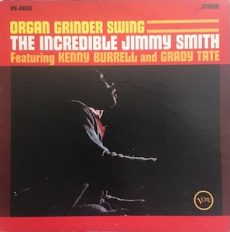
This morning’s selection from the library holds a special significance to me. It was one of my mom’s favorite albums to play while enjoying her morning coffee and preparing our Sunday dinners when we were younger. Organ Grinder Swing (Verve Records V-8628/V6-8628) is a terrific trio album by Jimmy Smith, with Kenny Burrell on guitar and Grady Tate on drums. It was his second most successful album, surpassed only by Back at the Chicken Shack. The soulful character of his organ playing had a profound impact on me from the moment I first heard Houseparty and The Sermon. I quickly became a devoted fan, growing to appreciate even more the rich musicality and infectious grooves he brought to every performance. My copy of this album is the original 1965 U.S. deep groove stereo release.
The title track, The Organ Grinder’s Swing by Will Hudson, Irving Mills, and Mitchell Parish, kicks off the first side with Jimmy’s infectious enthusiasm on a swinging theme. Kenny builds the opening solo with some home-cooking. The organist steps up next with a spirited statement, and Jimmy’s vocal comments as it unfolds. Grady provides a steady beat that propels the group into the climax. Oh, No, Babe by Jimmy Smith gets this soulful blues underway with Smith’s organ and vocals, which are inserted during the introduction and melody. Burrell’s gentle touch shines in a refined, inviting opening solo. Smith brings a Southern flair to the proceedings with a down-home, tasteful delight ahead of the song’s conclusion.
Blues For J by Jimmy Smith is a bluesy mid-tempo original that opens with the trio’s joyously carefree theme in unison. Kenny takes center stage, showcasing his guitar artistry in the opening solo. Jimmy extends the happy mood with a vibrant performance, leading the group back to the ensemble’s reprise and a satisfying finish. The trio delivers a unique take on Greensleeves, the beloved English folk tune. Smith begins the melody with gospel-tinged musical ideas that give the melody a fresh sense of soulfulness. Burrell launches the opening statement with a laid-back, smooth groove. Smith then takes command, delivering an energetic and spirited interpretation that continues until the group’s theme reprise gradually dissolves, like autumn leaves drifting to the ground.
I’ll Close My Eyes by Buddy Kaye and Billy Reid is gently introduced by the trio, segueing into a graceful melody. Kenny’s opening statement radiates a comforting elegance and is one of his most beautiful moments on the album. Jimmy then guides the group toward the song’s reprise, incorporating sensitive ideas and a warm, refined tone, until the ensemble brings back the theme. Satin Doll by Duke Ellington, Johnny Mercer, and Billy Strayhorn is one of the most frequently recorded jazz standards, and picks up the beat one final time for the trio’s light-hearted theme. Burrell looks back nostalgically and sparkles with a soulful touch in the opening solo. Smith responds by gliding efficiently over the keys in a closing statement of happiness while Tate keeps the tempo lively and upbeat ahead of the finish.
Creed Taylor produced Organ Grinder Swing, and Rudy Van Gelder handled the recording. While the album’s sound quality is a strong effort, it falls short of the very best due to a harshness in the microphone placement at the organ, which is especially notable on The Organ Grinder’s Swing, Blues For J, and Greensleeves. This technical flaw, however, does not diminish from the album’s overall excellence. So, don’t let that deter you from adding this record to your library. The album’s greatest strength to me is how impeccably the trio works together. Kenny Burrell and Grady Tate perfectly complement Jimmy Smith throughout every track with a flawless sense of rhythm. If you aren’t looking at the cover, you could easily mistake this for one of the organist’s classic Blue Note recordings.
For fans of the jazz organ or those just discovering the music of Jimmy Smith, I invite you to check out Organ Grinder Swing the next time you’re visiting your favorite record shop. It perfectly captures the dynamic spirit and sophisticated musicianship that emerges when three exceptional performers unite, resulting in a memorable showcase of rhythm, style, and collaboration!
~ Back at the Chicken Shack (Blue Note BLP 4117/BST 84117), Houseparty (Blue Note BLP 4002/BST 84002), The Sermon (Blue Note BLP 4011/BST 84011) – Source: Discogs.com ~ Satin Doll – Source: JazzStandards.com ~ Greensleeves, I’ll Close My Eyes, The Organ Grinder’s Swing – Source: Wikipedia.org © 2025 by Edward Thomas Carter

More Posts: choice,classic,collectible,collector,history,instrumental,jazz,music,organ
Daily Dose Of Jazz…
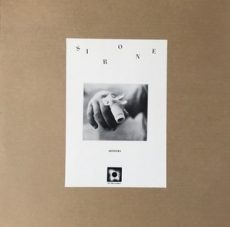
Norris Jones, better known as Sirone, was born September 28, 1940 in Atlanta, Georgia. He worked in Atlanta late in the 1950s and early in the 1960s with “The Group” alongside George Adams. He recorded with R&B musicians such as Sam Cooke and Smokey Robinson.
In 1966, in response to a call from Marion Brown, he moved to New York City, where he co-founded the Untraditional Jazz Improvisational Team with Dave Burrell. He also worked with Brown, Gato Barbieri, Pharoah Sanders, Noah Howard, Sonny Sharrock, Sunny Murray, Albert Ayler, Archie Shepp, and Sun Ra, as well as with John Coltrane when he was near the end of his career.
He co-founded the Revolutionary Ensemble with Leroy Jenkins and Frank Clayton in 1971. Jerome Cooper later replaced Clayton in the ensemble, which was active for much of the decade. The 1970s and early 1980s saw Sirone recording with Clifford Thornton, Roswell Rudd, Dewey Redman, Cecil Taylor, and Walt Dickerson.
In the 1980s, he was a member of Phalanx, a group with guitarist James “Blood” Ulmer, drummer Rashied Ali, and tenor saxophonist George Adams. From 1989, he lived in Berlin, Germany, where he was active with his group Concord with Ben Abarbanel-Wolff and Ulli Bartel.
Bassist, trombonist, and composer Sirone, who was involved in theater, film, and was a practicing Buddhist, died in Berlin, Germany on October 21, 2009, at the age of 69.
More Posts: bandleader,bass,composer,history,instrumental,jazz,music,trombone