

Daily Dose Of Jazz…
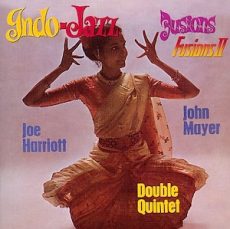
John Henry Basil Mayer was born on October 28, 1930 in Calcutta, Bengal, British India, to an Anglo-Indian father and Tamil mother. After studying with Phillipe Sandre in Calcutta and Melhi Mehta in Bombay, he won a scholarship to London’s Royal Academy of Music in 1952, where he studied composition with Matyas Seiber, as well as comparative music and religion in eastern and western cultures.
He worked for five years as a violinist with the London Philharmonic Orchestra beginning in 1953 and then with the Royal Philharmonic Orchestra from 1958 to 1965. During that period John was also composing fusions of Hindustani classical and Western classical forms fused with jazz undertones. His Violin Sonata was performed by Yehudi Menuhin and his Shanta Quintet was recorded by jazz sitarist Diwan Motihar and Denis Preston’s Lansdowne String Quartet in 1967.
In the 1960s he worked extensively with the Jamaican-born jazz musician Joe Harriott, with whom he formed the group Indo-Jazz Fusions. John also composed for film, and the BBC quiz show Ask the Family. From 1989 onwards he taught composition at Birmingham Conservatoire where he introduced the BMus Indian music course in 1997. He continued to compose concert works for chamber, solo and orchestral projects and record jazz-fusion albums.
Composer and sitarist John Mayer, known primarily for his fusions of jazz with Indian music, was fatally injured when hit by a motorist in North London and died on March 9, 2004.

More Posts: bandleader,composer,history,instrumental,jazz,music,sitar
Daily Dose Of Jazz…
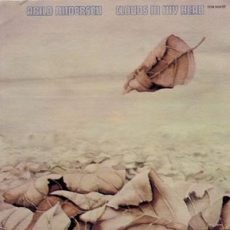
Arild Andersen was born on October 27. 1945 at Strømmen, Norway and started his musical career as jazz guitarist in the Riverside Swing Group in Lillestrøm, Norway from 1961 to 1963, and started playing double bass in 1964. He soon became part of the core jazz bands in Oslo, Norway, such as the Roy Hellvin Trio, the backing band at Kongsberg Jazz Festival, and was named Best Bassist by Jazznytt in 1967. That same year he started as bassist in the Jan Garbarek Quartet.
In 1968 after completing his education he became a professional musician and collaborated with Karin Krog, George Russell, and Don Cherry. He performed with visiting American musicians Phil Woods, Dexter Gordon, Bill Frisell, Hampton Hawes, Johnny Griffin, Sonny Rollins, Sheila Jordan, and Chick Corea. During the same period he worked with Ferenc Snétberger and Tomasz Stańko.
The early Seventies saw Andersen collaborating with Norwegian musicians before leaving for the United States in 1973. A year later he was leading his own bands, worked with the Radka Toneff Quintet and has recorded more than a dozen albums as a leader for ECM Records. Arild founded the critically acclaimed band Masqualero, and appeared as side man on a series of recordings.
In January 2009, he was named “Musicien Europeen 2008” by the French Academie du Jazz and in 2010, Andersen received the Ella Award at the Oslo Jazzfestival. He recorded his latest trio album with American drummer Bob Moses and Slovenian guitarist Samo Salamon titled Pure and Simple.
Bassist Arild Anderson, known as the most famous Norwegian bass player in the international jazz scene, continues to perform and record at 80 years old.
More Posts: bass,history,instrumental,jazz,music
Requisites
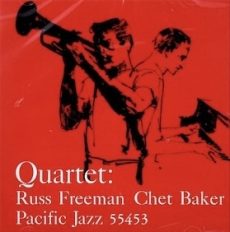
Quartet ~ Russ Freeman and Chet Baker | By Eddie Carter
It had been some time since I last enjoyed Russ Freeman’s piano work, so this morning I chose an excellent collaboration featuring him and trumpeter Chet Baker from my library. Quartet (World Pacific Records, PJ-1232) hit the stores in 1957 and was the eleventh album Freeman and Baker recorded together. The album showcases six original tunes alongside two standards, and they are supported by the outstanding rhythm section of Leroy Vinnegar on bass and Shelly Manne on drums. The copy of this album that I own is a King Record Company Japanese mono reissue (Pacific Jazz GFX-3104).
The first side opener, Love Nest by Otto Harbach and Louis A. Hirsch begins at a brisk pace, with Chet on muted trumpet during the lively melody, which continues into a spirited opening statement. Russ gets the next nod and delivers an energetic reading. Leroy follows up with a swinging interpretation, then Chet and Shelly engage in a brief exchange before the closing chorus returns. Fan Tan, the first of six originals by Russ Freeman, slows the pace to midtempo for the quartet’s theme. Freeman is afforded plenty of room to shape his phrases in the opening statement. Baker is back on the open horn and maintains a laid-back vibe as he effortlessly swings to the closing chorus and ending.
Summer Sketch begins with a gentle piano introduction. Chet Baker’s trumpet playing throughout the track is both poetic and tender, with each note radiating romantic beauty, softly guiding the group to a smooth, unified finish. An Afternoon At Home ends the first side with the rhythm section’s inviting introduction, allowing Baker to glide through the opening chorus at a leisurely, relaxed pace. Freeman’s lead solo is as enjoyable as spending a leisurely afternoon with friends. Then, Vinnegar takes the spotlight next for a captivating solo. Baker has the last word with a charming presentation, before the quartet brings the tune to a satisfying close.
Say When starts Side Two with the quartet’s spirited melody. Chet leads the way with an exciting opening statement. Russ soars into the following presentation, then Shelly swings with great force in a brief, exhilarating closing reading before the theme’s reappearance and the group’s exit. Lush Life by Billy Strayhorn is one of the enduring favorites among jazz standards. The song begins with Freeman’s sensitive introduction, gently segueing to Baker’s rich tone as he introduces the tender theme. The pianist’s solo possesses a sad, reflective beauty, culminating in the trumpeter’s tender and thoughtful finale.
Amblin is a slow blues, introduced by the trio’s soulful introduction, segueing to the leader’s down-home melody. Chet opens with a solo that’s thoughtfully crafted and effortlessly delivered. Russ continues letting each verse glide effortlessly next. Leroy wraps it up with plenty of heart, ahead of the quartet’s theme reprise and climax. Hugo Hurwhey takes off with a short introduction, preceding the ensemble’s upbeat theme. Baker hits an ideal groove in the opening statement. Freeman takes the reins next with a robust reading, then Vinnegar, Manne, and Freeman culminate the solos in a vigorous exchange with Baker, leading to the melody’s restatement and conclusion.
Richard Bock produced Quartet, but the identity of the recording engineer is unidentified. However, this King Record Company reissue possesses outstanding audio quality, with an excellent soundstage that brings the foursome into your listening room with impressive clarity and presence. Whether you’re a Russ Freeman or Chet Baker fan, or are just discovering the discography of either musician, I emphatically recommend and invite you to pick up Quartet on your next trip to the record store. The album is a stellar showcase for both musicians and would make a welcome addition to any jazz library!
~ Lush Life – Source: JazzStandards.com
© 2025 by Edward Thomas Carter
>

More Posts: choice,classic,collectible,collector,history,instrumental,jazz,music,piano,trumpet
Daily Dose Of Jazz…
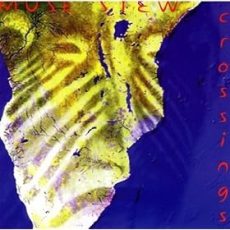
Scott Samenfeld was born on October 26, 1951 in New York City and grew up between the city and New Jersey. Moving to Boston, Massachusetts in 1970 he attended Berklee College of Music and has been performing in the Boston area ever since.
The first band Scott founded, Muse Stew, began its life performing jazz and poetry. He currently leads his group performing his original compositions as well as other jazz and Latin artists. They blend African, Afro-Cuban, Brazilian and other folk rhythms of jazz.
Samenfeld performs with a 16 piece big band, the Sounds of Swing Orchestra. They have been performing throughout New England for almost 20 years. As an educator Samenfeld has been a music teacher for many years and taught music theory and jazz guitar at the Guitar Workshop. During the 1970’s he taught jazz ensemble and instrumental music at the Cambridge School in Weston and The Open Road School in Waltham during that period as well.
Scott has focused on composing and performing his music and has been a member of the groups Razzamatazz, Trillium, Favela, and Ibrahima’s World Beat.
Bassist Scott Samenfeld who plays in the mediums of avant garde, bossa nova, and modern jazz, continues to perform, compose and teach.
More Posts: bandleader,bass,history,instrumental,jazz,music

Daily Dose Of Jazz…
Eduardo Puperi was born in Porto Alegre, Rio Grande do Sul, Brazil on October 25, 1969. From 1986 to 1991 he studied music at CLAM, a school directed by Zimbo Trio in São Paulo, Brazil with teachers Fernando Corrêa and Conrado Paulino. He graduated in composition and directing in 1993 from the University of Music and Arts Alcântara Machado (FAAM).
The next year Puperi formed the Ludi & Tiné Quartet with guitarrist Paulo Tiné. The instrumental group that lasted until 1999 and released an album called “Vento Leste” in 1997. He was musical director at Cultura Inglesa in São Paulo from 1996 to 2000, directing the musicals Guys and Dolls, Bye Bye Birdie, Hair, All that Jazz and Fame. From 1991 to 2004 he directed the big bands FAAM Jazz Band, Orquestralha and Swinging Sounds.
His groups have been Aura Tropical and the Edu Puperi Trio, the latter which became a quartet in 2005 with bassist Luis Passos, drummer Humberto Zigler, and tenor and soprano saxophonist and flutist Chiquinho de Almeida. Both groups have released albums.
In 2001 he began teaching piano, guitar and performing practice at Casa de Música Luiz Chaves. Pianist Edu Puperi continues teaching, performing and recording.
More Posts: bandleader,history,instrumental,jazz,music,piano