

Daily Dose Of Jazz…
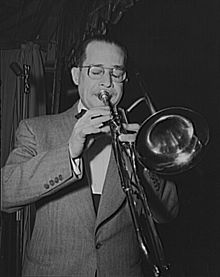
Juan Tizol: The Puerto Rican Trombonist Who Gave Duke Ellington “Caravan”
Imagine stowing away on a ship to chase your musical dreams, then ending up writing some of the most iconic compositions in jazz history. That’s not fiction—that’s Juan Tizol’s extraordinary story.
A Musical Education in Puerto Rico
Born January 22, 1900, in Vega Baja, Puerto Rico, Tizol grew up surrounded by music in a family where it was taken seriously. He started on violin but quickly switched to valve trombone, the instrument that would become his distinctive voice. His uncle Manuel Tizol, music director of the San Juan symphony, became his primary teacher, and young Juan soaked up everything—classical technique, ensemble discipline, professional standards. He played in his uncle’s band and gained invaluable experience performing with local operas, ballets, and dance groups. This was a classical education, Puerto Rican style. Tizol wasn’t learning jazz yet—he was learning music, period.
A Dangerous Leap of Faith
Then came 1920 and a decision that would change everything: Tizol joined a band heading to Washington, D.C. The catch? They traveled as stowaways on a ship, risking everything for the chance to play music in America.
Once they arrived safely, the group set up shop at the Howard Theater, one of Washington’s premier African American venues, playing for touring shows and silent movies while occasionally working small jazz and dance gigs on the side. It was at the Howard that Juan first crossed paths with a young Duke Ellington, who was just beginning to make a name for himself.
Joining the Duke Ellington Orchestra
Summer 1929 brought the call that every jazz musician dreams of—Duke wanted him in the band. Tizol became the fifth voice in Ellington’s brass section, and suddenly the maestro had entirely new compositional possibilities. Now he could write for trombones as an actual section instead of just doubling the trumpets. Tizol’s rich, warm valve trombone tone also blended beautifully with the saxophones, often carrying lead melodies that gave Ellington’s sophisticated arrangements their distinctive color and texture.
More Than Just a Sideman
But Tizol wasn’t just a player—he was essential to the band’s daily operation, meticulously copying parts from Ellington’s scores (no small task in the pre-Xerox era) and contributing his own remarkable compositions.
And what compositions! “Caravan” and “Perdido” are timeless jazz standards that musicians still play today, nearly a century later. Both have been recorded hundreds of times and have become part of the permanent jazz repertoire. Tizol also brought explicit Latin influences into the Ellington sound with pieces like “Moonlight Fiesta,” “Jubilesta,” and “Conga Brava,” adding rhythmic spice and exotic colors that made the band’s already rich palette even more distinctive.
California Calling
In 1944, Tizol made a difficult decision—he left Ellington to join Harry James’ Orchestra in Los Angeles. The reason was simple and human: he wanted more stable work and more time with his wife. The constant touring with Duke was glamorous but exhausting.
He returned to Ellington in 1951, then back to James two years later, spending most of his remaining career on the West Coast. There he worked with James’ popular orchestra, contributed to Nelson Riddle’s elegant arrangements, and appeared on the Nat King Cole television show, bringing his warm sound to America’s living rooms.
After one more brief reunion with Ellington in the 1960s—because that musical connection never really disappears—Tizol eventually retired in Los Angeles, where he passed away on April 23, 1984, in Inglewood, California.
A Legacy Beyond Borders
From stowaway to standard-bearer, Juan Tizol’s journey reminds us that jazz has always been an international language—and sometimes the most quintessentially “American” sounds come from somewhere else entirely.
Every time a band plays “Caravan,” with its mysterious, exotic melody suggesting desert caravans and distant lands, they’re playing Juan Tizol’s vision. Not bad for a kid from Puerto Rico who risked everything to follow the music north.
More Posts: trombone
On The Bookshelf
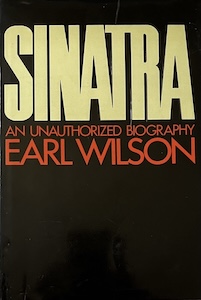
Sinatra: An Unauthorized Biography | Earl Wilson
When celebrated newspaper columnist Earl Wilson dared to pull back the curtain on Frank Sinatra in 1976, he created something extraordinary: a no-holds-barred portrait of America’s most enigmatic entertainer while Ol’ Blue Eyes was still commanding stages and headlines.
This wasn’t just another celebrity biography—it was a deep dive into the tempestuous world of a living legend. Wilson masterfully weaves together Sinatra’s meteoric career, his passionate romances, his headline-grabbing controversies, and the contradictions that made him endlessly fascinating. Rare photographs punctuate the narrative, offering intimate glimpses into moments both public and private, revealing the complex, sometimes volatile personality behind the velvet voice.
For Sinatra devotees and collectors, the hardcover first edition has become a prized treasure—a time capsule capturing the Chairman of the Board at the height of his powers. What makes this biography particularly compelling is its audacity: published without Sinatra’s blessing during his reign as an entertainment titan, it stands as both a fearless piece of journalism and an invaluable historical record.
Whether you’re a devoted fan or a cultural historian, Wilson’s unauthorized portrait remains essential reading—a vivid snapshot of Sinatra in full swing, controversy and all.
Sinatra: An Unauthorized Biography ~ 1976 | Earl Wilson
Daily Dose Of Jazz…
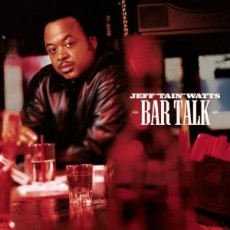
Jeff “Tain” Watts: The Drummer Who Redefined What’s Possible Behind the Kit
Ever wonder how a classical timpanist becomes one of jazz’s most explosive and innovative drummers? Jeff “Tain” Watts’ journey is the answer—and it’s a masterclass in fearless evolution.
From Orchestral Precision to Jazz Freedom
Born January 20, 1960, Watts started his musical life studying classical percussion at Pittsburgh’s Duquesne University, where he focused primarily on orchestral timpani—all precision, discipline, and controlled power. But then came Berklee College of Music, where everything changed.
Suddenly he was immersed in jazz, studying alongside future stars like Branford Marsalis, guitarist Kevin Eubanks, saxophonist Greg Osby, and even rockers-to-be like Aimee Mann and guitarist Steve Vai, plus fellow drummer Marvin “Smitty” Smith. The competitive, creative energy of that environment was electric, and Watts absorbed it all.
The Marsalis Years Launch a Career
In 1981, Watts joined Wynton Marsalis’ quartet, and the results were immediate and spectacular—three Grammy Awards with that ensemble alone. His drumming was different: polyrhythmic complexity, startling dynamics, classical precision married to jazz swing. He wasn’t just keeping time; he was participating in every conversation happening on the bandstand.
When he left Wynton’s group in 1988, the work kept pouring in: sessions and tours with guitarist George Benson and pianist/vocalist Harry Connick Jr., the thunderous pianist McCoy Tyner. Then in 1989, he joined Branford Marsalis’ quartet, beginning a musical partnership that continues to this day—a relationship built on mutual respect, creative trust, and the kind of telepathic communication that only comes from thousands of hours on stage together.
Hollywood Comes Calling
A three-year Los Angeles stint brought Hollywood into the mix. Watts became the Tonight Show drummer under Jay Leno, bringing jazz sensibility to America’s living rooms every weeknight. Then he stepped in front of the camera as the character Rhythm Jones in Spike Lee’s classic film Mo’ Better Blues. Not many musicians can say they’ve conquered both sides of the entertainment industry with equal authority.
Back to New York, Forward in Music
Returning to New York in 1995, Watts joined saxophonist Kenny Garrett’s powerhouse band while maintaining his connection with Branford and constantly expanding his collaborator list to read like a who’s who of modern jazz: pianist Danilo Pérez, saxophonist Michael Brecker, vocalist Betty Carter, pianist Kenny Kirkland, saxophonist Courtney Pine, pianist Geri Allen, harpist Alice Coltrane, saxophonist Steve Coleman, pianist Gonzalo Rubalcaba, saxophonist Ravi Coltrane, pianist George Cables—the list goes on and on.
The Story Behind “Tain”
Oh, and that nickname “Tain”? Pianist Kenny Kirkland gave it to him while they were touring through Florida, passing a Chieftain gas station. Kirkland started calling him “Chief,” which morphed into “Tain,” and it stuck. Sometimes the best stories are the simplest ones.
A Remarkable Distinction
Watts won a Best Instrumental Solo Grammy in 2010 for “Dark Key Music,” but perhaps his most remarkable distinction is this: he’s the only musician to appear on every single Grammy Award-winning jazz record by both Wynton and Branford Marsalis. That’s not luck—that’s being essential.
Composer and Visionary
As a composer, Watts brings the same creativity and innovation to writing that he does to drumming, contributing most of the original compositions on his own albums as a leader. His music is as thoughtful and complex as his playing—proof that the mind driving those hands is always working, always searching.
Never Standing Still
From classical timpani to redefining modern jazz drumming, from network television to intimate club dates, from sideman to bandleader to composer, Jeff “Tain” Watts proves that the best musicians never stop evolving, never stop pushing boundaries, and never, ever play it safe.
The drums chose him. Classical music trained him. Jazz liberated him. And we’re all the richer for it.
More Posts: drums
Daily Dose Of Jazz…
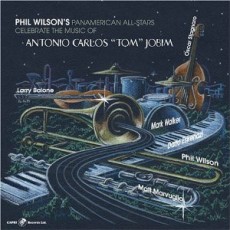
Phil Wilson: The Trombonist Who Turned a Challenge Into a Triumph
Here’s a story that proves sometimes the detours life throws at you lead exactly where you’re meant to be.
An Unexpected Path to Music
Born Phillips Elder Wilson, Jr. on January 19, 1937, in Belmont, Massachusetts, young Phil started out on piano like so many kids do. But when teachers noticed he had a mild form of dyslexia, they suggested switching to trombone—an instrument where reading music might come easier for him, where the physical act of playing could help compensate for the visual challenges. That simple suggestion changed everything.
Not only did the condition fail to slow him down, but by age fifteen Wilson had already turned professional. Talk about finding your calling early. What could have been an obstacle became a launching pad.
Making His Mark on the Big Band Scene
The late 1950s saw him playing with Herb Pomeroy’s respected Boston-based band (1955-57), then hitting the road with the legendary Dorsey Brothers. The 1960s brought him into Woody Herman’s celebrated Thundering Herd, and soon he was writing sophisticated arrangements for the explosive Buddy Rich. Wilson wasn’t just playing trombone in these organizations—he was actively shaping their sound, contributing ideas, pushing boundaries.
Leader and Educator
By the mid-1960s, he’d begun recording as a leader, eventually releasing fourteen albums over his career that showcased his warm tone, technical command, and compositional vision. But perhaps his most lasting impact has been as an educator—and this is where Wilson’s story becomes truly inspiring.
When Wilson joined the Berklee College of Music faculty in 1965, he didn’t just teach private lessons and cash his checks. He built something special. The ensemble he formed became one of the most respected college jazz bands in the country, a proving ground for countless future professionals who’ve gone on to shape contemporary jazz. For students, playing in Wilson’s ensemble wasn’t just an educational experience—it was a rite of passage.
His influence extended beyond Berklee, too, as he served as chairman of the jazz division at the New England Conservatory of Music, helping shape curriculum and philosophy at two of America’s most important jazz institutions.
Still Going Strong
Decades later, Phil Wilson continues doing what he’s always done: composing new works, performing when the spirit moves him, and teaching the next generation with the same passion and patience that defined his early years in the classroom.
The Power of Adaptation
From a kid who struggled with reading to a master trombonist, composer, arranger, and educator who’s fundamentally shaped American jazz education—that’s not just overcoming obstacles. That’s redefining what’s possible. That’s proving that sometimes what looks like a limitation is actually an invitation to find your true voice.
Sometimes the instrument chooses you. And sometimes, when you let it, it changes not just your life but the lives of thousands of students who pass through your classroom over half a century.
That’s Phil Wilson’s legacy: a career built not despite a challenge, but because he and his teachers found the perfect creative response to it.
More Posts: trombone
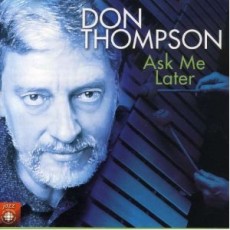
Daily Dose Of Jazz…
Don Thompson: The Triple-Threat Canadian Who Could Do It All
What if you could sit down at the piano, pick up a bass, or grab the vibes and master all three at the highest professional level? That’s not a hypothetical. That’s Don Thompson’s reality.
A Vancouver Beginning
Born Donald Winston Thompson on January 18, 1940, in Powell River, British Columbia, he was already gigging around Vancouver by age 20, freelancing primarily on bass but always ready to switch instruments as the music demanded. He led his own groups, played with the city’s top jazz ensembles, and became a familiar face and sound on Canadian radio and television. The kid from Powell River was going places.
The Call to San Francisco
Then came 1965 and the opportunity that changed everything: saxophonist John Handy’s acclaimed quintet needed a bassist, which meant relocating to San Francisco. Thompson toured extensively across the United States, recorded two Columbia Records albums with Handy, and suddenly found himself crossing paths with heavyweight players like trombonist Frank Rosolino, trumpeter Maynard Ferguson, pianist Denny Zeitlin, and keyboardist George Duke. The West Coast jazz scene was thriving, and Thompson was right in the middle of it.
Toronto and the Boss Brass
By 1967, Thompson had relocated to Toronto, and in 1969 he joined Rob McConnell’s legendary Boss Brass, first as percussionist, then bassist, then pianist over the course of six years. Talk about job security through sheer versatility! The 1970s also brought him into saxophonist Moe Koffman’s orbit, where he contributed not just bass and piano but also sophisticated arrangements and original compositions. Thompson wasn’t just a hired gun; he was a complete musician.
A Passport Full of Jazz History
Thompson’s travel documents tell their own story: European and Japanese tours with the elegant guitarist Jim Hall, countless nights as part of Toronto’s famed Bourbon Street Jazz Club “house rhythm section” (backing whoever came through town), and collaborations with an almost absurd roster of legends Paul Desmond, Art Farmer, James Moody, Zoot Sims, Clark Terry, Harry “Sweets” Edison, Slide Hampton, Abbey Lincoln, Sarah Vaughan, Sheila Jordan, Joe Henderson, Dewey Redman… and the list keeps going.
Each collaboration revealed a different side of Thompson’s musical personality. Need a supportive, swinging bassist? He’s got you. Want intricate harmonic accompaniment at the piano? No problem. Looking for shimmering vibraphone colors? Done. The man could do it all, and do it with taste, intelligence, and deep listening.
Recognition and Continuation
Awards have piled up over the decades, albums as both leader and sideman fill the discography, and Thompson has earned recognition as one of Canada’s most important jazz musicians. But accolades haven’t slowed him down, today he continues doing what he’s always done: freelancing, teaching the next generation, playing with the band JMOG, and leading his own quartet when the mood strikes.
The Ultimate Team Player
Three instruments. Countless collaborations across six decades. One remarkable career that proves sometimes the best musicians are the ones who refuse to be limited by a single chair on the bandstand.
Don Thompson never became a household name, and he probably wouldn’t want to be one. But ask any serious jazz musician who’s played in Canada or toured through Toronto, and they’ll tell you: when Don Thompson walks into the room, whether he’s heading for the piano, the bass, or the vibes, you know you’re about to make some beautiful music.
That’s a legacy worth celebrating.
More Posts: bass