

Daily Dose Of Jazz…
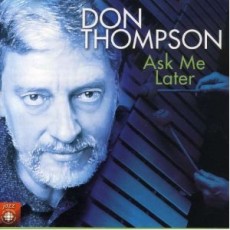
Don Thompson: The Triple-Threat Canadian Who Could Do It All
What if you could sit down at the piano, pick up a bass, or grab the vibes and master all three at the highest professional level? That’s not a hypothetical. That’s Don Thompson’s reality.
A Vancouver Beginning
Born Donald Winston Thompson on January 18, 1940, in Powell River, British Columbia, he was already gigging around Vancouver by age 20, freelancing primarily on bass but always ready to switch instruments as the music demanded. He led his own groups, played with the city’s top jazz ensembles, and became a familiar face and sound on Canadian radio and television. The kid from Powell River was going places.
The Call to San Francisco
Then came 1965 and the opportunity that changed everything: saxophonist John Handy’s acclaimed quintet needed a bassist, which meant relocating to San Francisco. Thompson toured extensively across the United States, recorded two Columbia Records albums with Handy, and suddenly found himself crossing paths with heavyweight players like trombonist Frank Rosolino, trumpeter Maynard Ferguson, pianist Denny Zeitlin, and keyboardist George Duke. The West Coast jazz scene was thriving, and Thompson was right in the middle of it.
Toronto and the Boss Brass
By 1967, Thompson had relocated to Toronto, and in 1969 he joined Rob McConnell’s legendary Boss Brass, first as percussionist, then bassist, then pianist over the course of six years. Talk about job security through sheer versatility! The 1970s also brought him into saxophonist Moe Koffman’s orbit, where he contributed not just bass and piano but also sophisticated arrangements and original compositions. Thompson wasn’t just a hired gun; he was a complete musician.
A Passport Full of Jazz History
Thompson’s travel documents tell their own story: European and Japanese tours with the elegant guitarist Jim Hall, countless nights as part of Toronto’s famed Bourbon Street Jazz Club “house rhythm section” (backing whoever came through town), and collaborations with an almost absurd roster of legends Paul Desmond, Art Farmer, James Moody, Zoot Sims, Clark Terry, Harry “Sweets” Edison, Slide Hampton, Abbey Lincoln, Sarah Vaughan, Sheila Jordan, Joe Henderson, Dewey Redman… and the list keeps going.
Each collaboration revealed a different side of Thompson’s musical personality. Need a supportive, swinging bassist? He’s got you. Want intricate harmonic accompaniment at the piano? No problem. Looking for shimmering vibraphone colors? Done. The man could do it all, and do it with taste, intelligence, and deep listening.
Recognition and Continuation
Awards have piled up over the decades, albums as both leader and sideman fill the discography, and Thompson has earned recognition as one of Canada’s most important jazz musicians. But accolades haven’t slowed him down, today he continues doing what he’s always done: freelancing, teaching the next generation, playing with the band JMOG, and leading his own quartet when the mood strikes.
The Ultimate Team Player
Three instruments. Countless collaborations across six decades. One remarkable career that proves sometimes the best musicians are the ones who refuse to be limited by a single chair on the bandstand.
Don Thompson never became a household name, and he probably wouldn’t want to be one. But ask any serious jazz musician who’s played in Canada or toured through Toronto, and they’ll tell you: when Don Thompson walks into the room, whether he’s heading for the piano, the bass, or the vibes, you know you’re about to make some beautiful music.
That’s a legacy worth celebrating.
More Posts: bass
Daily Dose Of Jazz…
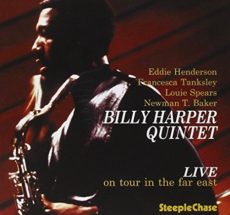
Billy Harper: The Tenor Titan Who Sang Before He Could Speak Jazz
Long before Billy Harper picked up a tenor saxophone, he was already making music with his voice. Born January 17, 1943, in Houston, Texas, he was singing choral and solo pieces at both secular and sacred events by age five. Music wasn’t something he discovered, it was something already flowing through him, as natural as breathing.
A Prodigy Finds His Instrument
By 14, while still attending Worthing High School, Harper had already formed his first Billy Harper Quintet, a remarkably ambitious move for a teenager. After graduating cum laude, he headed to North Texas State University to study saxophone and music theory, joining their powerhouse big band that was already legendary in jazz education circles. In 1965, the ensemble took first prize at the Kansas Jazz Festival, with Harper’s passionate tenor playing catching the attention of everyone in earshot.
The Move That Changes Everything
The following year, 1966, Harper made the pilgrimage every serious jazz musician eventually makes: New York City. His Coltrane-influenced sound—spiritually intense, harmonically sophisticated, and emotionally raw immediately caught ears. Soon he was playing with jazz royalty: two transformative years with drum master Art Blakey, followed by stints with Elvin Jones, the Thad Jones/Mel Lewis Orchestra, Max Roach, Randy Weston, and Gil Evans throughout the 1970s. These weren’t just gigs; they were nightly masterclasses with living legends who had helped define modern jazz.
Global Ambassador, Singular Vision
Harper toured the world with these groups—Africa, Europe, Japan, across the United States—absorbing influences and sharing his sound with audiences everywhere. But it was his work as a leader that truly showcased his unique vision and voice.
His 1973 album Capra Black became a seminal statement of Black consciousness, fusing avant-garde jazz exploration with gospel fervor and political urgency. Then came 1976’s Black Saint, which not only launched the influential Italian label of the same name but announced Harper as a major international force—a composer, bandleader, and conceptualist with something important to say.
A Prolific Career
With over twenty albums to his name and collaborations with flutist Bobbi Humphrey, trumpeter Lee Morgan, and pianist McCoy Tyner (among many others), Harper has spent recent decades recording primarily for the respected Steeplechase and Evidence labels, documenting his continuing evolution as an artist.
Giving Back
And he’s never stopped teaching—generously sharing his hard-won knowledge at Livingston College, Rutgers University, and The New School of Jazz and Contemporary Music, earning grants and awards along the way. For Harper, passing on the tradition is as important as extending it.
Still Blowing Strong
He continues touring the globe, still delivering that powerful, spiritually charged tenor sound that’s unmistakably his own. His playing carries the weight of gospel testifying, the intellectual rigor of advanced harmonic thinking, and the emotional honesty of someone who’s lived deeply and honestly through their music.
From Houston church choirs to the world’s greatest concert halls and jazz festivals—that’s a journey worth listening to. And Billy Harper is still writing new chapters.
More Posts: saxophone
Daily Dose Of Jazz…
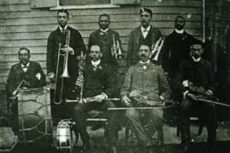
John Robichaux: The Forgotten King of New Orleans Dance Bands
Before there was Louis Armstrong, before jazz became the word on everyone’s lips, there was John Robichaux—a Creole musician born January 16, 1866, in Thibodaux, Louisiana, who quietly ruled New Orleans’ dance scene for nearly half a century.
A Multi-Instrumentalist’s Rise
Picture a young man learning brass bass, alto saxophone, and drums, then maturing into a 25-year-old bass drummer with the prestigious Excelsior Brass Band—one of New Orleans’ most respected musical institutions. But Robichaux wasn’t content to simply keep the beat. From 1892 to 1903, while still performing with the Excelsior, he was simultaneously leading his own ensembles and adding violin to his growing arsenal of instruments. The man believed in keeping busy.
The Bandleader New Orleans Trusted
Here’s what makes his story remarkable: Robichaux’s bands weren’t just popular—they were the bands to hire if you wanted class, precision, and professionalism. At one point in 1913, he was conducting a staggering 36-piece orchestra. Imagine coordinating that many musicians in the early 20th century, long before modern amplification or recording technology!
His reputation attracted New Orleans’ finest musicians—legends like guitarist Bud Scott, clarinetist Lorenzo Tio Jr., and cornetist Manuel Perez all played under his baton. When you could attract that caliber of talent, you weren’t just running a band—you were running an institution.
Forty-Six Years at the Top
For an astonishing 46 years, Robichaux was the most continuously active dance bandleader in New Orleans. Forty-six years! That’s longer than most entire careers, a testament to both his musical excellence and his business acumen in an incredibly competitive city.
When History Changed the Game
But history has a way of complicating even the greatest success stories. When Louisiana’s Black Code amendment passed in 1894, it reclassified Creoles of color, throwing Robichaux’s refined Creole orchestras into direct competition with the grittier Uptown Negro bands that played a rawer, more improvisational style. The musical landscape was shifting beneath his feet, gradually eroding the dominance he’d worked decades to build.
A Prolific Legacy
Still, Robichaux persisted with remarkable productivity. Over his career, he composed more than 350 songs and orchestral arrangements—a staggering output that speaks to both his creativity and work ethic. He remained primarily in New Orleans, occasionally touring with the traveling musical revue One Mo’ Time, but always returning to the city that made him.
The Bridge Between Eras
When John Robichaux died of natural causes in 1939, an entire era of New Orleans music died with him. He represents a crucial bridge between the city’s formal, European-influenced dance orchestras and the raw, revolutionary jazz that would soon conquer the world. His bands were where young musicians learned discipline, arrangement, and professionalism before they went off to create something entirely new.
History remembers the revolutionaries, but it often forgets the masters who created the foundation upon which revolutions are built. John Robichaux deserves better than footnote status—he deserves recognition as one of the architects of New Orleans’ musical golden age.
More Posts: bandleader,drums,violin
Daily Dose Of Jazz…
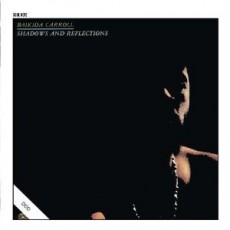
Baikida Carroll: From St. Louis Streets to the Avant-Garde
Some musicians are born into jazz, literally. Baikida Carroll arrived on January 15, 1947, in St. Louis, Missouri, as the son of tenor saxophonist Jimmy Harris. Music wasn’t just in the house; it was the family business, the air he breathed, the language spoken at the dinner table.
A High School Band for the Ages
As a teenager, Carroll played trumpet in his high school band alongside a young pianist named Donny Hathaway (yes, that Donny Hathaway), while studying theory with his mentor Vernon Nashville. Through the All-City Jazz Band, he connected with future innovators Lester Bowie, J.D. Parran, and James Jabbo Ware. These weren’t just bandmates, they were co-conspirators in what would become the future of creative jazz.
Learning the Craft, Breaking the Rules
Carroll sharpened his technical skills at Southern Illinois University and the Armed Forces School of Music, building a foundation solid enough to support the experimental flights to come. Then he dove headfirst into St. Louis’s Black Artists Group (BAG), where he directed their groundbreaking free jazz ensemble. The 1970s found this revolutionary collective recording in Europe, pushing boundaries and redefining what jazz could be communal, spiritual, and liberated from commercial constraints.
Walking Both Sides of the Street
But here’s what makes Carroll fascinating: he never stayed in one lane. During that same decade, while exploring the outer reaches of avant-garde expression, he was also gigging with blues and R&B royalty—Albert King, Little Milton, Fontella Bass, and Tina Turner. Between gigs, he took master classes with legends like Oliver Nelson, Thad Jones, Ron Carter, Mel Lewis, Phil Woods, and Roland Hanna. Talk about range. Talk about refusing to be boxed in.
A Staggering Body of Work
His discography tells the full story: four albums as a leader and over thirty as a sideman, collaborating with an astonishing roster that includes Sam Rivers, Carla Bley, Steve Lacy, Anthony Braxton, Oliver Lake, Jack DeJohnette, Muhal Richard Abrams, and Julius Hemphill, among many others. Each collaboration reveals a different facet of his musical personality—from tender balladry to explosive free improvisation.
Beyond the Bandstand
Theater called to him too, with credits spanning productions from Cat on a Hot Tin Roof to Having Our Say. Fellowships, awards, board positions, Carroll’s contributions to music and the arts run deep and wide, extending far beyond his trumpet playing into education, advocacy, and community building.
Multiple Lifetimes, One Musician
This is a musician who’s lived multiple lifetimes within jazz, each one worth exploring, each one revealing new dimensions of what’s possible when you refuse to choose between tradition and innovation, between accessibility and experimentation, between commercial viability and artistic integrity.
Baikida Carroll didn’t just play the trumpet. He used it to ask questions, challenge assumptions, and remind us that jazz has always been about freedom, musical, personal, and otherwise.
More Posts: trumpet
Daily Dose Of Jazz…
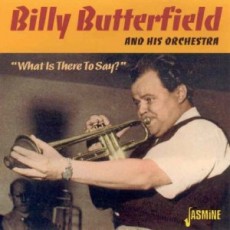
Billy Butterfield: The Trumpet Player Who Almost Became a Doctor
What if one of jazz’s most lyrical trumpet voices had ended up in a white coat instead of on a bandstand? Billy Butterfield, born January 14, 1917, in Middletown, Ohio, started out on cornet as a kid, then pivoted to pre-med studies before the irresistible pull of music brought him back—and thank goodness it did.
A Warm Tone Finds Its Audience
By the late 1930s, Butterfield’s warm, singing tone was turning heads when he joined Bob Crosby’s swinging orchestra. From there, he became the go-to trumpeter for the era’s biggest bandleaders—Artie Shaw, Les Brown, and Benny Goodman all recognized what they had when Butterfield stepped up to the microphone. His sound wasn’t about flash or fury; it was about beauty, control, and emotion that could break your heart.
War, Then a Perfect Recording
When World War II called, Butterfield served from 1943 to 1947, leading his own Army orchestra and bringing music to troops who desperately needed it. After the war, he signed with Capitol Records and delivered one of those perfect moments that defines an era: “Moonlight in Vermont,” featuring Margaret Whiting’s ethereal vocals floating over his exquisite muted trumpet. It’s the kind of recording that still stops people in their tracks seventy years later.
Leading His Own Way
The 1950s brought fruitful collaborations with arranger Ray Conniff, and by the 1960s, Butterfield was leading his own orchestra for Columbia Records—proof that the sideman had grown into a compelling leader. But perhaps his most enduring partnership came in the late 1960s when he joined the aptly named World’s Greatest Jazz Band alongside fellow trumpeter Yank Lawson and bassist Bob Haggart. It was a dream team of veteran musicians playing classic jazz with authority and joy, and Butterfield remained with them until his final days.
A Life Well Played
Throughout it all, Butterfield stayed busy as a sought-after guest artist, bringing his mastery of trumpet, flugelhorn, and cornet to stages around the globe. Whether in an intimate club or a grand concert hall, that distinctive tone—thoughtful, melodic, perfectly controlled—made every performance memorable.
A Legacy in Every Note
Billy Butterfield left us on March 18, 1988, but that gorgeous sound—warm as a summer evening, clear as a bell, romantic without being sentimental—lives on in every recording. The medical profession’s loss became jazz’s eternal gain.
Sometimes the world needs a great doctor. But sometimes it needs a trumpet player who can make “Moonlight in Vermont” sound like the most beautiful thing you’ve ever heard. Billy Butterfield was that player, and we’re all the richer for the choice he made.
More Posts: bandleader,flugelhorn,trumpet