

Daily Dose Of Jazz…
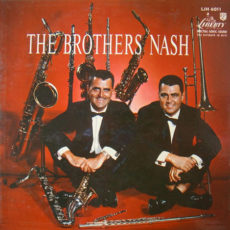
Dick Nash: The Trombone Voice Behind Hollywood’s Golden AgeRichard Taylor Nash was born on January 26, 1928, in Boston, Massachusetts, and discovered brass instruments at age ten but it was tragedy that would deepen his commitment to music. After his parents’ death, while living in boarding school, the young Nash threw himself into trumpet and bugle, finding solace and purpose in the discipline and beauty of making music. What began as comfort became calling.
From Big Bands to the Studio
Nash’s first professional work came in 1947 with bands like Tex Beneke’s popular ensemble, a solid apprenticeship with a name bandleader. After serving in the Army, where he continued playing, he joined Billy May’s swinging outfit, gaining experience in the competitive world of post-war big bands.
But Nash’s real destiny was waiting in Los Angeles, where he would become one of the most sought-after studio musicians in the entertainment capital of the world. When producers needed a trombonist who could nail it on the first take, who could read anything, who could deliver both technical perfection and emotional depth, they called Dick Nash.
Mancini’s Secret Weapon
Nash became the favorite trombonist of composer and conductor Henry Mancini, and if you know Mancini’s work, you understand the honor that represents. Mancini wrote sophisticated, jazz-inflected scores that required musicians who could swing, play with taste, and capture specific moods with just a few perfectly placed notes.
Nash was the featured trombone soloist on several iconic Mancini soundtracks: the cool, late-night jazz of Mr. Lucky and Peter Gunn, the exotic adventure of Hatari!, the wistful romance of Breakfast at Tiffany’s, and the achingly beautiful melancholy of The Days of Wine and Roses.
If you’ve ever heard that gorgeous trombone solo floating over “Moon River” or punctuating the Peter Gunn theme, that’s Dick Nash—his sound became part of America’s collective musical memory, even if most listeners never knew his name.
Equally at Home in Jazz
But Nash wasn’t just a studio musician grinding out commercial work. By 1959, he was playing bass trombone on saxophonist Art Pepper’s brilliant Art Pepper + Eleven: Modern Jazz Classics session—a challenging, ambitious album that showcased Nash’s ability to function in pure jazz settings alongside one of the West Coast’s most intense improvisers.
A Who’s Who of Collaborations
Over the course of his career, Nash remained predominantly associated with swing and big band genres, but his résumé reads like a directory of 20th-century popular music greatness. Besides working on countless film scores, the trombonist performed and recorded with Quincy Jones, Ella Fitzgerald, Harry James, Count Basie, Oscar Peterson, Louie Bellson, Nat King Cole, Mel Tormé, June Christy, Stan Kenton, Les Brown, Don Ellis, Jimmy Witherspoon, Frank Sinatra, Lena Horne, Peggy Lee, Erroll Garner, Anita O’Day, Teresa Brewer, Randy Crawford, The Manhattan Transfer, Sonny Criss… and the list goes on.
The Ultimate Professional
Think about that range: from Basie’s driving swing to Sinatra’s intimate balladry, from Kenton’s progressive big band experiments to Ellis’ avant-garde explorations, from pop sessions to pure jazz dates. Nash could do it all, and do it with the kind of musicality that elevated everything he touched.
The Invisible Artist
Dick Nash represents a particular kind of musical excellence that often goes unrecognized: the studio musician who serves the music rather than their own ego, who makes everyone around them sound better, whose artistry is heard by millions but whose name remains known primarily to fellow musicians and serious fans.
He didn’t need the spotlight. He was the light—illuminating countless recordings, soundtracks, and live performances with his warm tone, impeccable technique, and deep musicality.
From a grieving boy in boarding school finding comfort in a bugle to becoming Henry Mancini’s go-to trombonist and one of the most recorded musicians in American history, Dick Nash’s journey reminds us that sometimes the greatest artists are the ones who help others shine.
And if you’ve ever been moved by a film score, charmed by a classic pop recording, or thrilled by a big band arrangement, there’s a good chance Dick Nash’s trombone was part of what made you feel that way—even if you never knew it.
More Posts: trombone
Requisites
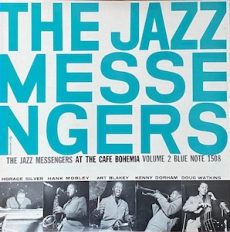
The Jazz Messengers at The Café Bohemia, Volume 2 | By Eddie Carter
Submitted for your approval this morning, we’re returning to the little jazz club at 15 Barrow Street to see The Jazz Messengers at The Café Bohemia, Volume 2 (Blue Note BLP 1508). Returning to the stage are Kenny Dorham on trumpet, Hank Mobley on tenor saxophone, Horace Silver on piano, Doug Watkins on bass, and Art Blakey on drums. The copy I own is the 1978 King Record Company Japanese mono reissue, sharing the original catalog number. Just as he did to start the evening, Art once again greeted the audience, encouraging any latecomers to settle in and enjoy themselves as The Jazz Messengers got things rolling.
The opening selection, Sporting Crowd, is a lively Hank Mobley original that’s off to the races with Blakey and the rhythm section’s rocking introduction, leading into the ensemble’s swinging, cohesive theme. Kenny kicks off his opening statement with a brass bite in a fiery performance that displays his impeccable chops. Hank launches into a scintillating solo that builds intensity before passing the spotlight to Horace, who impresses in an energetic interpretation. Art has the last word and delivers an electrifying display before the ensemble returns to take the song out.
Art introduces the 1944 jazz standard, Like Someone In Love by Jimmy Van Heusen and Johnny Burke. It first appeared in the film “Belle of the Yukon,” and Blakey would re-record it in 1960, but it remained shelved until 1967, when it was released as the title track of The Jazz Messengers album. The ensemble lovingly honors this beloved tune with a relaxing melody. Kenny retakes the lead, delivering a fine example of delicacy and sensitivity. Hank brings the second solo off in charming style, then Horace wraps up with an easygoing reading before the melody’s reprise and warm applause from the audience.
Art turns the microphone over to Kenny Dorham, who gets the spotlight to himself when he introduces Yesterdays, the beautiful 1933 ballad by Jerome Kern and Otto Harbach. It first appeared in the Broadway musical, “Roberta,” that year and was featured again in the 1935 film. Over the past ninety years, it’s become a beloved jazz standard, cherished and reinterpreted by countless artists. The trumpeter’s performance is a model of thoughtful sensitivity as he delivers a melody of serene beauty. As the song’s only soloist, his interpretation shines with gentle sensitivity, each phrase rendered with graceful elegance and culminating in a thoughtful, reflective conclusion.
Avila and Tequila by Hank Mobley injects renewed energy into the quintet with an uptempo beat, with Art’s Latin-inspired, lively, lengthy percussive introduction leading into the vigorous melody. Hank launches into a searing opening statement that creates a lot of heat. Kenny follows him closely, keeping the fires burning in a robust performance. Horace continues cooking hard with a brisk interpretation, inspiring Doug and Art to propel the beat to a vibrant, swinging peak. The drummer rounds out the solos with a brisk workout, joined by Mobley, Silver, and Watkins, before the ensemble comes together for the swift reprise and enthusiastic ovation.
The album closes with I Waited For You, a 1946 ballad by Dizzy Gillespie and Gil Fuller that hasn’t been over-recorded. Hank opens with a delicately pretty introduction, leading into Kenny’s heartwarming melody. The trumpeter continues embracing a touch of refined artistry in the opening statement. Hank follows, gently navigating the song’s nostalgic beauty in the following interpretation. Horace provides the song’s exclamation point in a beautifully crafted finale, exquisitely conceived and presented, leading into the quintet’s breathtaking climax and a slow fadeout as the group reprises their theme.
Alfred Lion produced The Jazz Messengers at Café Bohemia, Volume 2, along with its companion, while Rudy Van Gelder took care of the recording during the group’s live performance. The King Japanese mono reissue offers fantastic sound quality—clean and lively. It’s truly a delightful listening experience from The Jazz Messengers, showcasing some of the finest in Hard-Bop, just as its companion does. If you’re new to jazz or a longtime fan of the group, I wholeheartedly recommend adding The Jazz Messengers at Café Bohemia, Volume 2 to your library. It’san album that promises a rich and enjoyable musical journey.
~ Like Someone In Love, Yesterdays – Source: JazzStandards.com © 2026 by Edward Thomas Carter
More Posts: choice,classic,collectible,collector,drums,history,instrumental,jazz,music
Daily Dose Of Jazz…
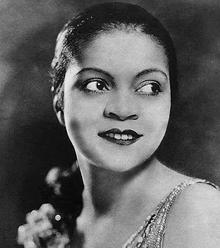
Florence Mills: The “Queen of Happiness” Who Lit Up the Stage Too Briefly
Florence Winfrey was born on January 25, 1895, in Washington, D.C., and from the moment she could carry a tune, it was clear something special was happening. By age six, she was already performing duets with her two older sisters, and soon the trio formed a polished vaudeville act they called “The Mills Sisters.” The act did well enough to draw audiences, but eventually her sisters chose different paths, leaving the stage behind.
Refusing to Give Up the Dream
Florence, however, was determined to pursue a career in show business—quitting simply wasn’t in her vocabulary. She joined forces with Ada Smith, Cora Green, and Carolyn Williams to form a group called the “Panama Four,” which achieved moderate success on the vaudeville circuit. But Mills was destined for something bigger.
The Show That Changed Everything
Her breakthrough came in 1921 when she landed a role in the groundbreaking Broadway musical Shuffle Along. This wasn’t just another show—it’s widely credited with igniting the Harlem Renaissance, proving that Black artists could create commercially successful, artistically excellent work that appealed to integrated audiences. Mills’ performance captivated theatergoers and critics alike.
From there, her star ascended rapidly. She played the legendary Palace Theatre—the ultimate goal for any vaudevillian—and became an international sensation with the hit show Lew Leslie’s Blackbirds, where her signature song “I’m a Little Blackbird Looking for a Bluebird” became an anthem of hope and aspiration that resonated far beyond the footlights.
“The Queen of Happiness”
Mills became known as the “Queen of Happiness” for her effervescent stage presence, delicate yet expressive voice, and winsome, wide-eyed beauty that seemed to radiate joy. She graced the pages of Vogue and Vanity Fair—extraordinary recognition for a Black performer in the 1920s, when such visibility was rare and hard-won.
She wasn’t just entertaining audiences; she was breaking barriers and changing perceptions about what Black artists could achieve on the world stage.
A Tragic, Premature End
But success came at a devastating cost. By 1926, after more than 250 grueling performances of Blackbirds in London, Mills’ health began to fail. Exhausted and weakened, she developed tuberculosis—a disease that was particularly deadly in that era. Then, in a cruel twist of fate, she contracted an infection following an appendicitis operation.
On November 1, 1927, Florence Mills died at just 32 years old, her brilliant light extinguished far too soon.
A Legacy That Endures
Her death sent shockwaves through the entertainment world and the Harlem community. Duke Ellington memorialized her in his haunting composition “Black Beauty,” while Fats Waller paid tribute with “Bye Bye Florence”—both testament to the profound impact she had on her fellow artists.
The residential building at 267 Edgecombe Avenue in Harlem’s prestigious Sugar Hill neighborhood bears her name, ensuring that residents and visitors alike remember the woman who helped put Harlem on the cultural map. And in 2012, author Alan Schroeder introduced a new generation to her story with the children’s book Baby Flo: Florence Mills Lights Up the Stage, published by Lee & Low.
What Might Have Been
It’s impossible not to wonder what Florence Mills might have achieved had she lived longer. At 32, most performers are just hitting their stride. Instead, we’re left with recordings that only hint at her magic, reviews that describe her incandescent presence, and the knowledge that for a brief, shining moment, she was the brightest star in the sky.
The “Queen of Happiness” brought joy to millions but didn’t live long enough to fully enjoy the kingdom she helped create. Her story is both inspiring and heartbreaking—a reminder that talent and determination can change the world, even if the world doesn’t get to keep you as long as it should.
More Posts: vocal
Daily Dose Of Jazz…
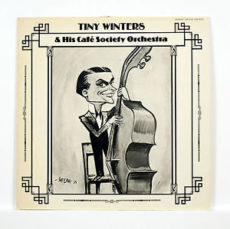
Tiny Winters: The Bassist Who Fooled Fans Into Thinking He Was Ella Fitzgerald
Frederick Gittens was born on January 24, 1909, in London, England, but the jazz world would come to know him by a name that became legendary in British jazz circles: Tiny Winters.
From Violin to the Bass That Swings
He learned violin as a child—a common enough beginning—but something about the double bass called to him. He made the switch and developed a pizzicato style directly inspired by the great New Orleans bassist Pops Foster, whose propulsive walking lines and rhythmic drive had helped define early jazz. Winters was absorbing American jazz from across the Atlantic and making it his own.
Rising Through Britain’s Jazz Scene
By the 1920s, he was already working with the Roy Fox Band, one of Britain’s premier dance orchestras. The 1930s brought collaboration with pianist and arranger Lew Stone, whose sophisticated arrangements were pushing British jazz toward new heights.
But here’s where Winters’ story gets delightfully unusual: he possessed an unusually high vocal range that he put to remarkable use covering Ella Fitzgerald hits. His falsetto was so convincing that he regularly received fan mail addressed to “Miss Tiny Winters.” Imagine the surprise of fans who showed up expecting a female vocalist and discovered a bassist with a four-octave range!
Becoming a Bandleader and Session Ace
Winters went on to play with the elegant Ray Noble, recorded with the great American tenor saxophonist Coleman Hawkins when he visited London, and began leading his own groups by 1936. With his reputation firmly established, he became a regular fixture at the fashionable Hatchett Club while freelancing as a sought-after session player in theatrical orchestras for major productions like Annie Get Your Gun and West Side Story.
Comedy, Television, and New Ventures
Later in his career, Winters played with cornetist Digby Fairweather in the Kettner’s Five, recorded with veteran saxophonist Benny Waters, and became both the bassist and featured comedian with trombonist George Chisholm in The Black and White Minstrel Show—a television variety program that showcased his versatility as an entertainer, not just a musician.
The Final Chapters
During the late 1980s, Winters led the Café Society Orchestra and his own Palm Court Trio, proving that age hadn’t diminished his passion for leading ensembles. He also found time to write his autobiography, cheekily titled It Took a Lot of Pluck—a perfect pun for a bassist whose fingers had plucked millions of notes over seven decades.
When he retired in the 1990s, he did so with honor: Winters was awarded the Freedom of the City of London, a historic recognition that acknowledged not just his musical contributions but his status as a beloved cultural figure.
A Life Well Lived
Bassist, vocalist, comedian, and bandleader Tiny Winters passed away on February 7, 1996, leaving behind a legacy that reminds us jazz wasn’t just an American export—it was reimagined, reinterpreted, and reinvigorated by musicians around the world who made it their own.
From fooling fans with his Ella Fitzgerald impersonations to holding down the bass in London’s finest orchestras for seventy years, Tiny Winters proved that sometimes the most interesting careers are the ones that refuse to fit into neat categories.
More Posts: bass
Daily Dose Of Jazz…
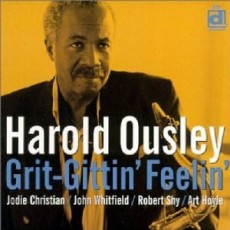
Harold Ousley: The Tenor Voice That Bridged Blues and BebopHarold Lomax Ousley was born January 23, 1929, in Chicago, Illinois—the cradle of electric blues and a proving ground for countless jazz saxophonists. Heavily influenced by the big-toned Gene Ammons, Ousley picked up tenor saxophone and flute in the late 1940s and immediately set about carving out his own path through the rapidly evolving jazz landscape.
Backing the Legends
The 1950s found Ousley in stellar company, recording behind two of the greatest vocalists in American music: Billie Holiday and Dinah Washington. Imagine being the saxophonist supporting Holiday’s weathered, emotionally devastating voice, or matching Washington’s powerful, blues-drenched delivery. That’s the kind of education money can’t buy—you either rise to the occasion or get left behind. Ousley rose.
Throughout that decade, he also worked as a sideman with his idol Gene Ammons, absorbing the older master’s approach to tone, phrasing, and the art of making a ballad sing. The 1960s brought collaborations with organist Jack McDuff and a young guitarist named George Benson who was just beginning to make noise on the jazz scene.
Stepping Into the Spotlight
Ousley released his first record as a leader in 1961: Tenor Sax on the Bethlehem label—a straightforward title for a straightforward player who let his horn do the talking. Over the following decades, he would lead five more sessions for Muse, Cobblestone, Digi-Rom, Tele-Jazz, and Delmark labels, each one showcasing different facets of his musical personality.
His 16-bar blues boogaloo “Return of the Prodigal Son” demonstrated his rhythmic flair and compositional chops, but it became better known as a highlight on George Benson’s popular Cookbook album—sometimes your song becomes famous through someone else’s interpretation, and that’s okay.
Weathering the Changes
During the 1970s, Ousley found himself playing with jazz royalty—Lionel Hampton’s swinging vibes-led ensemble and Count Basie’s legendary orchestra. But the musical landscape was shifting beneath everyone’s feet. Fusion was exploding, electric instruments were taking over, and the acoustic hard bop sound Ousley excelled at was suddenly out of fashion. When mainstream jazz resurged in the 1980s, it often favored younger players.
Rather than become bitter, Ousley adapted. He moved into cable television production, creating programming that featured jazz performances and interviews—using a different medium to keep the music and its stories alive. He didn’t record again until the late 1990s, but he never stopped being part of the jazz community.
A Musical Identity
Though Ousley’s playing resided heavily in blues—that Chicago foundation never left him—he quickly cited Charlie Parker as his first model for the hard bop lines that gave his solos their forward momentum and harmonic sophistication. But perhaps the most overlooked aspect of his artistry was the gentler side: the sweet, caressing sound he brought to ballads, where his tone became butter-smooth and his phrasing unhurried, letting every note breathe.
A Life in Service to the Music
Tenor saxophonist Harold Ousley passed away on August 13, 2015, in Brooklyn, New York, having spent nearly seven decades contributing to jazz as a sideman, leader, collaborator, and documentarian.
He may not have achieved the fame of some of his contemporaries, but Harold Ousley represents something equally valuable: the solid professional who showed up, played beautifully, supported the music and the musicians around him, and kept the tradition alive even when the spotlight moved elsewhere.
That’s not just a career—that’s dedication.
More Posts: saxophone