

Daily Dose Of Jazz…
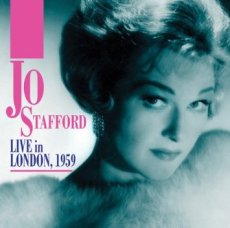
Jo Elizabeth Stafford was born on November 12, 1917 in Coalinga, California. Her mother was an accomplished banjo player who folk songs became of great influence. Her first public singing appearance came in Long Beach when she was 12. She attended Long Beach Polytechnical High School with dreams of a career in opera but with the onset of the Great Depression she joined her sisters and became The Stafford Sisters. Popularity grew and they got their start at KNX Radio when Jo was just 18 and went on to perform at KHJ Radio in Los Angeles
The sisters found work in the film industry as backup vocalists, made their first recording with Louis in 1936 and a year later she created arrangements for Fred Astaire on the soundtrack of “A Damsel In Distress”. Jo went on to join the Pied Pipers, work with Tommy Dorsey in New York, record four sides for RCA Victor and then returned to Los Angeles. After the Dorsey years the group was signed to Johnny Mercer’s new label Capitol Records and started singing on the radio shows of Frank Sinatra, Bob Crosby and Mercer.
In 1944, Stafford left the Pied Pipers going solo, picked up the nickname G.I. Jo for her continuous performance for the US troops, hosted “The Chesterfield Supper Club” and before the decade ended had a couple of million-seller tunes. By the 50s she was doing work for Voice of America, recording at Columbia Records becoming the first artist to sell 25 million records and hosted The Jo Stafford Show on TV. In the Sixties she recorded for Reprise, Warner and Dot record labels in the Sixties, won a Grammy for Best Comedy Album for her performance a part of the comedy duo Jonathan and Darlene Edwards.
Stafford went into semi-retirement in the mid-60s citing the music business as no longer fun and retiring completely in 1975. She devoted her time to charity for those with developmental disabilities. She donated her library to the University of Arizona and was inducted into the Big Band Academy of America’s Golden Bandstand in 2007.
Jo Stafford, singer of jazz standards and tradition pop music whose career spanned thirty years passed away of congestive heart failure on July 16, 2008. Her work in radio, television and music is recognized by three stars on the Hollywood Walk of Fame.

Put A Dose In Your Pocket
More Posts: vocal
Daily Dose Of Jazz…
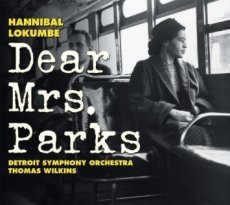
Hannibal Lokumbe was born Marvin Peterson in Smithville, Texas on November 11, 1948. As a child he was inspired by the spirituals and hymns of his grandparents but by 13 was given a trumpet and a year later his band The Soul Masters was backing icons such as Jackie Wilson, Otis Redding, Etta James, Lightning Hopkins and T-Bone Walker.
He attended North Texas State University from 1967 to 1969, and then moved to New York in 1970. Lokumbe spent the next twenty-five years in New York City playing trumpet and recording with some of his jazz heroes including Gil Evans, Pharaoh Sanders, Roy Haynes, Elvin Jones, and McCoy Tyner among many others. In 1974 he formed the Sunrise Orchestra and for more than fifteen years toured the world playing in every major music festival from Istanbul to China.
The recipient of numerous awards including the Bessie’s, the NEA, and a Lifetime Achievement Award from the Detroit Symphony Orchestra, Hannibal has composed works for The Kronos String Quartet, the Philadelphia, Baltimore, Cleveland, Detroit and Houston Symphonies. His groundbreaking opera African Portraits was performed and recorded by The Chicago Symphony under the direction of Daniel Barenboim and has been performed nearly two hundred times since its November 11, 1990 Carnegie Hall debut.
His works range from string quartets to full orchestral and choral compositions; he has written two books of poems, wrote and starred in an autobiographical play entitled Diary of an African American, and has lectured extensively at The University of Pennsylvania and at Harvard University. He currently has a catalogue of 14 recordings as a leader and twenty-two as a sideman having worked with Richard Davis, Grachan Moncur, Elvin Jones, Pharoah Sanders and numerous others. Trumpeter Hannibal Lokumbe steadfastly composes works for choir, jazz and vocal soloist; mentors and teaches children in history, music composition, teaching choral music to his community choir and he also gardens.
Give The Gift Of Knowledge
More Posts: trumpet
Daily Dose Of Jazz…
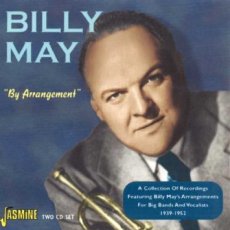
Billy May was born William E. May on November 10, 1916 in Pittsburgh, Pennsylvania and started playing the tuba in the high school band. At seventeen he began playing with Gene Olsen’s Polish-American Orchestra and a few local bands. Hearing Charlie Barnet’s band on the radio, he approached the bandleader in 1938 and asked if he could write arrangements for the band. For the next two years he arranged, played trumpet and recorded with Barnet, with his arrangement of Ray Noble’s Cherokee becoming a major hit during the swing music era.
By 1940 Glenn Miller hired May away from Barnet to arrange, play and record prior to performing the same duties with Les Brown before settling in as staff arranger for the NBC radio network and the n at Capitol Records.
He composed for television with such familiar scores as The Green Hornet, Batman, Naked City and Emergency; and for film Sergeants 3, Pennies from Heaven, Orchestra Wives, Cocoon and Cocoon: The Return among others. While at Capitol Records, Billy’s orchestra backed many of the arrangements he wrote for the top singers, including Frank Sinatra, Nat “King” Cole, Peggy Lee, Vic Damone, Rosemary Clooney, Bobby Darin, Ella Fitzgerald, Johnny Mercer, Jack Jones, Bing Crosby, Nancy Wilson and the list continues.
With his own band, May had a hit single, “Charmaine” though his most famous composition was the children’s song “I Tawt I Taw A Puddy Tat” recorded with Mel Blanc in 1950. He released an album as a leader titled Sorta-May, won a Grammy in 1959 for Best Performance By An Orchestra, went on to work with Verve, Reprise, Warner Bros. and Roulette record labels collaborating with Duke Ellington, Sammy Davis Jr., Petula Clark, Mel Torme, Jo Stafford, Dean Martin and Keely Smith on one of his final musical works. Composer, arranger and trumpeter Billy May passed away on January 22, 2004 at the age 85.
Take A Dose On The Road
More Posts: trumpet

The Jazz Voyager
Full Jazz Hotel: Rua Silveira Peixoto, 1297 – Batel – Curitiba, Brasil / Telephone: (41) 3312.7000 / Slaviero Full Jazz was built and designed for jazz and blues lovers, where you can relax and listen in the bar. Even the hotel location contributes to this musical environment. Then its back into the street and just two blocks away I will get a taste of the city’s nightlife heart, the Batel Avenue, a place with the best options of restaurants and nightclubs in Curitiba.
Next Stop: South Dakota! From Curitiba it’s off to the Queen City of the West in the heart of the Lakota and Dakota Native American Nation on the Great Plains and the largest city in the state of South Dakota, Sioux Falls. Another long plane ride begins at 3:19pm and the 25 hour flight has layovers in Brasilia, Atlanta and Minneapolis before arriving at my final destination at 12:30pm the following day. But I will take advantage of the six hour layover on the first leg of the trip in Brasilia, so for about five hours I can check out the capital city before getting a bit of Europe in America.
Sponsored By

Daily Dose Of Jazz…
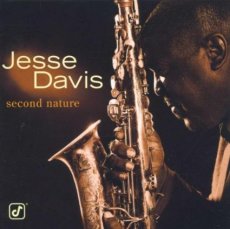
Jesse Davis was born on November 9, 1965 in New Orleans, Louisiana and showed signs of musical talent at a very young age. When he was eleven, his brother Roger, an accomplished tuba player bought Jesse a saxophone and taught him how to play it. He went on to study with Ellis Marsalis, whose teachings inspired him to become a music student at North-Eastern Illinois University on a full scholarship. He eventually transferred to William Patterson College in New Jersey, then to the New School in New York City, enrolling in their Jazz and Contemporary Music Program under the tutelage of Ira Gitler.
After graduating, alto saxophonist Jesse Davis embarked on a productive jazz career and has recorded eight albums on the Concord Jazz label. He has collaborated with such artists as Jack McDuff, Major Holley, Cecil Payne, Jay McShann, Cedar Walton, Benny Golson, Illinois Jacquet Kenny Barron and Roy Hargrove amongst a long list of notables.
Davis has received a “Most Outstanding Musician award” from magazine, won several awards at jazz festivals for outstanding soloist, toured Europe several times fronting his quartet and a member of the Sax Machine and made his debut as an actor in the celebrated Robert Altman movie “Kansas City”.
Jesse was equally influenced by Charlie Parker, Cannonball Adderley and Sonny Stitt and contributes a flawless technique and a natural feeling for the blues to every one of his performances as he continues to perform, record and tour.
Dose A Day – Blues Away
More Posts: saxophone