

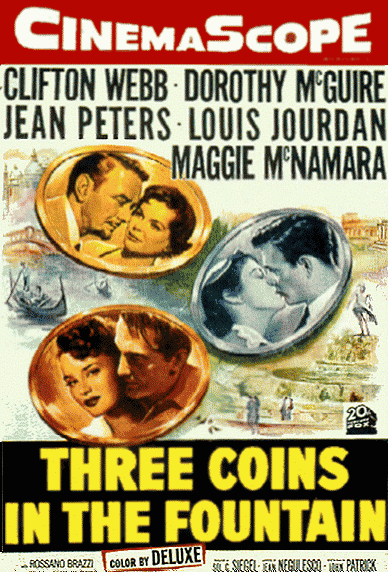
Hollywood On 52nd Street
Three Coins in the Fountain is a popular song, music written by Jule Styne and lyrics by Sammy Cahn for the 1954 romantic comedy film of the same name. Starring Clifton Webb, Dorothy McGuire, Jean Peters Louis Jordan, Rossano Brazzi and Maggie McNamara, the title song was sung by an un-credited Frank Sinatra and went on to become an enduring standard with perpetual encores by jazz musicians. It won an Oscar for Best Original Song at the 27th Academy Awards in 1955.
The Story: Three American women working in Rome dream of finding romance in the Eternal City. That dream is fueled by their belief in the magic of throwing coins into the Trevi Fountain and making a wish.
Sponsored By

www.whatissuitetabu.com
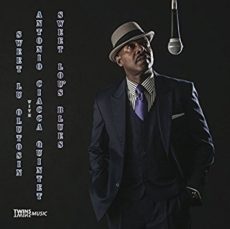
Review: Sweet Lu Olutosin | Sweet Lu’s Blues
When pursuing dreams that extend far beyond the horizon of sight, the journey demands unwavering faith. This not only applies to the visionary but to the listener as well. So on a beautiful sunny afternoon I put my ear buds in and settled down with Sweet Lu’s Blues for what I anticipated would be a wonderful adventure in sound and color. From the very first note of Malcolm’s Song I was transported to a “Gay Paris!” street scene with dancers in colorful attire moving provocatively to Sweet Lu’s words.
Then ever so gently he slips into the romance of falling in love every day with the same woman, deftly followed by the promise of the bittersweet side of love in the blues when a man falls hard. Scatting through Call Him Blackjack he easily moves us to drift into the simple pleasures life has to offer to the adventurous. Turning his attention to the Sinatra classic he slows down to interpret Nancy With The Laughing Face and closing the project with the up-tempo of The Baron, a Latin beat under Be My Mamacita and the title track that had me bopping my head and tapping my foot.
I would do grave dishonor if I failed to give praise for the fine aggregation of musicians that comprise the Antonio Ciacca Quintet. Never the understatement, these voices will become familiar compliments to your ear as they place their signature on this project. The arrangements are fun, exciting and surprising with each track and as the title tune came to a close I unabashedly shouted “Applause, Applause!” to Lutalo Olutosin for a vision that unquestionably hit the sweet spot on the mark.
carl anthony | notorious jazz | november 15, 2014
Give A Gift Of Jazz ~ Share 
#preserving genius
More Posts: bandleader,history,instrumental,jazz,music,review,vocal
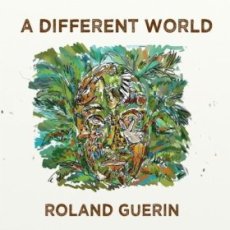
Daily Dose Of Jazz…
Roland Guerin was born on November 15, 1968 into a musical family, first learning music from his bass playing mother. Her sage wisdom taught him that you can’t make it in music without a strong groove and feeling.
While studying marketing at Southern University in Baton Rouge he joined legendary jazz educator Alvin Batiste’s band, The Jazztronauts. Following this stint he toured the world with jazz guitarist Mark Whitfield and during this period he further explored the jazz genre in which he found success.
While exploring his spiritual side, Guerin created a new instrument – a hollow-bodied acoustic six string bass guitar that enabled him to write music for an entire spectrum of genres including pop, rock, R&B, classical, folk, and country.
Roland made his debut as a bandleader in 1998 with his acclaimed “The Winds of the New Land”, and then released four successful albums in the next decade. From 1994 to 2010 Roland was a member of the Marcus Roberts Trio, also regularly enhanced by symphony orchestras.
He would go on to perform with George Benson, Jimmy Scott, Frank Morgan, Vernel Fournier, Gerry Mulligan, Brian Blade, John Scofield, Herlin Riley and Dr. Michael White while recording with Ellis Marsalis, Marcus Roberts, and Allen Toussaint among others.
When he is not touring around the world, Roland is very active on the New Orleans music scene, and has released his last album “A Different World” in 2011.

Inspire A Young Mind
More Posts: bass,bass guitar
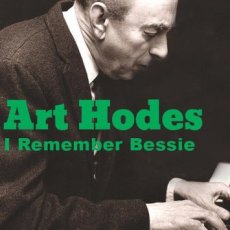
Daily Dose Of Jazz…
Art Hodes was born Arthur W. Hodes on November 14, 1904 in Ukraine, Russia but his family emigrated to the U.S. and settled in Chicago, Illinois when he was just a few months old. Although he gained wider attention once he moved to New York City in 1938, He began his career as a pianist in Chicago playing with Sidney Bechet, Joe Marsala and Mezz Mezzrow.
In the 1940s Art led his own big band that would be associated with his hometown of Chicago, playing mostly in that area for the next forty years. By the late 1960s he starred in a series of TV shows on Chicago style jazz called “Jazz Alley” appearing with greats like Pee Wee Russell and Jimmy McPartland. During this period he also wrote for jazz magazines like Jazz Record and remained an educator and writer in jazz.
He toured the UK in 1987 recording with drummer John Petters, and then returned the next year to play the Cork Jazz Festival with Petters and Wild Bill Davison, followed by a tour with the Legends of American Dixieland.
Over the course of his career he performed and recorded with Louis Armstrong, Wingy Manone, Gene Krupa, Mugsy Spanier, Alert Nicholas and Vic Dickerson among others. Pianist Art Hodes passed away on March 4, 1993 in Harvey, Illinois and was posthumously inducted into the Big Band and Jazz Hall of Fame in 1998.
Give A Gift Of Jazz – Share
More Posts: piano
Daily Dose Of Jazz…
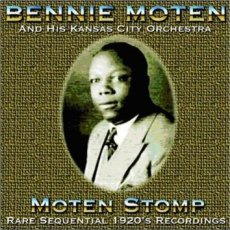
Bennie Moten was born on November 13, 1894 in Kansas City, Missouri. By the time he reached his mid-twenties he was leading the Kansas City Orchestra that was the most important of the itinerant, blues-based orchestras active in the Midwest at the time. The band helped develop the riffing style that would come to define many of the 1930s Big Bands.
Moten first recorded with Okeh Records in 1923 influenced by New Orleans and ragtime. His Victor Records sessions had a more sophisticated sound similar to Fletcher Henderson but featured a hard stomp popular to Kansas City.
By 1928 Bennie’s piano was showing some Boogie Woogie influences, but the real revolution came in 1929 when he recruited Count Basie, Walter Page and Oran “Hot Lips” Page. Walter Page’s walking bass lines gave the music an entirely new feel compared to the 2/4 tuba, colored by Basie’s understated, syncopated piano fills.
Their final session comprised of 10 recordings made in 1932 were made during a time when the band was suffering significant financial hardship but had added Ben Webster and Jimmy Rushing as their primary vocalist. These recordings showed the early stages of what became known as the “Basie Sound” some four years before Basie would record under his own name.
Pianist and bandleader Bennie Moten passed away after an unsuccessful tonsillectomy on April 2, 1935.
Jazz Is Global – Share
More Posts: piano