

Daily Dose Of Jazz…
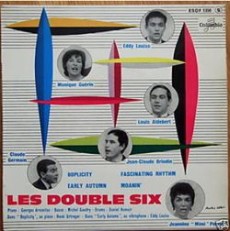
Jeannine “Mimi” Perrin was born February 2, 1926 in France and began private music instruction including piano as a child and pursued English studies at the Sorbonne. Recovering from tuberculosis, in 1949 she hit the French jazz scene in the cabarets of Saint-Germain-des-Pres and came to prominence with her trio. Towards the end of the 50s she worked as a studio background vocalist but was also a member of Blossom Dearie’s vocal group Blue Stars of France.
In 1959, she formed the vocal sextet Les Double Six, alluding to the fact that the group used overdubbing in the studio to sing twelve-part songs. The group became successful in the Sixties patterning itself to the vocalise of King Pleasure and Lambert, Hendricks & Ross. Mimi toured her group throughout Europe and North America recording with Quincy Jones, Dizzy Gillespie and Ray Charles.
Perrin was the leader and principal soloist in the group and established herself as a soloist and one of the great jazz singers with John Coltrane’s “Naima”. A later group, founded in 1966 by Perrin, did not achieve her previous success, and she abandoned music after another bout of tuberculosis.
From 1972 onwards, she worked as a translator of science fiction and fantasy and in the 1980s and 1990, she translated such novels Dean Koontz and John LeCarre as well as Alice Walker’s The Color Purple, along with the biographies of Nina Simone, Dizzy Gillespie, Quincy Jones and Steven Spielberg. Vocalist and pianist Mimi Perrin passed away on November 16, 2010 in Paris, France.
From Broadway To 52nd Street
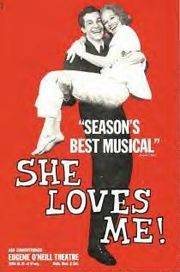
She Loves Me opened the Eugene O’Neill Theatre on April 23, 1963 and the show ran for 301 performances. Sheldon Harnick penned the lyrics and Jerry Bock composed the music to the tune She Loves Me which has entered into the pantheon of jazz standards. The musical starred Barbara Cook, Daniel Massey, Barbara Baxley and Jack Cassidy.
The Story: Set in Hungary in the late 1930s, the story follows two coworkers George and Amalia who unwittingly meet through a Lonely Hearts column. As the two anonymously write love letters to each other, things don’t go so well at work. Not knowing that they are each other’s pen pal, they constantly fight. Further Georg’s boss, Mr. Maraczek, who thinks George is having an affair with his wife, constantly criticizes George at work. Eventually, the boss realizes that another clerk is having the affair. In the end Georg and Amalia discover that they are each other’s pen pal and they fall in love.
Broadway History: The alternative theatre movement aimed to break these commercial and psychological restraints by bonding spectator and audience and by lessening the theatrical illusion of an imagined space and time. Conventional theatre taught the spectator to lose himself in the fictional onstage time, space, and characters; conversely, alternative theatre relied on the spectator’s complete consciousness of the present. This present is the real time and space shared by the audience and the performers; only when the audience consciously perceives the present can they perceive the theatrical experience as relevant to their lives, and not as escapist fiction. The primary importance of the spectator’s consciousness of the present is that he is an active force in creating the theatrical event rather than a passive observer of a ready-made production.
Sponsored By

www.whatissuitetabu.com

Daily Dose Of Jazz…
Joseph Leslie Sample was born February 1, 1939 in Houston, Texas and began playing piano at age five, taking lessons from organ and piano great, Curtis Mayo. While in high school during the 1950s, Sample teamed up with two friends, saxophonist Wilton Felder and drummer Stix Hooper and formed the group “Swingsters”. While studying piano at Texas Southern University he added trombonist Wayne Henderson and several other players to the Swingsters, which evolved into the Modern Jazz Sextet and then the Jazz Crusaders in emulation of Art Blakey’s Jazz Messengers. Prior to graduation in 1960 the Jazz Crusader moved to Los Angeles.
The group quickly found opportunities on the West Coast, making its first recording, Freedom Sounds in 1961 and releasing up to four albums a year over much of the 1960s. The Jazz Crusaders played at first in the dominant hard bop style of the day, standing out by virtue of their unusual front-line combination of saxophone and trombone. Another distinctive quality was the funky, rhythmically appealing acoustic piano playing of Sample, who helped steer the group’s sound into a fusion between jazz and soul[2] in the late 1960s.
In 1969 Sample made his first recording under his own name titled Fancy Dance that was followed by a string of albums such as Rainbow Seeker and Street Life. He continued to record and perform as a solo artist while maintaining steerage of The Crusaders into jazz fusion, changing the name in 1971 which it remained until the group disbanded in 1987.
Sample has had a very successful career working and recording with the likes of Miles Davis, George Benson, Joni Mitchell, Jimmy Witherspoon, B.B. King, Eric Clapton, Steely Dan, The Supremes, Minnie Riperton, Marvin Gaye, Ray Brown, Shelly Manne, Randy Crawford, Anita Baker, Lalah Hathaway, Howard Hewitt, George Duke and Lizz Wright, well into the new millennium.
His song “One Day I’ll Fly Away” was sung by Nicole Kidman in the film Moulin Rouge; and “Rainbow Seeker” is included on the Weather Channel Presents: Smooth Jazz II. Pianist, keyboardist and composer Joe Sample, who has played through various genres of jazz, continued to perform, record and tour with the Coryell Auger Sample Trio with his son Nicklas, who plays bass, until his passing on September 12, 2014 at age 75 in Houston, Texas.
Daily Dose Of Jazz…
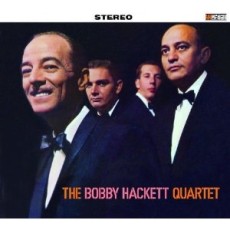
Bobby Hackett was born January 31, 1915 and raised in Providence, Rhode Island. At an early age he played the ukulele and by the time he was twelve, he was playing guitar, violin and had bought his first cornet. Leaving high school after his freshman year he took a steady job with a band that performed seven days a week at the Port Arthur and playing guitar regularly at the Rhodes and Arcadia ballrooms that often broadcasted on Providence radio and when Cab Calloway arrived short-handed and invited him to fill in.
In the fall of 1932 Bobby was recruited by The Herbie Marsh Orchestra, spent the summer of 1933 playing with Payson Re’s band, met Pee Wee Russell, by 1934, and playing college gigs with his band The Harvard Gold Coast Orchestra on weekends between Providence and Boston throughout 1935 and 36.
He worked with a new band at Nick’s in Greenwich Village, with Benny Goodman, Eddie Condon, Jack Teagarden and Teddy Wilson, played the new York World’s Fair in 1939, did the club circuit in New York, toured, recorded with his own band on MCA, took a seat with the Horace Heidt Musical Knights and recorded on the soundtrack of Fred Astaire vehicle “Second Chorus”.
After a dental surgery Bobby’s lip was in bad shape making it difficult for him to play, however, Glenn Miller offered him a job as a guitarist with the Miller Band and playing short trumpet solos. During the 1950s, he made a series of albums of ballads with a full string orchestra, produced by Jackie Gleason, in the Sixties toured with singer Tony Bennett, and by the early 1970s, Hackett performed separately with Dizzy Gillespie and Teresa Brewer. In his later years, he continued to perform in a Dixieland style even as trends in jazz changed.
Trumpeter Bobby Hackett passed away on June 7, 1976 from a heart attack. In 2012, he was selected to be inducted into the Rhode Island Music Hall of Fame.
More Posts: bandleader,cornet,guitar,trumpet
Daily Dose Of Jazz…
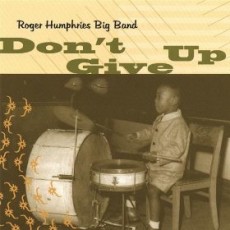
Roger Humphries was born January 30, 1944 in Pittsburgh, Pennsylvania and began playing drums at age four, and went professional at age 14. He led an ensemble at Carnegie Hall at age 16. Early in the 1960s, he began touring with jazz musicians; one of his more prominent gigs was in a trio with Stanley Turrentine and Shirley Scott in 1962.
In 1964, he played with Horace Silver on Song For My Father, following this Humphries drummed for Ray Charles. He led his own band “R. H. Factor” in the 1970s, and led ensembles under other names into the Nineties, recording under his own name in 1993, 2003 and 2011. He held teaching positions at the University of Pittsburgh and the Pittsburgh High School for the Creative and Performing Arts.
Humphries’s list of credits in jazz, R&B, and pop is extensive playing with Lee Morgan, Grant Green, Billy Taylor, Benny Green, Coleman Hawkins, Clark Terry, Dizzy Gillespie, Jack McDuff, Jon Faddis, Joe Williams, Herbie Mann, Gene Harris, Milt Jackson, Slide Hampton and the list goes on. Drummer and big band leader Roger Humphries continues to perform.
More Posts: drums