

The Jazz Voyager
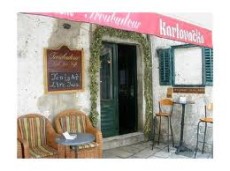
Troubadour Hard Jazz Cafe: 2 Bunic’eva Poljana, Dubrovnik, Croatia / Telephone: 020 323 476 / Run by the Van Bloemen family, who founded the mythical Troubadour in Earl’s Court, London, in 1954, then sold it in 1970 and moved to Dubrovnik. Located in the coastal city it’s a well-known Old Town mainstay, the Troubadour offers al fresco seating and live jazz performances by talented local artists. Offering impromptu concerts, in summer tables spill out onto the piazza with a small wooden stage. Be prepared for steep prices for some of the drinks and cocktails you’ll have a great jazz experience.
Daily Dose Of Jazz…
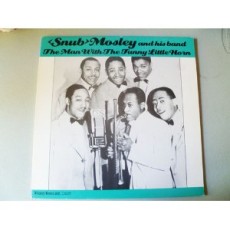
Snub Mosley was born Lawrence Leo Mosley on December 29, 1905 in Little Rock, Arkansas. Playing trombone in high school after graduation he joined Alphonse Trent’s territory band from 1926 to 1933. Following this he played with the Jeter-Pillars Orchestra in 1934, Claude Hopkins from 1934-35, was band mates with Fats Waller and Louis Armstrong with the Luis Russell Orchestra 1936-37. In addition, he led his own groups before settling in New York City.
Though Mosley spent most of his career on trombone, he also invented an instrument called the slide saxophone, which had both the slide portion of a trombone and a saxophone mouthpiece. The instrument is prominently featured in his 1940 recording The Man With The Funny Little Horn. From 1940 to 1978 he recorded for Decca, Sonora, Penguin, Columbia and Pizza record labels.
Trombonist Snub Mosley passed away quietly on July 21, 1981 at his home at 555 Edgecombe Avenue in Harlem, New York City.
More Posts: slide saxophone,trombone

From Broadway To 52nd Street
The Fantasticks opened it season of 418 performances at the Sullivan Theatre on May 3, 1960. The musical starred Jerry Orbach, Rita Gardner, Kenneth Nelson and Tom Jones performing music composed and written by Harvey Schmidt and Tom Jones. Most notably from the show came one tune that would inevitably land in the jazz annals of music – Try To Remember.
The Story: The parents of the boy Matt, and the girl Louisa build a wall between their homes not because of any real animosity but on the assumption that the best way to kindle a romance is to appear to oppose it. They even hire El Gallo to stage a mock rape so Matt can rescue Louisa and seemingly be the hero. The kids discover the parent’s ploy, fall out and go separate ways. Eventually, they return to each other, disillusioned but mature.
Jazz History: In the late 60s, jazz began to feel the full impact of the rock revolution. Important jazz venues shut their doors, major labels abandoned jazz to pursue rock, and many jazz artists left the country for better opportunities abroad. Jazz record sales plummeted as rock sales soared, and younger audiences increasingly chose the Beatles, Jimi Hendrix, or the politically oriented folk music of Bob Dylan over jazz. New hybrids of rock and jazz developed as a result, some fueled by jazz players interested in rock and funk, others by rockers interested in jazz. A few late-60s jazz-rock acts like Blood, Sweat, and Tears and Chicago made inroads onto the pop charts, and some youth culture-oriented jazz artists like Charles Lloyd and Gary Burton scored with rock audiences. Numerous late-60s rockers, including Jimi Hendrix, Eric Clapton, Duane Allman, and many San Francisco bands, also began to extend their solos based on the modal improvisations of John Coltrane and other free jazz innovators.
Sponsored By

www.whatissuitetabu.com
Daily Dose Of Jazz…
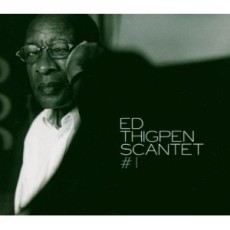
Edmund Leonard Thigpen was born on December 28, 1930 in Chicago, Illinois but was raised in Los Angeles, California where he attended the same high school, Thomas Jefferson, as fellow jazz greats Dexter Gordon, Art Farmer and Chico Hamilton. He majored in sociology at Los Angeles City College, left for East St. Louis to pursue music while living with his father, also a drummer, who played with Andy Kirk’s Clouds of Joy.
Ed first worked professionally in New York City with the Cootie Williams orchestra in 1951 at the Savoy Ballroom, during this decade he played with musicians such as Dinah Washington, Gil Melle, Oscar Pettiford, Eddie Vinson, Paul Quinichette, Charlie Rouse, Lennie Tristano, Jutta Hipp, Johnny Hodges, Dorothy Ashby, Bud Powell and Billy Taylor.
In 1959 he replaced guitarist Herb Ellis in the Oscar Peterson Trio in Toronto, Canada, recorded with Teddy Edwards-Howard McGhee in 1961, led his own 1966 session “Out of the Storm” for Verve, and went on tour with Ella Fitzgerald for five years beginning in 1967.
A move to Copenhagen in 1974 saw Thigpen collaborating with several other American expatriate jazz musicians who over the past two decades had settled in the city such as Kenny Drew, Ernie Wilkins, Thad Jones, along with native Danes Mads Vinding, Niels-Henning Orsted Pederson, Alex Riel and Sven Asmussen. He also worked with visiting musicians Clark Terry, Eddie “Lockjaw” Davis, Milt Jackson and Monty Alexander.
Ed Thigpen, a drummer with over 50 albums to his credit as a leader and sideman, passed away peacefully after a brief period in Copenhagen’s Hvidovre Hospital on January 13, 2010 at the age of 80.
More Posts: drums,percussion
Daily Dose Of Jazz…
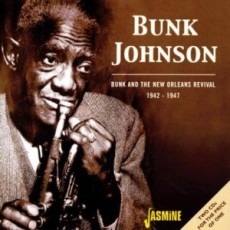
Willie Gary “Bunk” Johnson was born December 27, 1879 although there is some speculation surrounding his birth year as 1889. He received lessons from Adam Olivier, began playing professionally in Olivier’s orchestra and spent some adolescent years occasionally playing with Buddy Bolden’s band.
During the decade 1905-1915 Bunk was regarded as one of the top trumpeters in New Orleans in between repeatedly leaving to tour with minstrel shows and circus bands. In 1931 he lost his trumpet and front teeth when a violent fight broke out at a dance that put an end to his playing. He thereafter worked in manual labor, occasionally giving music lessons on the side when he could.
The later years of the thirties saw writers researching jazz history and trading letters with Johnson in which he stated he could play again if he had new teeth and trumpet. Writers and musicians took up a subsequent collection and got his new dentures via Sidney Bechet’s dentist brother, a new horn and made his first recording in 1942.
This propelled Bunk into public attention, attracting a cult following and he played New Orleans, San Francisco, Boston and New York City. His work in the 1940s show why he was well regarded by his fellow musicians—on his best days playing with great imagination, subtlety and beauty. Earlier fame eluded him for he was unpredictable, temperamental, with a passive-aggressive streak and a fondness for drinking alcohol to the point of serious impairment. In 1948, jazz trumpeter Bunk Johnson suffered from a stroke and died the following year in New Iberia on July 7, 1949.
More Posts: trumpet