

Daily Dose Of Jazz…
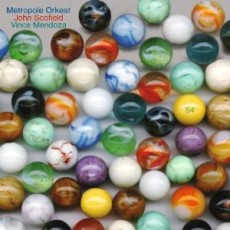
John Scofield was born on December 26, 1951 in Dayton, Ohio but early in his life the family moved to Wilton, Connecticut and it was here that he discovered his interest in music. He attended Berklee College of Music but left to record with Chet Baker and Gerry Mulligan followed by joining the Billy Cobham/George Duke Band touring and recording for two years.
Affectionately known as “Sco”, he went on to record with Charles Mingus, replace Pat Metheny in Gary Burton’s band and in 1976 signed with Enja Records releasing his first album “John Scofield” the next year. He formed his own band with Steve Swallow and Adam Nussbaum in ’70 and joined Miles Davis for three and half years in 1982. Leaving Miles he formed the Blue Matter Band and released three albums, in the nineties he put together a quartet that included Joe Lovano, Charlie Haden and Jack DeJohnette and recorded several albums for Blue Note. Towards the end of his tenure with Blue Note, Scofield returned to a more funk and soul jazz-oriented sound, a direction that has dominated much of his subsequent output to the present.
Scofield has played and collaborated with Joe Henderson, Joey DeFrancesco, Herbie Hancock, Pat Metheny, Bill Frisell, Pat Martino, Mavis Staples, Medeski, Martin & Wood, Jaco Pastorious, John Mayer, Hal Galper and the Metropole Orchestra along with many other well-known artists.
Guitarist John Scofield is at ease in the bebop idiom as well as he is versed in Jazz-fusion, funk, blues, soul, rock and other forms of modern American music and currently is an adjunct professor at NYU’s Steinhardt School of Education.
More Posts: guitar
Daily Dose Of Jazz…
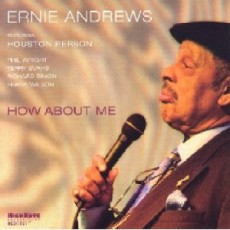
Ernie Andrews was born on December 25, 1927 in Philadelphia, Pennsylvania and spent his earliest years singing in his mother’s church. When he was becoming teen age his family move to Los Angeles, California where he studied drums and continued singing at Jefferson High School. His early influences included Ella Fitzgerald, Billy Eckstine, Al Hibbler, Johnny Mercer, Jimmy Rushing and “Big” Joe Turner.
Discovered by songwriter Joe Greene in 1947 when he won an amateur contest at Central Avenue’s Lincoln Theatre, Ernie was taken into the studio and recorded him at the ripe age of 17.The hit “Soothe Me” sold 300,000 copies and Andrews became a singer to be reckoned with. His next big hit came with Benny Carter called “Make Me A Present Of You” and by this time he was not only working at home but also touring playing clubs, after-hours rooms and concerts.
By 1959, Andrews had joined Harry James’ band, touring the U.S. and South America for nine years, which time he considers his most valuable learning experience. In 1967, he recorded the jazz classic “Big City” with Cannonball Adderley on Capital Records, rejoined James in 68, based himself in Baltimore in ’69, began a solo career and had another big hit with “Bridge Over Troubled Waters”. Her returned to Los Angeles in 1974 where he has resided for more than 50 years.
He has the ear to improvise and a rich resonant voice, and plays his vocal chords as a musician plays his horn. With his special strut, unique mannerisms and a performance that portrays the gamut of emotional experience, he consistently moves audiences to standing ovations. Vocalist Ernie Andrews continued to play clubs, concerts and jazz festivals throughout the world, often performing in Las Vegas, until his transition on February 21, 2022, at the age of 94.

More Posts: vocal
Daily Dose Of Jazz…
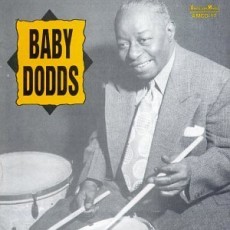
Warren “Baby” Dodds (pronounced “dots”) was born on December 24, 1898 in New Orleans, Louisiana. He was the younger brother of clarinetist Johnny Dodds and is regarded as one of the very best jazz drummers of the pre-big band era, and one of the most important early jazz drummers. Some of his early influences include Louis Cottrell, Harry Zeno, Henry Martin, and Tubby Hall.
Dodds gained reputation as a top young drummer in New Orleans, and worked on Mississippi River steamship bands with young Louis Armstrong. In 1921 moved to California to work with Joe “King” Oliver, and followed Oliver to Chicago, which would be his base of operations.
Dodds recorded with Louis Armstrong, Jelly Roll Morton, Art Hodes, his brother Johnny Dodds and by the late 1940s he worked at Jimmy Ryan’s in New York City. He also worked with Bunk Johnson when he would return to New Orleans. After suffering three strokes in 1949 and 1950, Dodds tutored and played in public irregularly, though he was unable to complete entire performances. In 1954 he played for a Natty Dominique recording session that featured bassist Israel Crosby and pianist Lil Hardin Armstrong.
Dodds was among the first drummers who improvised while performing to be recorded. He varied his drum patterns with accents and flourishes, and he generally kept the beat with the bass drum while playing buzz rolls on the snare. This play would be a long roll that lasted till the following beat, which created a smoother time feel that he later developed into the jazz ride pattern most commonly used ever since. He continues to be admired for the creativity of his playing and he believed in playing something different for every chorus of every tune. Additionally Dodds is perhaps the first jazz drummer to record unaccompanied: in 1945 he recorded two solos for Circle Records, and the next year recorded a series of solos and reminiscences for Folkways Records. Baby Dodds, jazz and Dixieland drummer passed away on February 14, 1959.
More Posts: drums
Daily Dose Of Jazz…
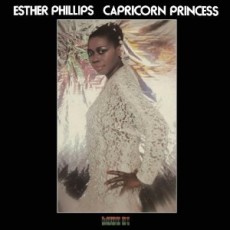
Esther Phillips was born Esther Mae Jones on December 23, 1935 in Galveston, Texas. He parents divorced when she was young and she shared her childhood between Houston and Los Angeles and brought up singing in church. At age fourteen she entered and won a local L.A. amateur talent contest that culminated in a recording with Johnny Otis for Modern Records and added her to his traveling revue, billed as Little Esther Phillips, a name she reportedly took from a gas station sign.
Her first hit record was “Double Crossing Blues” in 1950 for Savoy Records and after several hit records with Savoy that went to number one or hit the Billboard charts in the top ten, she was counted as one of the very few female artists that enjoyed such success in their debut year. She left Otis and Savoy for Federal Records but just a quickly as the hits came, they stopped, in part because she no longer worked with Otis and her increasing drug use that had her addicted by the middle of the decade.
By 1954, she was back home in Houston recuperating with her father, working small nightclubs around the South, punctuated by periodic hospital stays in Lexington, Kentucky, stemming from her addiction. In 1962, Kenny Rogers re-discovered her while singing at a Houston club and got her signed to his brother Lenox label, which assisted in her comeback. From Lenox she went to Atlantic Records, dropped “Little” from her name, and covered the Beatles’ “And I Love Him” and they flew her to the UK for her first overseas performance.
With the ushering in of 1972 she realized one of her biggest with her first album “From A Whisper To A Scream” for Creed Taylor’s Kudu Records with an account of drug use on the lead track in Gil Scott-Heron’s “Home Is Where The Hatred Is”. The song went on to be nominated for a Grammy Award but when Phillips lost to Aretha Franklin, the latter presented the trophy to Phillips, saying she should have won it instead.
While at Kudu she scored her biggest hit single with a disco-style update single of Dinah Washington’s “What A Difference A Day Makes” that reached the U.S. Top 20 and the UK Top 10. The subsequent album had her working with the Brecker Brothers, Joe Beck, David Sanborn, Steve Khan and Don Grolnick. She continued to record and perform throughout the 1970s and early 1980s, completing a total of seven albums on Kudu and four with Mercury Records.
At age 48, Esther Phillips died in Carson, California on August 7, 1984 from kidney and liver failure due to her on-going battle she waged with heroin dependency.
More Posts: vocal

The Jazz Voyager
Café Club del Jazz: Calle 47 42-38 Local 123 – Torres de Bombona, Medellin, Columbia. / Telephone: +574 2169331 / Contact: Christian Salgado. The only club dedicated entirely to Jazz. Offering live music Thursdays and Fridays, as well as lectures and conferences about jazz, video concerts and more. Drinks and food available.