

Daily Dose Of Jazz…
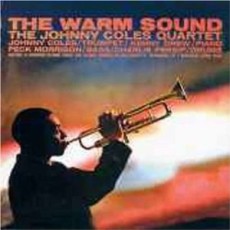
Trumpeter Johnny Coles was born on July 3, 1926 in Trenton, New Jersey. He spent his early career playing with R&B groups, including those of Eddie Vinson, Bull Moose Jackson, and Earl Bostic from 1948-1956). He joined James Moody for two years in 1956, then played with Gil Evans’s orchestra between 1958 and 1964 and was a part of the Miles Davis ensemble on Sketches of Spain.
Following this period, Coles worked with the Charles Mingus sextet which also included Eric Dolphy, Clifford Jordan, Jaki Byard, and Dannie Richmond. From 1968 to 1986 he played with Herbie Hancock, Ray Charles, Duke Ellington, Art Blakey, Dameronia, Mingus Dynasty and the Count Basie Orchestra under Thad Jones’ direction.
Coles recorded as a leader several times over the course of his career for Epic, Blue Note, Mainstream and Criss Cross record labels. As a sideman he recorded sessions with Tina Brooks, Booker Ervin, Grant Green, Horace Parlan and Duke Pearson among others.
Nicknamed “Little Johnny C”, the trumpeter passed away of cancer on December 21, 1997 in Philadelphia, Pennsylvania.
More Posts: trumpet
Daily Dose Of Jazz…
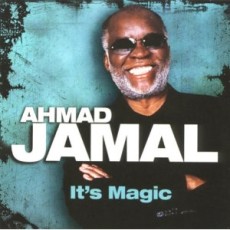
Ahmad Jamal was born Freddy “Fritz” Jones on July 2, 1930, in Pittsburgh, Pennsylvania. A child prodigy, he began playing the piano at the age of three and started formal studies at 7. While attending Westinghouse High School, he completed the equivalent of college master classes under the noted African-American concert singer and teacher Mary Caldwell Dawson and pianist James Miller. Joining the musicians union at 14, he began touring with first the George Hudson Orchestra upon graduation at the age of 17. He followed that employ with The Four Strings, that drew critical acclaim for his solos.
Jamal moved to Chicago in 1950, formed his first trio, The Three Strings and was discovered and signed by record producer John Hammond while performing at New York’s The Embers Club. At Okeh Records the trio cut their first sides in 1951. Working as the house trio at the Pershing Hotel in Chicago they recorded and released the landmark classic album “But Not For Me” which stayed on the Ten Best selling charts for 108 weeks. The financial success from this one album allowed Jamal to open a restaurant and club call The Alhambra.
Miles Davis, Randy Weston, Keith Jarrett, Jack DeJohnette and Gary Peacock cite him as a major influence in use of rhythm and space as well as his innovative use of multi-tonal melodic lines and his unique extended vamps. Over the course of his career Ahmad Jamal’s style has changed steadily from the lighter, breezy style heard on his 1950s recordings to the Caribbean styling of the 1970s and onto the large open voicing and bravura-laden playing of the Nineties.
He performed the title tune by Johnny Mandel for the soundtrack of the film “Mash”, has received the American Jazz Masters award from the National Endowment for the Arts; named a Duke Ellington Fellow at Yale University; and two tracks from his hit album But Not For Me – “Music, Music, Music,” and “Poinciana” were featured in Clint Eastwood’s film The Bridges of Madison County. The French government has inducted Ahmad Jamal into the prestigious Order of the Arts and Letters, naming him “Officer de l’Ordre des Arts et des Lettres.
Pianist Ahmad Jamal continues to tour with his trio, playing the world’s most prestigious venues and festivals exclusively on Steinway pianos.
More Posts: piano
Daily Dose Of Jazz…
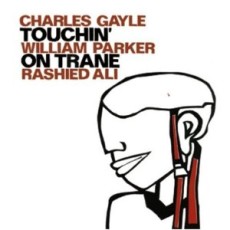
Rashied Ali, born Robert Patterson on July 1, 1933, grew up learning to play drums in Philadelphia, Pennsylvania influenced by his mother who sang with Jimmie Lunceford, and his brother Muhammad, a drummer with Albert Ayler.
Moving to New York in 1963, Ali worked in groups with Bill Dixon and Paul Bley. He would go on to record or perform with Pharoah Sanders, Alice Coltrane, Arthur Rhames, James Blood Ulmer and many others. Scheduled to be second drummer alongside Elvin Jones on John Coltrane’s landmark free jazz album Ascension, he dropped out just before the recording was to take place. Though Coltrane did not replace him, he became best known for playing and recording with Trane from Meditations in 1965 onwards.
Rashied became a driving force in the free and avant-garde drumming world, stimulating the most avant-garde kinds of jazz activities. During the early 1970s, he ran an influential loft club in New York, called Ali’s Alley, briefly formed a non-jazz project called Purple Trap with Japanese experimental guitarist Keiji Haino and jazz-fusion bassist Bill Laswell. In the 1980s, he was member of Phalanx with guitarist James Blood Ulmer, tenorist George Adams and bassist Sirone.
Though most known for his work in the jazz idiom, Rashied Ali also made his contributions to other experimental art forms including multi-media performances and fully improvised large-scale performance pieces. During the last years of his life he played with Sonny Fortune, led his own quintet, served as mentor to young drummers, and was the featured drummer on Azar Lawrence’s 2009 album Mystic Journey.
Over the course of his stellar career drummer Rashied Ali amassed a discography of eighteen albums as a leader with another thirty as a sideman. He continued to record, perform and tour worldwide until his death at age 74 in New York City after suffering a heart attack on August 12, 2009.
More Posts: drums
The Jazz Voyager
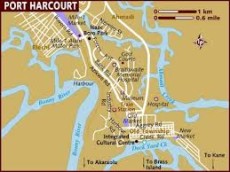
Port Harcourt Jazz Club: 3, Khana Lane, D/Line, Port Harcourt, Nigeria. Telephone: +234 803 3362062 Fax: +234 84 236772 / Contact: Chris Finebone.
With over 300 members., this jazz club organizes the Annual Opobo Beach Jazz Festival. The club engages both local and international jazz musicians to satisfy the cosmopolitan taste of members in the oil and gas business here week days & weekends.
Daily Dose Of Jazz…
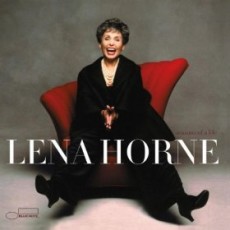
Lena Mary Calhoun Horne was born June 30, 1917 in the Bedford-Stuyvesant neighborhood in Brooklyn, New York. Descended from African, European and Native American heritage, her family belonged to what W.E.B. DuBois called “The Talented Tenth”, the upper stratum of middle-class, well-educated blacks.
Her father, Edwin “Teddy” Horne, a numbers kingpin, left the family when she was three and moved to the Hill District in Pittsburgh while her actress mother, Edna Scottron, travelled extensively with a black theatre troupe leaving Lena to be mainly raised by her grandparents. Throughout her formative years she travelled with her mother, lived in Fort Valley and Atlanta, Georgia with a final move back to New York in her teens.
Horne joined the mike chorus of the Cotton Club at 16 becoming a nightclub performer before moving to Hollywood, where she had small parts in numerous movies, and more substantial parts in the films “Cabin in the Sky” and “Stormy Weather. Due to the Red Scare and her left-leaning political views, Horne found herself blacklisted and unable to get work in Hollywood.
Returning to her roots as a nightclub performer, Horne took part in the March of Washington in August 1963, and continued to work as a performer, both in nightclubs and on television, while releasing well-received record albums. She announced her retirement in March 1980, but the next year starred in a one-woman show, “Lena Horne: The Lady and Her Music”, which ran for more than three hundred performances on Broadway and earned her numerous awards and accolades. She continued recording and performing sporadically into the 1990s, disappearing from the public eye in 2000. Lena Horne died on May 9, 2010 in New York City of heart failure.

More Posts: vocal