

From Broadway To 52nd Street
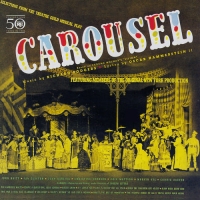
The Majestic Theatre opened the curtain for Carousel for the first time on April 19, 1945. With music composed by Richard Rodgers and Oscar Hammerstein, the musical ran for eight hundred and ninety performances. John Raitt and Jan Clayton had the title roles in this play adapted from the famous Molnar story of Liliom, from which came two songs that would endear themselves for years as jazz standards – What’s The Use Of Won’drin’ and If I Loved You.
The Story: Billy Bigelow, a shy New England carnival barker falls in love with Julie Jordan. Eventually winning Julie’s heart, he later discovers she is pregnant. Jobless, Billy decides he must provide for his son, or daughter, he agrees to join his criminal friend Jigger Craig in a robbery to earn extra money. The plan misfires and Billy kills himself rather than being caught. Before a heavenly judge he pleads for another chance to return to earth to earn his redemption and see his daughter. When his daughter refuses his gift of a star he has stolen from the sky, he slaps her and returns to purgatory. The widowed Julie and child are left to continue to live starkly. The story is set in Maine where majestic backdrops add emotional emphasis.
Jazz History: It was known simply as The Street and as historian Arnold Shaw stated in his book 52nd Street, “If you flagged a taxi in NYC and asked to be taken to The Street, you would be driven, without giving a number or an avenue, to Fifty-Second Street between Fifth and Sixth Avenues” By the late 1940s, as the jazz clubs turned into strip joints, many bemoaned the death of The Street. They considered this era to be the block’s decline.
In 1948, Time magazine decried the change from jazz to bump-n-grind: “where nightclubs in sorry brownstones crowd each other like bums on a breadline”, an era was all but over. Swing was still there, but it was more hips than horns. Barrelhouse had declined and burlesque was back. There was little jazz left on 52nd Street and even the customers had changed. There were fewer crew haircuts, pipes and sports jackets and more bald spots, cigars and paunches.
Sponsored By

www.whatissuitetabu.com
Daily Dose Of Jazz…
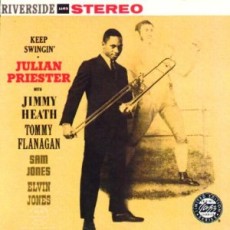
Julian Priester was born on June 29,1935 in Chicago, Illinois. He attended DuSable High School studying under Walter Dyett and during his teens he played trombone with Muddy Waters, Dinah Washington, and Bo Diddley and jammed with jazz greats Max Roach, Clifford Brown and Sonny Stitt.
By the early 1950s Priester was a member of Sun Ra’s big band, recording several albums with the group before leaving Chicago in 1956 to tour with Lionel Hampton. Settling in New York in ’58 Julian joined Max Roach’s band and during his tenure recorded two albums as a leader for Riverside Records titled Spiritsville and Keep Swingin’.
In 1961 Priester left Max Roach and for the next eight years took a sideman gig on albums by Freddie Hubbard, Stanley Turrentine, Blue Mitchell, Art Blakey, Joe Henderson, McCoy Tyner, Johnny Griffin and Sam Rivers. During that period he also took part in Coltrane’s Africa/Brass ensemble, which played with Coltrane’s quartet on the album by the same name recorded in 1961. Accepting an invitation to play with Ellington’s big band, he stayed for six months and by 1970 Priester was playing fusion in Herbie Hancock’s sextet.
In 1973, Priester moved to San Francisco, recorded two more albums as a leader, joined the faculty of Cornish College of the Arts in Seattle in 1979 teaching jazz composition, performance and history. Over the course of the next three decades Julian has been a member of the Dave Holland band, returned to play with Sun Ra’s band, became a member of Charlie Haden’s Liberation Music Orchestra, co-led with drummer Jimmy Bennington “Portraits and Silhouettes”, played the 30th Annual Chicago Jazz Festival and made significant contribution to “Alice”, a tribute album to Alice Coltrane.
Trombonist Julian Priester’s musical experience spans to the borders of jazz and beyond, encompassing R&B, bebop, hard bop, and progressive and free jazz.
More Posts: trombone
Daily Dose Of Jazz…
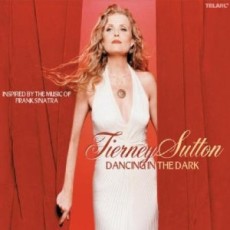
Tierney Sutton was born in Omaha, Nebraska on June 28, 1963. A choirgirl as a child, she attended Nicolet High School in Milwaukee, Wisconsin. She matriculated through Wesleyan University where she was introduced to jazz and then went on to Berklee College of Music. The singer took a semi-finalist slot in 1998 in the Thelonious Monk Jazz Vocal Competition, and received an Indie Award nomination for Best Jazz Vocal Album for her 1999 debut recording.
Versatile in the studio and on stage, the three-time Grammy Nominee for “Best Jazz Vocal Album”, has fronted the Tierney Sutton Band for the past 16 years. The group is an incorporated unit that makes all musical and business decisions together, tours worldwide and has played such prestigious venues as Carnegie Hall, the Hollywood Bowl and Jazz at Lincoln Center.
She has lent her voice to films like The Cooler with Alec Baldwin and William H. Macy; Twisted with Samuel L. Jackson, Andy Garcia and Ashley Judd; and an indie titled Blue In Green. Her voice has been heard on commercials for BMW, Dodge, J.C. Penny and Coca-Cola. Tierney has also been performing in a trio format with flautist Hubert Laws and guitarist Larry Koonse.
Sutton also wears an educator’s hat having taught in the Jazz Studies Department at the University of Southern California for 11 years and since 2008 has been the Vocal Department Chair at Los Angeles Music Academy in Pasadena, California. She continues to give workshops and clinics throughout the world.
More Posts: vocal
Daily Dose Of Jazz…
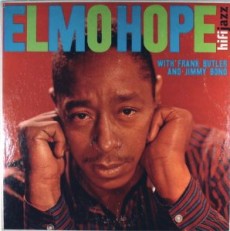
Elmo Hope was born St. Elmo Sylvester Hope on June 27, 1923 in New York City, he began his career with the Joe Morris band. From 1953 he recorded in New York as a leader and as a sideman with Sonny Rollins, Lou Donaldson, Clifford Brown and Jackie McLean. Losing his cabaret card in New York for drug use he moved to Los Angeles in 1957. On the West Coast he performed with Chet Baker before moving, followed with a stint with Lionel Hampton, then recorded with Harold Land and Curtis Counce.
Elmo led recording sessions with Frank Foster, John Coltrane, Hank Mobley, Art Blakey, Paul Chambers, and Philly Joe Jones. On a number of occasions Hope recorded in the trio format and more rarely as a leader of a quintet for Blue Note, Prestige, Riverside and other labels.
Disillusioned with the West Coast scene, Hope returned to New York in 1961, where he went to prison briefly on drug charges then returned to playing, recording duet albums with his pianist wife Bertha but recorded more rarely. Pianist Elmo Hope died of an overdose on May 19, 1967.
Though overshadowed by his contemporaries Bud Powell and Thelonious Monk, with his highly individual playing Hope holds a significant place alongside them, cited by later pianists Frank Hewitt and Sasha Perry, guitarist Kurt Rosenwinkel as their main influence, and Roswell Rudd composed “Hope No. 2” in his honor and during a concert with Archie Shepp, called Elmo Hope “ A great and fine composer and remains one of America’s well kept secrets”.
More Posts: piano
Daily Dose Of Jazz…
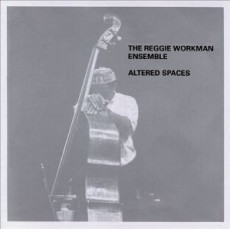
Reggie Workman was born Reginald Workman on June 26, 1937 in Philadelphia, Pennsylvania has been lauded for his work with both John Coltrane and Art Blakey. The double bassist, known for his avant-garde jazz and hard bop playing was a member of jazz groups led by Gigi Gryce, Roy Haynes, Wayne Shorter and Red Garland.
It was in 1961 that Workman joined Coltrane’s quartet, replacing Steve Davis and became a part of Trane’s “Live At The Village Vanguard” sessions, which has since become a legendary album. He also worked along with second bassist Art Davis on “Ole Coltrane”.
After a European tour Workman left the quartet and went on to play with James Moody, Yusef Lateef, Pharoah Sanders, Herbie Mann, Thelonious Monk, and became a Jazz Messenger. He has recorded several albums as a leader and with Archie Shepp, Lee Morgan and David Murray.
Reggie Workman has recorded seven albums as a leader and nearly four-dozen as a sideman working with Booker Little, Oliver Lake, Duke Jordan, Bobby Hutcherson and Grant Green among many others. He is currently a professor at The New School for Jazz and Contemporary Music in New York City.
More Posts: bass