

Daily Dose Of Jazz…
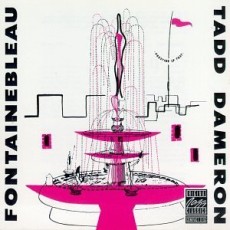
Cleveland, Ohio was the birthplace of Tadley Ewing Peake Dameron on February 21, 1917. Tadd as he was known in the jazz world became the definitive arranger/composer of the bop era writing such standards as “Good Bait,” “Our Delight,” “Hot House,” “Lady Bird,” and “If You Could See Me Now.” Not only did he write melody lines, he also wrote full arrangements. Though he never financially prospered, Dameron was an influential force from the mid-’40s till his death.
Dameron started out in the swing era touring with the Zack Whyte and Blanche Calloway bands, he wrote for Vido Musso in New York and most importantly, contributed arrangements for Harlan Leonard’s Kansas City Orchestra, some of which were recorded.
Soon he was writing charts for such bands as Jimmie Lunceford, Count Basie, Billy Eckstine, and Dizzy Gillespie (1945-1947) in addition to Sarah Vaughan. Always very modest about his own piano playing but he did gig with Babs Gonzales’ Three Bips & a Bop in 1947 and led a sextet featuring Fats Navarro at the Royal Roost during 1948-1949.
Dameron co-led a group with Davis at the 1949 Paris Jazz Festival, stayed in Europe for a few months (writing for Ted Heath), and then returned to New York. He wrote for Artie Shaw’s last orchestra that year, played and arranged R&B for Bull Moose Jackson (1951-1952) and in ‘53 led a nonet featuring Clifford Brown and Philly Joe Jones.
He also led bands that included Dexter Gordon, Sonny Rollins and Wardell Gray. Drug problems, however, started to get in the way of his music. After recording a couple of albums including 1958’s Mating Call with John Coltrane, drug addiction caused him to spend much of 1959-1961 in jail. After he was released, Dameron wrote for Sonny Stitt, Blue Mitchell, Milt Jackson, Benny Goodman, suffered several heart attacks and diagnosed with cancer from which he would eventually succumb to on March 8, 1965 in New York City.


Daily Dose Of Jazz…
Lew Soloff was born February 20, 1944 in New York City and is a jazz trumpeter, composer and actor. Studying trumpet at the Eastman School of Music, he continued his studies at Julliard. After graduation he freelanced around New York City with Maynard Ferguson, Joe Henderson, Machito, Tito Puente and Clark Terry. From 1968 to 1973 he worked with Blood, Sweat and Tears.
By 1973 he began an association an association with Gil Evans, played with George Gruntz’s Concert Jazz Band, Carla Bley, and is a longtime member of the Manhattan Jazz Quintet. He has also teamed up with the colorful trombonist Ray Anderson on several often-humorous recordings.
In the 1980’s he was part of a jazz ensemble called Members Only, recording for Muse Records. A brilliant high note trumpeter, Lew has long been sought after to play in big bands and session work. He is a distinctive soloist and an expert with the plunger mute. He has over four-dozen albums to his credit as a leader and sideman and currently performs, tours and records.
More Posts: trumpet
Daily Dose Of Jazz…
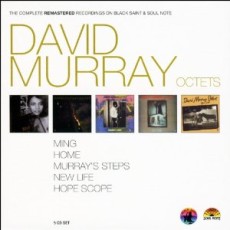
David Murray was born on February 19, 1955 in Oakland, California to musical parents, his mother played piano and his father, guitar. He was introduced to jazz while in the Berkeley school system playing alto in the school band. By thirteen he was in a local group called the Notations of Soul, but it was hearing Sonny Rollins that gave him the inspiration to switch from alto to tenor.
Influenced by Stanly Crouch while attending Pomona College, he moved to New York at 20 during the jazz loft era in lower Manhattan. Joining up with Crouch they opened their own loft space called Studio Infinity and Crouch occasionally played drums in Murray’s trio with Mark Dressler.
Murray’s early work was raw filed with multiphonics, extreme volume and upper register forays. By 1976 he recorded his first album “Flowers For Albert” and along with Julius Hemphill, Oliver Lake and Hamiet Bluiett became a founding member of the World Saxophone Quartet. Around the same time Joseph Papp commissioned David for a big band assemblage that enjoyed a modicum of critical success.
Through the 80’s he continued to play with the WSQ, his octet and various small bands, recording mostly for Italy’s Black Saint label, showcasing his rough and unformed talent as a composer. His recording dates became a flurry for the next two decades, leading more sessions than any other contemporary jazz musician. His playing matured and he began relying on the standard jazz repertoire when playing in small combo configurations. Yet by the time he was 40, his relative predictability was offset by his attention to the craft of playing and his inimitable style while his increased skill as a composer. In addition to winning a Grammy for Best Jazz Instrumental Group Performance for Blues for Coltrane: A Tribute to John Coltrane, over the course of his career he has been awarded a Guggenheim Fellowship, received a Bird Award, the Jazzpar Prize and has been named Musician of the Year by Newsday and Musician of the Decade by the Village Voice.
Murray mainly plays tenor saxophone and bass clarinet influenced in the free jazz genre of Albert Ayler and Archie Shepp. He has played with a host of world-renowned musicians, of which he is a member and continues to perform, record and tour.


Daily Dose Of Jazz…
Clyde Lombardi was born in February 18, 1922 in the Bronx borough of New York City. He had extensive classical training but by the time he was 20 he became a jazz musician. He became an advanced yet flexible bassist, quite valuable in the jazz world of the ’40s and ’50s, playing regularly with Red Norvo from 1942-1945.
Throughout the rest of the decade he would play with Joe Marsala and the Boyd Raeburn Orchestra in 1945, as well as both big bands and combos headed by Benny Goodman during 1945-1946 and his bebop fling of 1948-1949.
Clyde played and recorded with Charlie Ventura in 1946, Lennie Tristano, Wardell Gray, Stan Getz, Al Haig, Zoot Sims, Eddie Bert, Tal Farlow in 1953 and George Wallington among others.
Unfortunately for the jazz world he never got the opportunity to lead any albums of his own. He left jazz by 1959 re-emerging from time to time and working for CBS as a studio musician and recording with tenor Tony Graye. He passed away in New York City on January 1, 1978.

More Posts: bass
Daily Dose Of Jazz…
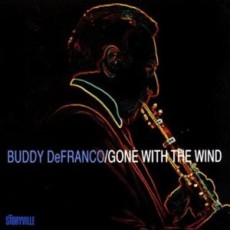
Buddy DeFranco was born Boniface Ferdinand Leonard DeFranco in Camden, New Jersey on February 17, 1923. By the age 14 he had won an amateur swing contest sponsored by Tommy Dorsey. Just four short years later he was working with the big bands of Gene Krupa in 1941 and Charlie Barnet in 1943. Those stints were followed with him playing off and on with Tommy Dorsey over the next few years.
Outside of a short-lived association with the Count Basie Septet in 1950, Buddy mainly lead his own bands from then on, playing and recording with Tal Farlow, Art Blakey, Kenny Drew and Sonny Clark, Art Tatum and Oscar Peterson as his sidemen, among others too numerous to name. He also played in some of Norman Granz’s Verve jam sessions and during the late 60’s DeFranco became the bandleader of the Glenn Miller Orchestra, an association that lasted until 1974. He has found more artistic success co-leading a quintet with Terry Gibbs off and on since the early 80’s and has recorded numerous albums.
Buddy DeFranco is considered one of the great clarinetists of all time and, until the rise of Eddie Daniels, he was indisputably the top clarinetist to emerge since 1940. It was DeFranco’s misfortune to be the best on an instrument that after the swing era dropped drastically in popularity and, unlike Benny Goodman and Artie Shaw, he has never been a household name for the general public and while most jazz clarinet players were unable to adapt to fading popularity, Buddy Defranco was one of the few bebop musicians who successfully continued to play clarinet exclusively until he passed away on December 24, 2014 in Panama City, Florida at age 91.
More Posts: clarinet