

Daily Dose Of Jazz…
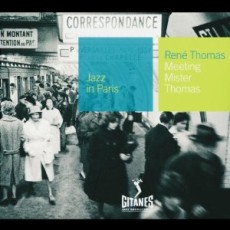
René Thomas was born on February 25, 1927 in Liege, Belgium and is considered one of the greatest jazz guitarists to emerge in the 1950s. Influenced by Django Reinhardt Thomas was mostly self-taught and became one of the most sought after guitarists for his cool tone. After WWII he played with the “Bop Shots”, Belgium’s first be-bop outfit with Jacques Pelzer and Bobby Jaspar.
In the early 1950s, Thomas moved to Paris where he connected with the modern jazz scene and in 1954, he recorded his first album under his own name. His reputation as a virtuoso guitarist and inventive musician spread rapidly in the jazz world.
In 1956, moving to Canada, Thomas played regularly for the Montreal jazz society and met Sonny Rollins. So impressed with his talent, Rollins invited him for a concert in Philadelphia and for the 1958 recording, Sonny Rollins and the Big Brass. While in the U.S. René played with the best jazz musicians of that era: Stan Getz, Miles Davis, Toshiko Akiyoshi, and Jackie McLean and in 1960 he recorded Guitar Groove.
Returning to Europe in 1962, he toured and recorded with Chet Baker, Kenny Clarke, Eddy Louiss, Lucky Thompson and Sonny Criss. While touring with Lou Bennett throughout Spain, guitarist Rene Thomas died of a sudden heart attack at the age of 47 on January 3, 1975.
More Posts: guitar
Daily Dose Of Jazz…
David Newman Jr. was born on February 24, 1933 in Corsicana, Texas. He got his nickname in high school when his then music teacher noticed his upside down sheet music tapped him on the head with his conductors baton and called him “Fathead”. Preferring to be called David, the jovial Newman accepted the nickname that stuck with him his whole life.
Moving to Dallas he graduated from Lincoln High School, began playing flute and tenor at local shows, and received a scholarship to Jarvis Christian College where he studied theology and music for two years. This brief stay was followed with him on the road touring with Bester Smith (Charlie Parker’s mentor) and dance hall one-nighters with T-Bone Walker.
Newman’s professional career as a musician began in 1954 as a member of the Ray Charles Band playing baritone sax that was the beginning of a twelve-year relationship followed by ten years with Herbie Mann and playing with Red Garland for a period in the 70’s. By the late 90’s he was recording for HighNote Records and a long and profitable relationship started producing some ten albums.
For over a half century, Newman recorded over thirty-eight albums under his own name beginning in 1958 with Fathead – Ray Charles Presents David Fathead Newman. Although best known for his hard bop style, he’s recorded with James Clay, Cannonball Adderley, Stanley Turrentine, Aretha Franklin, B. B. King, Natalie Cole, Average White Band, Eric Clapton, Jimmy McGriff and many others.
Always a musicians’ musician, Newman has influenced whole generations of saxophone players of different genres including R&B, blues and country, and texmex. On January 20, 2009, saxophonist and flautist David “Fathead” Newman died from complications of pancreatic cancer in Kingston, New York at age 75.

From Broadway To 52nd Street
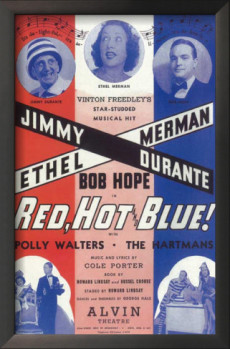
Red, Hot And Blue! opened the Alvin Theater stage on October 29, 1936. The music and lyrics, composed by Cole Porter, rendered the tune “It’s De-Lovely” sung by Ethel Merman. Though the show only ran for one hundred and eighty-three performances, the song became an enduring jazz standard. The story taken from the book by Howard Lindsay and Russell Crouse goes as follows:
The Story: Loud and brassy manicurist Nails O’Reilly Duquesne is a newly wealthy young widow. Organizing a benefit for her favorite cause, the rehabilitation of ex-convicts, she teams with her ex-con sidekick Policy Pinkle and her “square” boyfriend, lawyer Bob Hale. Soon she embarks on a nationwide search for Bob’s old girlfriend, which is really the reason for the enterprise. However, the national lottery that Nails starts gets the attention of the Finance Committee, winding up in Washington DC in an even more complicated situation, with the Supreme Court declaring the lottery unconstitutional, because it would benefit the people.
Jazz History: The blocks of 52nd Street between Fifth and Seventh Avenue were renowned in the mid-20th century for the abundance of jazz clubs and lively street life. The street was convenient to musicians playing on Broadway and the “legitimate” nightclubs and in the CBS studio. Musicians who played for others in the early evening played for themselves on 52nd Street.
In its heyday from 1930 through the early 1950s, 52nd Street clubs hosted such jazz legends as Miles Davis, Harry Gibson, Dizzy Gillespie, Billie Hoiday, Nat Jaffe, Marian McPartland, Thelonious Monk, Charlie Parker, Louis Prima, Art Tatum, Fats Waller and numerous more. Although musicians from all schools performed there, after Minton’s Playhouse in Harlem, 52nd Street was the second most important place for the dissemination of bebop. In fact, a tune called “52nd Street Theme” by Thelonious Monk became a bebop anthem and jazz standard.
Sponsored By

www.whatissuitetabu.com
More Posts: broadway

Daily Dose Of Jazz…
Harlem was originally a wealthy white suburb of the New York City borough of Manhattan at the turn of the 20th century, but over-speculation led to a collapse of the housing boom and by 1904, fed by the Great Migration, thousands of Blacks began to reside in Harlem, taking advantage of inexpensive rents. By the 1920’s it became the major residential, cultural and business center for Black people. It was also the center of a flourishing entertainment business with black theaters and black artist performing for black audiences.
Originally a Dutch village formally organized in 1658 and named Haarlem after a Dutch town in the Netherlands and has been defined by a series of boom-or-bust cycles. Harlem was in vogue during the Roaring Twenties and the Harlem Renaissance and white socialites flocked north to hear Duke Ellington, Cab Calloway, Fats Waller, Chick Webb, Louis Armstrong and Bessie Smith. The premiere dance hall was the Savoy Ballroom with the big four clubs were The Cotton Club, Connie’s Inn, Small’s Paradise and Barron Wilkins, which was the first to open in 1915.
The Cotton Club, opened by gangster Owney Madden in 1922 moved downtown in ’36; Connie’s Inn opened in 1923 by George and Connie Immerman and Ed Smalls opened Small’s Paradise in 1925 and endured until 1986. All four catered to white audiences with lavishly staged shows featuring black performers such as James P. Johnson, Bill “ Bojangles” Robinson and Ethel Waters.
Swing and jazz were at its height and over the next several decades attracted the nightlife of both wealthy and working patrons to witness the greatest black musicians and performers in music and entertainment at a proliferation of theatres and clubs.
The most popular nightspots within the boundaries of the Hudson and East Rivers and from 100th to 155th Streets were the Alhambra Theatre, the Apollo Theatre, Bamboo Inn, Bamville Club, Band Box, Barron’s, Brittwood, Capitol Palace, Club Basha, Count Basie’s, Dickie Wells Shim Sham Club, Garden Of Joy, Golden Gate Ballroom, Harlem Club, Harlem Opera House, Heat Wave, Lafayette Theatre, Lenox Club, Leroy’s, Lido Ballroom, Lincoln Theatre, Luckey’s Rendezvous, Minton’s Playhouse, Monette’s Supper Club, Monroe’s Uptown House, Nest Club, Pod’s & Jerry’s, Renaissance Ballroom, Rendezvous Cabaret, Rhythm Club, Saratoga Club, Ubangi Club and Yeah Man.
Harlem, which has recently been given the name Manhattan North, has former President Bill Clinton to have a visible presence, has skyrocketed rental costs and townhouse sales , given much of 125th Street a makeover, attracting thousands of tourists and an influx of residents who at one time not too long ago would never have crossed Central Park North or come down into the valley from Columbia University.
More Posts: club,dance,history,instrumental,jazz,music,vocal
Daily Dose Of Jazz…
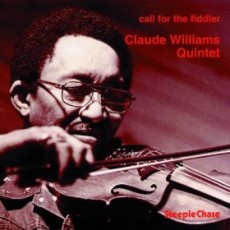
Claude “Fiddler” Williams, born on February 22, 1908 in Muskogee, Oklahoma, by the age of 10 had learned to play guitar, mandolin, banjo and cello and was inspired to learn the violin after hearing Joe Venuti play. He played around Oklahoma with bassist Oscar Pettiford and by 1927 had his first professional gig with Terence Holder’s territory band that soon became known as the Clouds of Joy led by Andy Kirk after Holder’s ouster.
Claude enjoyed a great deal of success due to the performing and composing talents of Mary Lou Williams. Their short-lived relationship ended due to health issues but during the thirties he worked with Alphonse Trent, George E. Lee, Chick Stevens, Nat King Cole and his brother Eddie.
In 1936 Claude became the first guitarist to record with Count Basie and throughout the 30’s and 40’s worked Chicago, Cleveland and Flint with the Four Shades of Rhythm. Throughout the 50’s he worked with Jay McShann, Eddie “Cleanhead” Vinson and Hank Jones.
Settling in Kansas City in 1953 he spent most of the next 20 years leading his own groups. By the 70’s a gig with McShann led to his first recordings in three decades and his second career was born. Over the next two decades he toured with McShann, worked as a feature soloist at jazz festivals, Parisian musical Black & Blue, a New York date with Roland Hanna and Grady Tate, played Carnegie Hall and Lincoln Center, and President Bill Clinton’s first inauguration. In 1997 Williams was the first inductee of the Oklahoma Jazz Hall Of Fame.
Claude “Fiddler” Williams, the venerable elder statesman of jazz, who outlasted virtually all his contemporaries and achieved his greatest successes at an advanced age and was the last surviving jazz musician to be recorded before 1930, passed away at the age of 96 of pneumonia in Kansas City on April 26, 2004.
More Posts: violin