

Daily Dose Of Jazz…
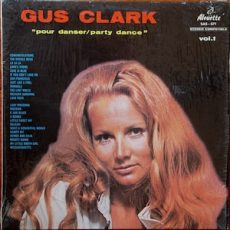
Gus Clark was born Gustave De Clercq on October 21, 1913 in Antwerp, Belgium. While still in his teens he led local dance bands and also played in the groups of musicians such as Harry Pohl, Maurice Pinto, and Jack Hoedemaeker.
In the 1930s Gus played with his own group in Brussels, Belgium, and Coleman Hawkins performed with this ensemble. He later set up a new ensemble of all-Black musicians in Belgium, which included Lauderic Caton as a sideman.
Clark performed with Jean Omer, Jean Robert, and Gus Deloof as a sideman, and continued recording as a leader in the 1940s and 1950s.
Pianist Gus Clark died in his native city on April 10, 1979.

More Posts: history,instrumental,jazz,music,piano
Requisites
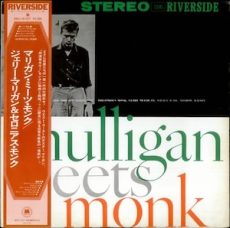
Mulligan Meets Monk ~ Thelonious Monk and Gerry Mulligan | By Eddie Carter
This morning’s record from the library, Mulligan Meets Monk (Riverside RLP 12-247/RLP 1106), is an excellent quartet date that brings together two giants, Gerry Mulligan and Thelonious Monk, for their only collaborative album. Their influence on bop and cool jazz is immeasurable. It hit the stores in 1957, and the personnel are Gerry Mulligan on baritone sax, Thelonious Monk on piano, Wilbur Ware on bass and Shadow Wilson on drums. My copy is the 1975 Victor Musical Industries Japanese Stereo reissue (Riverside SMJ-6107).
‘Round Midnight by Thelonious Monk, Cootie Williams, and Bennie Hanighen is one of The Great American Songbook’s most beautiful and recorded jazz tunes. It opens the first side with the quartet’s elegantly tender theme. Gerry delivers a mesmerizing first solo. Thelonious is next and gives a beautifully constructed reading ahead of the theme’s reprise and climax. Thelonious Monk’s Rhythm-a-ning picks up the pace with a lively introduction by Wilson segueing into the foursome’s spirited melody. Mulligan is up first with a statement of dynamic energy; then Monk speaks assertively in the second reading. Gerry returns with an excellent improvisation ahead of the theme’s restatement.
The group’s unique and refreshing approach to Sweet and Lovely by Gus Arnheim, Jules LeMare, and Harry Tobias starts with Gerry and Thelonious’ delicately graceful theme. Monk shows a considerable amount of respect in the opening solo. Mulligan’s exquisite softness in the closer precedes a gorgeous conclusion. Decidedly by Gerry Mulligan begins Side Two with a two-instrument dialogue between Gerry and Shadow, extending into the quartet’s brisk theme. Mulligan functions most effectively in the opening statement. Monk unwraps a pleasant surprise next. Wilbur takes a short, impressive walk, Gerry takes over briefly, and Shadow wraps things up before the close.
Straight, No Chaser is one of Thelonious Monk’s perfectly structured originals. The foursome’s bluesy theme sets up Gerry’s inspired opening statement. Wilbur’s bass goes to work next in a short reading, and then the pianist sums everything up nicely before the closing chorus and finale. I Mean You by Thelonious Monk and Coleman Hawkins begins with the pianist’s introduction, leading to the ensemble’s opening chorus. Monk steps into the spotlight first, cruising comfortably, and then Mulligan puts together a few good ideas in the second solo. Ware rounds out things with a breezy walk before the group reassembles to take the song out.
Mulligan Meets Monk was produced by Orrin Keepnews and recorded by Jack Higgins. The album’s sound quality is top-notch, with a superb soundstage that makes it feel like the quartet is performing right before you. Whether you’re a bop or cool jazz fan or new to the music of Gerry Mulligan and Thelonious Monk, Mulligan Meets Monk is a must-listen on your next record-shopping trip. It’s a delightful addition to both musicians’ discographies, showcasing their talents in a way that might make it a favorite in your library!
~ ‘Round Midnight, Straight, No Chaser, Sweet and Lovely – Source: JazzStandards.com
© 2024 by Edward Thomas Carter

More Posts: choice,classic,collectible,collector,history,instrumental,jazz,music,piano,saxophone
Daily Dose Of Jazz…
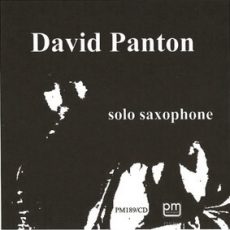
David Panton was born on October 20, 1946 in the Midlands, England where his formative musical experience revolved around singing in the local church choir and later with a mixed voice choir and an amateur operatic society. He began teaching himself classical piano from the age of twelve and by fifteen had begun to compose by improvising at the keyboard. At seventeen he joined the army as a bandsman, taking up the oboe and being posted for a year in 1964 to Kneller Hall, the Military School of Music. He later attended Birmingham School of Music for piano tuition under the late William Fellowes for a year from 1966. His composing took on a more modern direction which was largely unintelligible to his military colleagues.
After four years as bandsman he resigned to pursue a musical career back in civilization, taking up the alto saxophone as a result of hearing some of the American and British free jazz players of the time such as Ornette Coleman and Mike Osborne. He formed several groups and gave solo performances at the Birmingham Arts Lab, Midlands Arts Centre, Birmingham and Midlands Institue as well as numerous pubs. He made contact with London based musicians John Stevens, Evan Parker, Derek Bailey and Maggie Nichols which led to occasional appearances around the city.
He ventured into folk music with the group Forest, followed by the experimental theatre group Chameleon Laboratory Theatre. In 1979 he received an Arts Council jazz bursary, allegedly the first provincal based musician to do so, with a second following in 1981. By 1989 he abandoned music and started up an audio cassette duplication business. When the demise of the audio cassette undermined business viability, David opted to take up a civil service post in the late Nineties from which he retired in 2006.
In 2009 he was awarded the MA in Music from the Open University and has continued to pursue music activities in academia.
More Posts: bandleader,history,instrumental,jazz,music,piano,saxophone
Daily Dose Of Jazz…
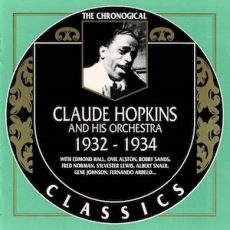
Sylvester Lewis was born on October 19, 1908 in Kansas City, Missouri and played locally as a college student around the city in the 1920s. His first major tour was with a traveling revue called Shake Your Feet, where he met Herbie Cowens. This meeting led to him joining the Cowens group, playing at the Rockland Palace in New York City in 1928.
He recorded with Jelly Roll Morton in New York the same year. After a stint with Aubrey Neal in 1929, Lewis joined Claude Hopkins’s band, playing with him from 1930 to 1936 and recording with him extensively between 1932 and 1935.
Leaving Hopkins, he performed in Billy Butler’s orchestra for the theater show Rhapsody in Black and played in Noble Sissle and Eubie Blake’s Shuffle Along in 1941. Sylvester led his own band for troop tours of the Pacific during World War II, and recorded with Roy Eldridge in 1946 after his discharge.
He began studying the Schillinger system in the late 1940s, but gave up music entirely after 1949 and spent the rest of his life working for the New York City Subway.
Trumpeter Sylvester Lewis died in 1974 in New York City.
More Posts: history,instrumental,jazz,music,trumpet
Daily Dose Of Jazz…
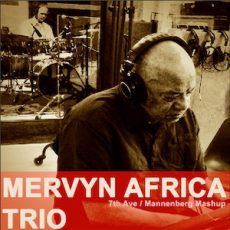
Mervyn Africa was born on October 18, 1950 in Cape Town, South Africa and studied music there and sang in the boys choir. Moving to the United Kingdom in 1981 he searched for work in the bands of fellow exiles, trumpeter Hugh Masekela, percussionist Julian Bahula and saxophonist Dudu Pukwana. With drummer Brian Abrahams and Russel Herman he was a co-founder of the Afro/jazz group District Six.
He put together a quartet consisting of bassist Michael Mondesir, trumpeter Dave Defries and percussionist Nana Tsiboe. Drawing from his rich cultural and musical background, he created a strong reputation as a solo performer, band leader and big in African jazz.
As a composer he is known for his piano improvisations and unique compositions, Mervyn’s influences range from classic and carnival music through to township jazz and Malay musical heritage.
Pianist and composer Mervyn Africa, also known for his 2010 portrayal in Master Harold and The Boy, remains a major presence on the London scene.
More Posts: bandleader,history,instrumental,jazz,music,piano,vocal