

Daily Dose Of Jazz…
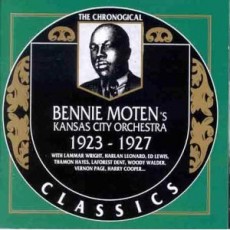
Lammar Wright Sr. was born on June 20, 1907 in Texarkana, Texas but grew up in Kansas City, Missouri. He began his musical career playing and recording with Bennie Moten’s band in 1923. Relocating to New York City in 1927 Lammar played with The Missourians, staying with the group after Cab Calloway became its leader. Wright remained Calloway’s lead trumpeter until 1942.
Playing sporadically with Calloway through the rest of the decade, Wright would also played with Don Redman, Claude Hopkins, Cootie Williams, Lucky Millinder, Sy Oliver and Louis Armstrong.
In the 1950s and 1960s he taught music and worked as a studio musician, in addition to recording with Arnett Cobb, Count Basie, the Sauter-Finegan Orchestra and George Shearing.
Wright led his own groups from time to time, had a role in the 1968 film The Night They Raided Minksy’s. Trumpeter Lammar Wright passed away on April 13, 1973 in New York City.
More Posts: trumpet
Daily Dose Of Jazz…
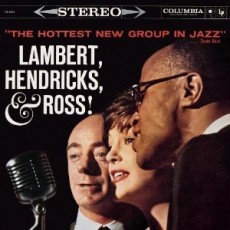
David Alden Lambert was born on June 19, 1917 in Boston, Massachusetts. His band debut was with Johnny Long’s Orchestra in the early 1940s and along with early partner Buddy Stewart; he successfully brought singing into modern jazz, concurrently with Ella Fitzgerald.
In the late 1950s Lambert teamed with wordsmith and vocalese pioneer Jon Hendricks. Annie Ross later joined the two vocalists and the trio lineup was a hit. After Ross left the group in 1962, Lambert and Hendricks went on without her by using various replacements, but the partnership ended in 1964.
Dave formed a quintet called “Lambert & Co.” which included the multiple voices of Mary Vonnie, Leslie Dorsey, David Lucas and Sarah Boatner. The group auditioned for RCA and was documented in a 15-minute documentary entitled Audition at RCA, and the Charlie Parker with Voices. It was one of the last images recorded of Lambert.
Lyricist and jazz singer Dave Lambert, an originator of vocalese best known for his work in Lambert, Hendricks and Ross, and who spent a lifetime experimenting with the human voice and expanding the possibilities of its use in jazz, was struck and killed by a truck on the Connecticut Turnpike while changing a flat tire, passed away on October 3, 1966.
More Posts: vocal
Daily Dose Of Jazz…
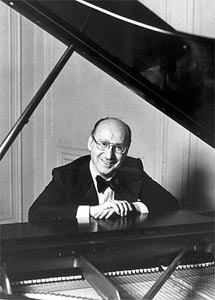
Sammy Cahn was born Samuel Cohen on June 18, 1913 in the lower East side of New York City and began his music career studying the violin. After only three lessons at thirteen years he joined a small Dixieland band called Pals of Harmony, touring the Catskill Mountains summer resorts and play private parties. By16 he was writing his first lyric “Like Niagara Falls, I’m Falling For You” and his songs were being sung on the vaudeville stage by Jack Osterman.
Much of Cahn’s early work was written in partnership with Saul Chaplin writing witty special material for Warner Brothers musical short subjects. They continued to work with then up-and-comers Milton Berle, Danny Kaye, Phil Silvers and Bob Hope. Cahn soon began a partnership with Lou Levy and writing for Jimmie Lunceford, Glen Gray, Tommy Dorsey and eventually teaming with Jimmy Van Heusen and writing for Frank Sinatra.
His impressive career spawned lyrics for Until The Real Thing Comes Along, Love and Marriage, Three Coins In The fountain, I Fall In Love Too Easily, All The Way, I’ll Never Stop Loving You, The Second Time Around and All My Tomorrows among many more.
Cahn was inducted into the Songwriters Hall Of Fame, nominated for 23 Academy Awards, five Golden Globes and an Emmy. He received four Oscars, and had the Sammy Awards created in his honor for movie songs and scores.
Sammy Cahn, best known for his romantic lyrics for film, Broadway and stand alone songs, many of which have become jazz standards, passed away on January 15, 1993 at age 79 in Los Angeles California.
More Posts: lyrics

Daily Dose Of Jazz…
Sam Wooding, born on June 17, 1895 in Philadelphia, Pennsylvania learned to play piano as a child, eventually becoming a bandleader who led several big bands in both the United States and abroad. In 1925 while performing at Small’s Paradise in Harlem, a Russian impresario hired him to be the pit band for the Chocolate Dandies in Berlin. That date led him to a record date for Vox Records with Doc Cheatham, Herb Fleming in the band.
In 1929, with a change in personnel, Wooding’s orchestra made more recordings in Barcelona and Paris for the Parlaphone and Pathé labels. He would remain in Europe, performing on the Continent, in Russia and England through most of the 1930s. He became an expatriate and his overseas stays made him virtually unknown in the States, building staunch jazz fans that liked what his orchestra offered.
Returning home in the late 1930s, when World War II seemed a certainty, Wooding began formal studies of music, attained a degree, and began teaching full-time, counting among his students trumpeter Clifford Brown. During this period he would lead and tour with the Southland Spiritual Choir. By the early 1970s, he formed another big band and took it to Switzerland for a successful concert, but this venture was short-lived. Pianist, arranger and bandleader Sam Wooding passed away on August 1, 1985 at age 89.
More Posts: piano
Daily Dose Of Jazz…
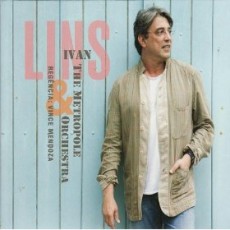
Ivan Lins was born on June 16, 1945 in Rio de Janeiro, Brazil. He began studies at the Military College in Rio, received an industrial chemical engineering degree from the Federal University and spending several years in Boston, Massachusetts with his naval engineer father, he continued his graduate studies at M.I.T. He considered a career in volleyball before discovering his considerable musical talent.
As a pianist Luiz Eça and João Donato influenced Lins. While in college he performed in a jazz-bossa trio. In 1970 Ivan started his music career by winning second place in a competition with the song “O Amor É o Meu País” and that same year famed Brazilian singer Elis Regina recorded his composition “Madalena”. He would host the TV Globo show Som Livre Exportaçã, partner with Vitor Martins and the two would become MPB history with romantic verses and political anthems.
His influence of jazz and bossa nova became evident in his music and an invitation from Quincy Jones brought him to international attention. Quincy recorded “Velas” (Sails) which won a Grammy, and George Benson recorded his Love Dance, and Paul Winter recorded “Velho Sertão”, renaming it Common Ground. It wasn’t too longer afterward that jazz artists like Patti Austin, Herbie Mann, Sarah Vaughan, Joe Pass, Diane Schuur, Manhattan Transfer and Ella Fitzgerald were recording his melodies.
He has recorded three-dozen albums, won two Latin Grammy awards, has won Best MPB Album of the Year, and many of his tunes have been part of Grammy winning albums and is one of the three most recorded Brazilian composers outside their native land.