

Daily Dose Of Jazz…
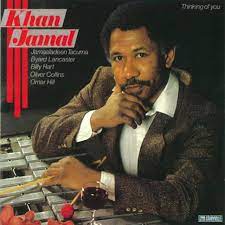
Khan Jamal was born Warren Robert Cheeseboro in Jacksonville, Florida on July 23, 1946. His father worked as an entrepreneur, his mother a stride pianist. Raised in Philadelphia, Pennsylvania and began playing the vibraphone during the later part of his teenage years in the mid Sixties. He went on to attend the Granoff School of Music and the Combs College of Music.
Jamal first played for a group called Cosmic Forces during the later part of the 1960s. He played with the Sun Ra Arkestra. After leaving the group, he teamed up with several of its former members to play with Sunny Murray’s group Untouchable Factor.
He later co-founded Sounds of Liberation with Byard Lancaster in 1970. The band released its only album titled New Horizons, two years later on its own record label Dogtown. However, it gained little impact outside Philadelphia at the time. In addition to leading his own groups, Jamal performed with Ronald Shannon Jackson’s Decoding Society in the 1980s, Joe Bonner, Billy Bang, Charles Tyler and others. His first solo album was Drum Dance to the Motherland, a live recording that was held in a small café in his hometown and first released in 1973.
His style connected the two contrasting forms of free jazz and jazz fusion. He was also known for his skill of shifting modes and moods. Vibraphone and marimba player Khan Jamal suffered from kidney failure prior to his transition on January 10, 2022, at the Chestnut Hill Hospital in Philadelphia. He was 75.


Daily Dose Of Jazz…
Gorni Kramer was born Francesco Kramer Gorni on July 22, 1913 in Rivarolo Mantovano, Lombardy, Italy. Learning music at a very young age, thanks to his musician father. The first instrument he learned how to play was the accordion, with which he performed as a child in his father’s band.
He studied double bass at the Conservatory in Parma, Italy and obtained his diploma in 1930. He started working as a musician for dance bands and in 1933 at 20, he formed his own jazz group. This new American musical genre was forbidden by the Italian fascist regime, but Gorni got to know it thanks to some fellow musicians who worked on board the liners connecting Europe and North America.
In the middle of the Thirties he became a successful songwriter, composing hit songs through the Thirties. In spite of his songs’ popularity, Gorni and his orchestra were still ignored by the Italian state radio EIAR, who boycotted them because they played jazz.
During World War II he worked with Natalino Otto, a singer also banned by EIAR because of swing and wrote one of her greatest hits. In 1949 he started working for Garinei and Giovannini, a very famous duo of impresarios who authored and produced musical comedies, an association that lasted ten years.
Kramer debuted on television in 1957 with Il Musichiere music show, composing the show’s theme song with other shows ensued. In the mid-1960s he gradually reduced his public performances, but he continued to work as a music publisher and a TV author.
Songwriter, bassist and bandleader Gorni Kramer transitioned from a heart attack on October 26, 1995 in Milan, Italy.
More Posts: bass,history,instrumental,jazz,music
Daily Dose Of Jazz…
Clifford Arthur Edgehill, originally spelled Edghill, was born July 21, 1926 in Brooklyn, New York. His first professional work was touring with Mercer Ellington in 1948 and by 1953 was touring with Ben Webster. He played with Kenny Dorham’s Jazz Prophets and Gigi Gryce in 1956 and the following year toured with Dinah Washington.
He was a member of the Eddie “Lockjaw” Davis Quartet with George Duvivier and/or Wendell Marshall and Shirley Scott. He appears on several of Scott’s recordings, including her 1958 debut album, Great Scott!. as well as on Very Saxy with Eddie “Lockjaw” Davis, Buddy Tate, Coleman Hawkins, and Arnett Cobb.
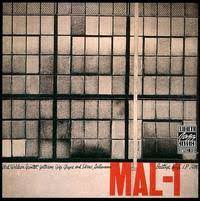
As well as recording he also played in quartets led by Horace Silver, Cecil Payne, Hank Mobley, Doug Watkins, Charlie Parker and Annie Laurie. Edgehill remained active through the 1950s, 1960s and 1970s, appearing on several of the Prestige recordings on Mal Waldron’s 1956 debut album, Mal-1, and with Eddie “Lockjaw” Davis and Shirley Scott.
Drummer Arthur Edgehill retired from music in the Seventies.
More Posts: drums,history,instrumental,jazz,music
The Jazz Voyager
Leaving the African continent for India the next layover for the Jazz Voyager is the Bombay Jazz Club. It is a one of its kind music venture hosting performances at its cozy Bandra space quite regularly. With fairy lights, framed artworks on the back wall and luminous red lamp shades typify this narrow space’s aesthetic.
Founded in 2012 by D. Wood nd Rajesh Punjab, they have consistently produced weekly programming of live jazz at the Bandra Base. They are dedicated to keeping jazz as a central part of the city and country’s music scene. With a self-titled house band performing, in addition to collaborations between Spanish, Japanese and American musicians, they continue to bring extraordinary musicians together, transforming any environment into an authentic jazz experience.
The adventure continues as this will be a new visit to the venue located in Mumbai at Baitush Saraf Building, Off Waterfield Road, TPS 3, 29th Rd, Bandra West. For more information they can be reached at +91-98211-21048.

More Posts: adventure,club,festival,genius,jazz,music,preserving,travel
Daily Dose Of Jazz…
Arnold Fishkind was born July 20, 1919 in Bayonne, New Jersey, and grew up in Freeport, Long Island, New York where he met and began a lifelong friendship with Chubby Jackson. At age 7 Fishkind began learning violin, and played in The Musical Aces, a local band of budding musicians. By age 14 he was playing bass.
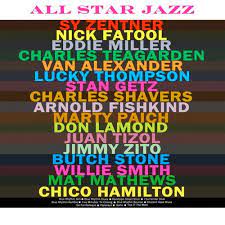
Fishkind had his first professional gig with Bunny Berigan in 1937. Following this he played with Jack Teagarden, Van Alexander, and Les Brown in the early Forties. After serving three years in the armed forces during World War II he met and played with pianist Lennie Tristano in New York, but by the fall he left to go to Hollywood to play with Charlie Barnet. During this experience he played alongside Stan Getz.
Returning to New York City from 1947 to 1949 he played with Tristano, then at the end of the decade recorded with Lee Konitz and on Johnny Smith’s Moonlight in Vermont. He also continued to play with Barnet, and played with Benny Goodman.
By the 1950s he found much work as a session musician, for radio, television and pop musicians including Frankie Laine. His career at ABC lasted fifteen years and included appearances in the Andy Williams Show in 1961. Fishkind became well known enough during this time to be mentioned by Jack Kerouac in his novel Visions of Cody.
Rock and Roll having decimated the market for jazz musicians in New York City, Fishkind moved from New York City back to California. In California he found work with the Dean Martin and Bob Hope television shows and some substitution engagements on the Tonight and Merv Griffin television shows, as well as some recording and film work.
He toured with Les Brown and Lena Horne, while continuing to record into the 1980s, playing with Frank Scott. Ultimately he moved to Palm Desert, California, where he was able to join the celebration of his friend Chubby Jackson’s 80th birthday. In his latter years, Fishkind became an ordained minister at Family Life Church in Palm Desert.
During his career he performed swing and bebop jazz, television, jingles, and even western themed music. He worked with Ella Fitzgerald, Stan Hasselgard, Peanuts Hucko, Charlie Parker, Shorty Rogers, Butch Stone and Jerry Wald. Bassist Arnold Fishkind, sometimes credited as Arnold Fishkin and who appeared on over 100 albums, transitioned on September 6, 1999 in Palm Desert, California.
More Posts: bass,history,instrumental,jazz,music