

Daily Dose Of Jazz…
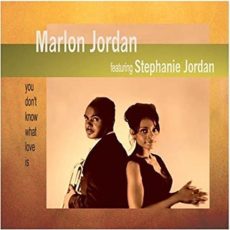
Marlon Jordan was born August 21, 1970 in New Orleans, Louisiana, one of six performers of a prominent family of New Orleans musicians. He is the son of saxophonist Edward “Kidd” Jordan and classical pianist Edvidge Jordan, and his brother Kent is a flutist, his sister Rachel is a violinist, and sister Stephanie is a jazz singer.
Starting on playing trumpet in the fourth grade, he graduated from the famed New Orleans Center for the Creative Arts. A major influence was Wynton Marsalis and Terence Blanchard who he knew when he was a child. Marlon recorded as a sideman with his brother Kent in 1987 and Dennis González in 1988.
In 1988 at age 18 he recorded his debut album as a leader, For You Only, with Branford Marsalis, brother Kent, and Elton Heron. Taking his quintet on the road, with Wynton Marsalis, Miles Davis and George Benson, he was billed as one of the headlining act in a series of JVC Jazz Festival dates. They would go on to play some of the country’s top jazz clubs, as well as in concerts.
He has recorded with his immediate family, Stephanie, Edward, Rachel, Kent, along with uncle Alvin Batiste, cousin Jonathan Bloom, uncle Maynard Chatters, and Chatters’ son, Mark.
In 2005, Marlon and sister Stephanie toured Bucharest, Germany, Lithuania and Ukraine as Jazz Ambassadors on a European Tour as part of the Higher Ground Relief effort sponsored by the U.S. Department of State, and Jazz at Lincoln Center to thank the people of Europe for their support of New Orleans and the Gulf region following Hurricane Katrina. Trumpeter, composer and bandleader Marlon Jordan continues to perform, record, and tour.

More Posts: bandleader,composer,history,instrumental,jazz,music,trumpet
The Quarantined Jazz Voyager
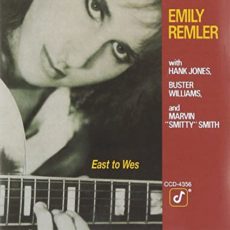
As the social distancing and my personal quarantine continues, the next album this jazz voyager is East To Wes by guitarist Emily Remler. Recorded in May 1988 on the Concord Records label. This is her last session to be recorded and released before her death. Having put together one of the finest rhythm sections, it has been hailed as her finest effort.
Track Listing | 51:18- Daahoud (Clifford Brown) ~ 5:19
- Snowfall (Claude Thornhill) ~ 6:39
- Hot House (Tadd Dameron( ~ 5:45
- Sweet Georgia Fame (Blossom Dearie/Sandra Harris) ~ 5:38
- Battle For A Music Box (Emily Remler) ~ 7:25
- Blues For Herb (Emily Remler) ~ 6:26
- Softly In A Morning Sunrise (Oscar Hammerstein II/Sigmund Romberg) ~ 8:14
- East To Wes (Emily Remler) ~ 6:14
- Emily Remler ~ guitar
- Hank Jones ~ piano
- Buster Williams ~ double bass
- Marvin “Smitty” Smith ~ drums

More Posts: adventure,club,genius,guitar,jazz,museum,music,preserving,restaurant,travel,voyager
Daily Dose Of Jazz…
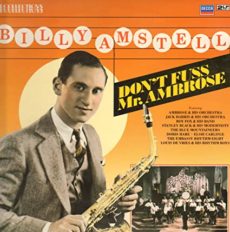
Billy Amstell was born on August 20, 1911 in London, England. At ten he played piano and at thirteen was teaching himself how to play the alto saxophone. He performed in Glasgow before moving to London in 1930, working with violinist Jack Harris.
During the next year, Billy recorded with Roy Fox and Spike Hughes and became a member of the Bert Ambrose Orchestra in which he played tenor saxophone. In the 1940s he worked for bandleader Geraldo and in the 1950s for the BBC Dance Orchestra, and in the 1960s while a studio musician he worked with George Chisholm.
The 1980s saw Amstell playing clarinet, releasing a solo album, Session After Midnight on the Zodiac label, and wrote his autobiography, Don’t Fuss, Mr. Ambrose. Saxophonist and clarinetist Billy Amstell, who continued to perform into his nineties, passed away on December 19, 2005 at the age of 94.
More Posts: bandleader,clarinet,history,instrumental,jazz,music,saxophone
Daily Dose Of Jazz…
Albert Morgan was born on August 19, 1908 in New Orleans, Louisiana into a musical family. He started on clarinet, then learned baritone saxophone, tuba, and bass. After taking lessons with Simon Marrero around 1919, he played with his brother Isaiah. Relocated briefly to Pensacola, Florida he played with Mack Thomas and Lee Collins.
Returning to New Orleans to play on riverboats with Fate Marable and Sidney Desvigne. Al went on to play with Davey Jones and Cecil Scott and recorded with the Jones & Collins Astoria Hot Eight.
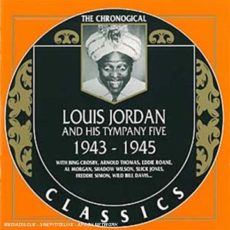
In the 1930s, Morgan led his own band and played as a sideman with Fats Waller, Les Hite, Zutty Singleton, Louis Jordan, and Sabby Lewis. This period saw him performing with Otto Hardwick and then spent four years with Cab Calloway from 1932 to 1936.
After leaving the Calloway orchestra, Al settled in California, playing live, on record, and on film. His film appearances include a feature on “Reefer Man” with the Calloway band in International House, Cab Calloway’s Hi-De-Ho, with Louis Armstrong in Going Places, and in The Gene Krupa Story.
From the 1950s to the 1970s, Morgan played extensively with Buddy Banks in a duo. Morgan recorded with Chu Berry, Coleman Hawkins, Don Byas, Jack Teagarden, Jay McShann, Red Allen, and T-Bone Walker.
Double bassist Al Morgan passed away on April 14, 1974 in Los Angeles, California.
More Posts: bandleader,bass,history,instrumental,jazz,music
Three Wishes
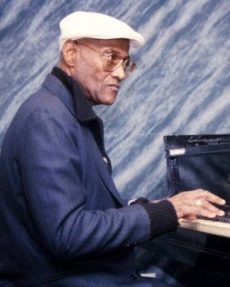
When inquired, Joe Knight told Nica that his three wishes would be:
-
-
“I would like to be inordinately healthy, to give me the strength to do anything of which I am capable to the fullest extent.”
-
“I would like to have a certain peace of mind – which could be obtainable from the result of number one.”
- “I would like to develop, within the span of my lifetime, the art of music.”
-
*Excerpt from Three Wishes: An Intimate Look at Jazz Greats ~ Compiled and Photographed by Pannonica de Koenigswarter
More Posts: baroness,history,instrumental,jazz,music,pannonica,piano,three,wishes