

The Jazz Voyager
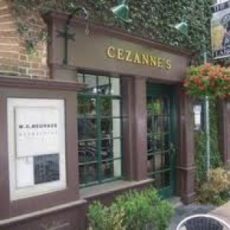
The Jazz Voyager is flying off to Houston, Texas to Cezanne upstairs from the Black Labrador Restaurant located at 4100 Montrose Boulevard, 77006. Currently the steadiest place to hear straight-ahead jazz in this town. This small room hosts local artists most nights with occasional touring artists stopping in to perform.
Saxophonist Woody Witt books the club and it is only open Friday and Saturday from 9:00pm -12:00am with two sets each night. General cover is $10.00 except when noted for special shows and events. Parking is available onsite as well as on the street. The club admits on a first come first serve basis and does not take reservations, and the restaurant downstairs offers a limited menu for jazz patrons.
Looking forward to checking out the Bruce Saunders Quartet this Friday evening. More information can be attained by calling 832-592-7464. #wannabewhereyouare #jazz #voyager #music

More Posts: adventure,club,genius,jazz,museum,music,preserving,restaurant,travel,voyager
Three Wishes
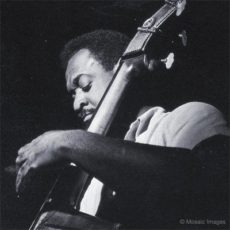
Responding to the question of three wishes by the Baroness Gene Taylor said:
- “Money.”
- “Health. That’s all there is.”
*Excerpt from Three Wishes: An Intimate Look at Jazz Greats – Complied and Photographed by Pannonica de Koenigswarter

More Posts: baroness,bass,history,instrumental,jazz,musician,pannonica,three,wishes
Requisites
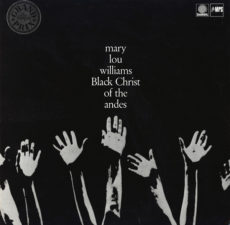
Black Christ of the andes is a 1963 recording from Mary Lou Williams on the MPS label. Photographer Charles “Chuck” Stewart provided the original cover image for designer Gigi Berendt, however, there was a second image provided for the 2004 reissue. In the mid-to-late 1950s, the jazz composer and pianist retired from public performance for nearly four years. During her hiatus she converted to Catholicism, and the first record she made after her return was a marked departure from her previous work: it was a mass.
In 1962, the Catholic Church canonized a new saint: A Peruvian brother of the Dominican Order named Martin de Porres, the son of a freed slave named Ana Velazquez and a Spanish gentleman who refused to recognize him because he was born with his mother’s dark features. St. Martin de Porres was a gifted healer who was dedicated to the poor — today, he is the patron saint of those who seek racial harmony.
The fourteen tracks on the album are St. Martin de Porres, It Ain’t Necessarily So, The Devil, Miss D. D., Anima Christi, A Grand Night For Swinging, My Blue Heaven, Dirge Blues, A Fungus Amungus, Koolbonga, Forty-Five Degree Angle, Nicole, Chunka Lunka and Praise The Lord.
The opening hymn, “St. Martin de Porres,” begins with a choir singing a cappella. The chords — dense and full of satisfying tensions — showcase Williams’ previously underutilized aptitude for vocal arrangement. As they sing the saint’s name, the choir slows down, masterfully swelling on the vowels as if to prove their devotion. When Williams finally enters on the keys, she does so with an Afro-Latin groove, perhaps a nod to the heritage of the hymn’s subject.
Williams, a leading exponent of stride piano, a difficult style of playing similar to ragtime, was developed in New York City’s Harlem during World War I. As one of the most influential women in jazz, she was a mentor to the likes of Charlie Parker and Thelonious Monk.
Mary Lou Williams’ Black Christ of the andes is jazz for the soul and an overlooked choral masterpiece that should be a part of every collection.

More Posts: choice,classic,collectible,collector,history,instrumental,jazz,music,piano
The Jazz Voyager
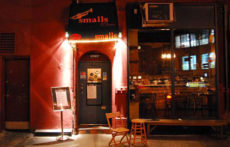
Heading back across the pond to New York City, the Jazz Voyager is coming into the city downtown to Greenwich Village to Smalls Jazz Club at 183 W 10th St, New York, NY 10014. A staple on the jazz scene since 1994, it was founded by Mitchell Borden, a former Navy submariner, registered nurse, philosopher & jazz violinist. His initiative was to create an environment that was conducive to jazz music and culture. Under his generous care, a culture of vibrant and newly energized young musicians claimed Smalls as their home base and began to develop their individuality in the music.
This Thursday the Jazz Voyager will be catching an old favorite, Francisco Mela Group from 10:30pm to 1:00am. The cover is $20.00 for the entire evening, Sunday through Thursday with the exception of select shows, so please speak with the doorman.
Fridays and Saturdays the admission is $20 Per Set from 7:30 PM to 12:00 AM on . Patrons will be invited to stay for an extra set depending on availability. $10 Students, generally for the 2nd set and at the discretion of the doorman. $0 Angels, Wizards and Holy People are always free. Smalls never takes reservations, as it is a first come/first serve admission policy. #wannabewhereyouare #jazz #voyager
More Posts: adventure,club,genius,jazz,museum,music,preserving,restaurant,travel,voyager
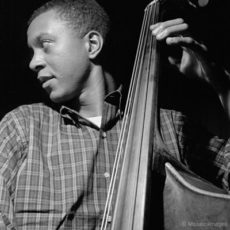
Three Wishes
Doug Watkins was asked for his three wishes by Nica and his answers were:
- “To be rich, prosperous, and a millionaire. Oh! I didn’t know you were serious. Change that – change that! To really be able to play.”
- “To live as a man should live.”
- “I want to go to Japan.”
*Excerpt from Three Wishes: An Intimate Look at Jazz Greats – Complied and Photographed by Pannonica de Koenigswarter
Doug Watkins: March 2, 1934 – February 5, 1962 / Bass
More Posts: baroness,bass,history,instrumental,jazz,musician,pannonica,three,wishes