

The Jazz Voyager
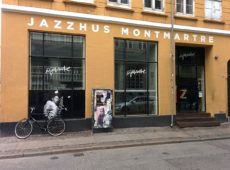
While the Jazz Voyager is tripping around across the pond he’s off to Denmark’s capital city of Copenhagen to the Jazzhus Montmartre at Store Regnegade 19A, DK-1110 Copenhagen K. A non-profit venue supported by the government, this jazz haven is located in a handsome yellow-painted building with large windows in the city centre. Attracting nordic greats and international names alike, the club is out of bounds for avant garde and funk/rock.
This week the Jazz Voyager will be entertained by the Katrine Madsen Quartet. Admission ranges from €25 for adults and students €13. Reservations are advised for name acts at +45 70 263 267. wannabewhereyouare

More Posts: adventure,club,genius,jazz,museum,music,preserving,restaurant,travel,voyager
Hollywood On 52nd Street
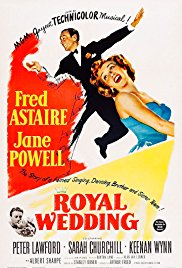
Too Late Now is a song composed by Burton Lane and the lyrics written by Alan Jay Lerner for the 1951 film Royal Wedding. The song was performed by Jane Powell.
The Story: The film centers around brother and sister dance team Tom and Ellen Bowen whose show closes in New York. Their agent, Irving Klinger (Keenan Wynn), books them in London for the same period as the Royal Wedding. They travel by ship where Ellen (Jane Powell) meets and becomes involved with Lord John Brindale (Peter Lawford). This causes her to miss a rehearsal. Tom (Fred Astaire) uses the time to dance with a hat rack and gym equipment.
Later Tom and Ellen attempt a graceful dance number as the ship rolls to and fro. Upon arrival brother and sister are met by Edgar Klinger (Wynn) who settles them into their hotel. Shortly afterward Tom holds auditions and meets Anne (Sarah Churchill). There is much indecision by the siblings about their romantic partners even though they are in-the-clouds. Ellen sings her third ballad, this time an open declaration of love, to Lawford with Too Late Now. Tom dances on the walls and ceiling of his hotel room. All ends well in this light musical. By the way, there is a vaudeville-style dance number in their show that features slapstick.
Too Late Now is the only song from this film that was to become a jazz standard.


Three Wishes
The three things that Horace Silver wished for were:
- “Immortality.”
- “To be rich.”
- “A baby.”
*Excerpt from Three Wishes: An Intimate Look at Jazz Greats – Complied and Photographed by Pannonica de Koenigswarter

More Posts: baroness,history,instrumental,jazz,musician,pannonica,piano,three,wishes
Requisites
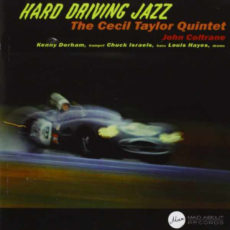
Hard Driving Jazz by the Cecil Taylor Quintet was recorded in New York City on October 13, 1958 at United Artists Records. This hard bop and modal session was licensed by United to Dillard et Cie, Imp. and released in 1959 on La Voix De Son Maître in Paris, France.
The cover photography was taken by Tom Burnside and the design of the cover was made by Griner/Lewis, the recording engineer was Fernando Vargas, Tom Wilson was the session producer and the liner notes were written by François Postif.
Four tunes made up this session composed by Chuck Israels, Jimmy Van Heusen, Johnny Burke, Kenny Dorham, John Klenner and Sam Lewis. Double Clutching, Like Someone In Love,Shifting Down and Just Friends for a short 33:14.
The players were Chuck Israels on bass, Louis Hayes on drums, Cecil Taylor on piano, Kenny Dorham on trumpet and on tenor saxophone was Blue Train (John Coltrane).

More Posts: choice,classic,collectible,collector,history,instrumental,jazz,music,piano
The Jazz Voyager
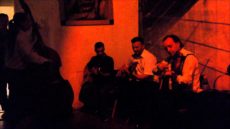
Next Stop: Berlin. The Jazz Voyager is going to have a listen to jazz at a small intimate 50 seat club at Donaustrasse 115 called Donau115 in the lively Neukölln district. Presenting top-quality straight-ahead and post-bop jazz on the ground floor of a building that was bombed in World War II, the floors above were torn down and rebuilt but the room Donau is original.
Admission is free but €5 donations encouraged for live music every Friday and Saturday, and most Sundays, Wednesdays and Thursdays. Beer is offered for €2.50 and the latest craze in drinks, Moscow Mules are €5. The club serves up often wildly original music is the operative word here and is said to be wunderbar. There is no phone but you can always go to donau115.de for more info. #wannabewhereyouare
More Posts: adventure,club,genius,jazz,museum,music,preserving,restaurant,travel,voyager