The Jazz Voyager
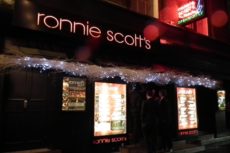
Ronnie Scott’s Jazz Club is the destination of this Jazz Voyager as I head across the pond to London, England. Opening October 30, 1959 in a basement at 39 Gerrard Street in the Soho district, it was set up and managed by musicians Ronnie Scott and Pete King. It then moved to its current and larger venue in 1965 at 47 Frith Street, W1D 4HT, UK.
This venerable bastion of jazz history will host jazz vocalist Rene Marie two days from now and the Jazz Voyager will be in the audience to enjoy another wonderful evening of her vocal charms. For those initiates be amongst the veterans who travel many miles or walk around the corner to return again and again. Make your reservations at 44 20 7439 0747.

More Posts: adventure,club,genius,jazz,music,preserving,restaurant,travel,voyager

Daily Dose Of Jazz…
Teddy Weatherford was born on October 11, 1903 in Pocahontas, Virginia and was raised in neighboring Bluefield, West Virginia where he learned to play the piano. But it was while living in New Orleans, Louisiana from 1915 through 1920, that he learned to play jazz piano.
Moving to Chicago, Illinois he worked with the bands of Erskine Tate through the 1920s and with such jazz notables as Louis Armstrong and Johnny Dodds and impressed the young Earl Hines. Restless to experience the world, Weatherford then traveled, first to Amsterdam and then around Asia playing professionally. In the early 1930s, he led a band at the Taj Mahal Hotel in Bombay, now Mumbai, India. He joined Crickett Smith’s band in Jakarta, Indonesia and took over leadership of Smith’s band in Ceylon, now Sri Lanka, in 1937.
During World War II, Teddy led a band in Calcutta, where he made radio broadcasts for the U. S. Armed Forces Radio Service. Performers with in his band included Bridget Althea Moe, Jimmy Witherspoon, Roy Butler and Gery Scott.
Pianist and bandleader Teddy Weatherford, who was also an accomplished stride pianist, passed away of cholera in Calcutta, aged 41, on April 25, 1945.

More Posts: piano
Daily Dose Of Jazz…
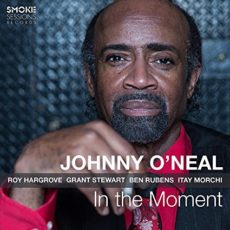
Johnny O’Neal was born October 10, 1956 in Detroit, Michigan and his playing was influenced by pianists Oscar Peterson and Art Tatum. In 1974, he moved to Birmingham, Alabama and worked as a musician, never needing a day job to make ends meet. There he worked with locals Jerry Grundhofer, Dave Amaral, Cleveland Eaton, and Ray Reach.
Moving to New York City in 1981 to perform with Clark Terry, he also landed a regular job at the Blue Note, accompanying among numerous others, Dizzy Gillespie, Ray Brown, Nancy Wilson, Joe Pass and Kenny Burrell. From 1982 to 1983 Johnny was a member of Art Blakey and the Jazz Messengers and made his Carnegie Hall debut in 1985.
During the Nineties he lived in Atlanta, Georgia and performed prolifically at Churchill Grounds and Just Jazz, before settling in Canada for a few years. He has recorded with Art Blakey, Russell Malone, Magic City Jazz Orchestra, SuperJazz Big Band and the Alabama Jazz Hall of Fame All-Stars, among others.
On the recommendation of Oscar Peterson, O’Neal portrayed Art Tatum in the 2004 movie Ray, recreating Tatum’s sound on the song Yesterdays. He has been profiled in the 2006 DVD Tight, was featured in Lush Life: Celebrating Billy Strayhorn, performing with the Jazz at Lincoln Center Orchestra and received a standing ovation.
Neo-bop pianist, vibist and vocalist Johnny O’Neal, whose playing ranges from the technically virtuosic to the tenderest of ballad interpretations, was a 1997 inductee of the Alabama Jazz Hall of Fame and continues his career performing, recording and touring.

More Posts: piano,vibraphone,vocal
Daily Dose Of Jazz…
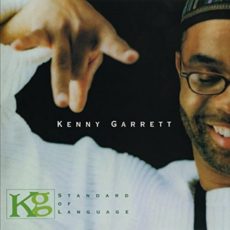
Kenny Garrett, born October 9, 1960 in Detroit, Michigan and his father played saxophone as a hobby. After graduating from Mackenzie High School in 1978 he joined the Duke Ellington Orchestra, led by Mercer Ellington. He moved on to join the Mel Lew Orchestra playing the music of Thad Jones followed by a stint with the Dannie Richmond Quartet that focused on the music of Charles Mingus.
1984 saw him recording his first album as a bandleader, Introducing Kenny Garrett, on the Criss Cross label. Moving to Atlantic Records he recorded Prisoner of Love and African Exchange Student. Since 1990 the majority of Garrett albums are co-produced by pianist/composer Donald Brown beginning with signing with Warner Bros. Records label, releasing Black Hope in 1992. Songbook, his first album made up entirely of his own compositions, recorded in 1997, was nominated for a Grammy Award.
Over the course of his ongoing career Kenny has performed and recorded with among others, Art Blakey, Joe Henderson, Brad Mehldau, Freddie Hubbard, Woody Shaw, McCoy Tyner, Pharoah Sanders, Brian Blade, Marcus Miller, Chick Corea, John McLaughlin, Herbie Hancock, Bobby Hutcherson, Ron Carter, Elvin Jones, Geri Allen, Jack Walrath, Cedar Walton, Rodney Kendrick, Charnett Moffett and Mulgrew Miller. Best known in many circles for the five years he spent playing with Miles Davis during the trumpeter’s electric period.
Garrett has won a Grammy Award, has been nominated for a Soul Train Award, a Grammy and a NAACP Image Award nominations for Seeds from the Underground, was awarded an Echo Award in the Saxophonist of the Year in 2013 and has received an Honorary Doctorate in Music from Berklee College of Music. Post-bop saxophonist and flautist Kenny Garrett who has released nineteen albums as a leader and over thirty as a sideman, continues to pursue his solo career.
More Posts: saxophone
Daily Dose Of Jazz…
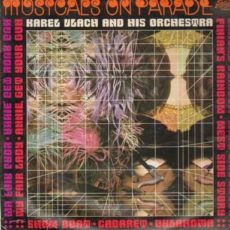
Karel Vlach, born in Prague, Czech Republic on October 8, 1911 and founded his first orchestra in 1938. Over the years many important composers, instrumentalists and arrangers of the Czech jazz scene went through his band.
From 1947 to 1948 Vlach’s orchestra performed at the V+W Theatre, recorded prolifically with Supraphon and his albums include both light classical, orchestral, jazz and pop arrangements for big band with strings.
During the decades from 1940to 1980 Karel arranged and conducted many Czech film scores, launched the singing careers of Czech artists Yvetta Simonová and Milan Chladil. He and his musical colleagues Dalibor Brazda and Gustav Brom also arranged and recorded many titles that are now a part of the Great American Songbook for British singer Gery Scott in the late 1950s.
Dance orchestra conductor and arranger Karel Vlach passed away on February 26, 1986 in Prague.