

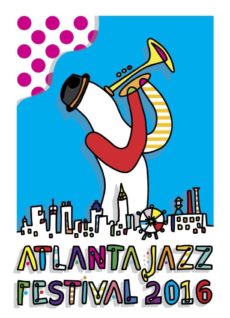
Atlanta Jazz Festival…2016
Last year signaled the mounting of the 39th time that Office of Cultural Affairs, under the current Director Camille Russell Love leadership, that she and her staff brought local favorites, emerging musicians and national performers to Piedmont Park for the 2016 jazz festival weekend that ran from May 27th – 29th.
Thousands turned out to grill, eat and sit on blankets, lawn chairs and under tents before three stages, Legends, International and Local to enjoy as eyewitnesses the talents of Alex Lattimore, Anonymous DaBand, Assaf Kehati, Band Room Nation, Camila Meza, Chandra Currelley, Chargaux, Daby Touré, Eliane Elias, Enoch, Etienne Charles, Eugenie Jones, Gregory Porter, Hypnotic Brass Ensemble, Jamison Ross, Joe Alterman, JOI, King Ace Beats, KP the Great, Mabu’s Ark Band, Mette Henriette, Navy Bound Southeast V.I.P. Protocol Combo, Next Collective, Rialto Jazz for Kids, Rialto Youth Jazz Orchestra, Tatran, The Benny Golson Quartet, The Headhunters, Theo Croker, and Tomeka Reid
Drummer Lil John Roberts and trumpeter Russell Gunn Quartet hosted respective nights of the Late Night Jazz Jam.
Sponsors for this year’s festival were Bank of America, Publix, PNC Bank, Loews Atlanta Hotel, MARTA, Cantoni, The Coca-Cola Company and the Atlanta Convention & Visitors Bureau. #AJF40

#preserving genius
More Posts: festival,forty,free,history,jazz,music,tradition,years
Daily Dose Of Jazz…
Mike Zwerin was born May 18, 1930 in New York on May 18, 1930. He studied at the High School of Music and Art and began leading bands in his teens, employing several up-and-coming musicians. At the age of 18, while on summer break from the University of Miami, he was the trombonist in Miles Davis’s nonet at the Royal Roost club in New York. This band was recorded performing the live sessions in 1948 and its music the following year culminated in the album that became immortalized as Birth of the Cool.
He abandoned his musical life for much of the 1950s but after a spell in France he returned to New York in 1958 and played the trombone in several big bands. However, in 1960 after his father’s death, he returned to the world of business and he took over as president of his dad’s company, the Capitol Steel Corporation. Over the next four years Mike kept a hand in jazz, working in John Lewis’s big band Orchestra USA, with whom he recorded and directed a small group. He also worked briefly with pianist Earl Hines but by the mid-1960s he withdrew from the business.
Zwerin moved to London in 1969 and then, in 1972, to Paris, which would be his home for the rest of his life. Nevertheless, he kept his hand in as a trombonist throughout the 1980s, working with his fellow expatriate Hal Singer and with the guitarist Christian Escoudé. In 1988 he toured with the Big Band Charles Mingus, played briefly with t Swiss bandleader George Gruntz and played with the French fusion band Telephone.
As a music critic and columnist he wrote for the Village Voice, Down Beat, Rolling Stone, Penthouse, the International Herald Tribune and Bloomberg News. He authored several books about his own life in the world of jazz, most notably The Silent Sound of Needles, about his struggles with drug addiction, Close Enough for Jazz and The Parisian Jazz Chronicles: An Improvisational Memoir, but his most ambitious book may be La Tristesse de Saint Louis: Swing Under the Nazis that included the story of the Kille Dillers and the Ghetto Swingers, two bands that played in concentration camps, and how jazz survived across Europe though banned by the Nazis and labeled degenerate music.
Throughout his career trombonist and bass trumpeter Mike Zwerin would perform and record with Miles Davis, Maynard Ferguson, John Lewis, Archie Shepp, Claude Thornhill and Bill Russo, arrange, direct and produce an album of Kurt Weill songs with the Sextet of Orchestra U.S.A., before passing away after a long illness on April 2, 2010 in Paris, France at the age of 79.
Sponsored By

#preserving genius

Daily Dose Of Jazz…
Warren Smith was born on May 17, 1908 in Middlebourne, West Virginia and and taught by hi s multi-instrumentalist father, he began playing piano from age seven. He learned cornet and saxophone before settling on the trombone.
Starting out in Harrison’s Texans, a territory band in the 1920s, Smith followed with an extended half-dozen year run in Abe Lyman’s employ in the 1930s. He worked with Bob Crosby in Indianapolis, Indiana during late in the 1930s before returning to work with Lyman briefly and closing out the decade.
Moving to Chicago, Illinois in the Forties, he settled in with Bud Jacobson and Bob Scobey, before heading to the West Coast to work with Jess Stacy and Lu Watters. In 1955 he toured with Duke Ellington, then played with Joe Darensbourg from 1957 to 1960. Through the Sixties he performed with Wild Bill Davison and Red Nichols.
On August 28, 1975 in Santa Barbara, California swing and mainstream trombonist Warren Smith, who never led a recording session but was fortunate to be able to make his living performing, passed away of natural causes at age 67.
Sponsored By

#preserving genius
Daily Dose Of Jazz…
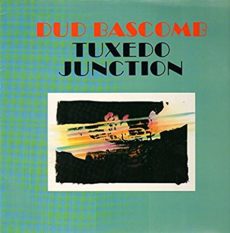
Wilbur Odell “Dud” Bascomb was born on May 16, 1916 in Birmingham, Alabama, the youngest of a family of ten children, and brother of tenor saxophonist Paul Bascomb. He played piano as a child but settled on trumpet, first playing with Erskine Hawkins at the Alabama State Teachers’ School, now Alabama State University in 1932. It was here that Hawkins led the Bama State Collegians band. Remaining with Hawkins until 1944, he soloed with him on many of his most well-known recordings.
Eventually he moved on to play in his brother’s septet, that became a big band later in the decade. He played briefly with Duke Ellington in 1947. During the 1950s Bascomb played for three years at Tyle’s Chicken Shack in New Jersey, leading a quintet which counted Lou Donaldson among its members.
He toured Japan three times with Sam Taylor and Europe with Buddy Tate in the 1960s, in addition to touring and recording with James Brown. He recorded sparingly as a leader and his Savoy Records sessions in 1959-60 were not issued until 1986.
Trumpeter Dud Bascomb passed away on December 25, 1972 in New York City. He was inducted into the Alabama Jazz Hall of Fame in 1979.

#preserving genius
More Posts: trumpet
The Jazz Voyager
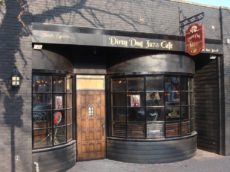
With reservations made at 313-882-5299, this Jazz Voyager is all set to head out to Grosse Pointe Farms, Michigan for some dinner and jazz Tuesday night with the Charles Boles Quartet at the The Dirty Dog Jazz Café located at 97 Kercheval Avenue, 48236, just thirteen miles from Detroit.
Seating just 65 diners and jazz enthusiasts each night, one is afforded the opportunity to enjoy legends, icons, and greenhorns of the jazz world. The café is modeled after an English pub, so there are lots of dark wood leather seats and lots of deep reds. The cuisine is upscale and eclectic and the music is live in this intimate space. Be warned music is played through dinner from 6:00pm – 9:00pm, so there just may be some chatter, hopefully not too loud. #jazzvoyager#wannabewhereyouare
Sponsored By

Voices From The Community
#preserving genius
More Posts: adventure,club,genius,jazz,music,preserving,restaurant,travel,voyager