

Daily Dose Of Jazz…
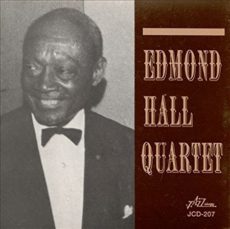
Edmond Hall was born on May 15, 1901 in Reserve, Louisiana, into a musical family. His father, Edward, played the clarinet in the Onward Brass Band, joined by Edmond’s maternal uncles, Jules Duhe on trombone, Lawrence Duhe on clarinet, and Edmond Duhe on guitar. The Hall brothers, Robert, Edmond, and Herbert, all became clarinetists, but Edmond was first taught guitar by his uncle Edmond. When Hall finally picked up the clarinet, he played it within a week.
Tired of working as a farm-hand, by 1919 he left for New Orleans where he signed up with the band of Bud Rousell, then with trombonist Jack Cary and blues cornetist Chris Kelley. His first big break came in late 1920, when he went to a dance at Economy Hall, saw Buddy Petit and discovered his clarinet player had left the band and the following Saturday Hall was sitting in with Petit’s band as a replacement until 1922.
Arriving in Pensacola, Florida in 1923, there was a series of band as he joined Lee Collins, then Mack Thomas, the Pensacola Jazzers, where Hall met the young trumpeter Charles “Cootie” Williams, on to “Eagle Eye” Shields, the Alonzo Ross DeLuxe Syncopators, finally in 1928 with pianist Arthur “Happy” Ford.
1929 saw Edmond moving back to New York he joined Charlie Skeet’s band, followed by Claude Hopkins and an invitation to play the Savoy Ballroom. By 1935 he left Hopkins and took residency in Billy Hicks’ Sizzling Six. Hall’s new sound on the clarinet led him to recording with the big stars and in 1937 he had his first recording session with Billie Holiday, sitting alongside tenor saxophonist Lester Young. Leaving Hicks he stepped into Café Society, joining Joe Sullivan’s band in late 1937. In between the regular job at the Cafe Society he recorded with Bud Freeman, Teddy Wilson, Charlie Christian, Henry “Red” Allen, J.C. Higginbotham, Art Tatum, Big Joe Turner, Hot Lips Page, Zutty Singleton, Meade Lux Lewis, Big Sid Catlett, Josh White, Ida Cox, Coleman Hawkins, Helen Ward, Vic Dickenson, Sidney de Paris, Wild Bill Davison, Eddie Heywood, Roy Eldridge and Jack Teagarden among others.
In 1941 Edmond led his first recording session as a leader, joined Teddy Wilson’s outfit, and made recordings as Edmond Hall’s Blue Note Jazzmen, the Edmond Hall Sextet, the Edmond Hall Celeste Quartet, Edmond Hall’s Star Quintet, Ed Hall and the Big City Jazzmen, and Edmond Hall’s Swingtet. Very popular among the musicians and critics and was frequently invited to the New York Town Hall Concerts led by Eddie Condon.
By 1944 Hall began fronting his own band, becoming a draw for Café Society. More recording dates followed for the famous Commodore Records and Blue Note labels. While business at the Café Society was exceedingly good, Hall appeared at Town Hall Concerts in between. Hall relocated successfully with his band to the Café Society Uptown and would also play for World War II servicemen.
Throughout his career he would perform with pianist George Wein, Louis Armstrong’s All Stars, tour Europe, settle in Los Angeles, California to shoot the film High Society with Grace Kelly and Bing Crosby, and appear on the Ed Sullivan Show. In 1952, Hall, Buzzy Drootin and Ralph Sutton appeared as the Ralph Sutton Trio in Saint Louis, where they played the Encore Lounge for several weeks and were the first mixed trio there. He received the Esquire Magazine Silver Award for clarinet, a certificate for nomination as one of the outstanding jazz artists of 1961 from Playboy Magazine and was awarded as the best Clarinetist by the English Melody Maker.
Clarinetist and bandleader Edmond Hall, who also played alto and baritone saxophones and is perhaps best known for the 1941 chamber jazz song Profoundly Blue, which is regarded as a pre-World War II jazz classic, passed away on February 11, 1967 in Boston, Massachusetts.
Sponsored By
Voices From The Community

#preserving genius
Daily Dose Of Jazz…
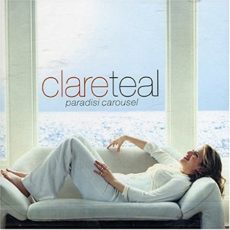
Clare Teal was born May 14, 1973 in Kildwick, Yorkshire and developed an interest in jazz from an early age, through her father’s collection of 78 rpm records. She became obsessed with big band singers like Ella Fitzgerald and big bands like Joe Loss. Taking music lessons first on the electronic organ, then more formally on clarinet, before studying music at Wolverhampton University. While there she found herself without a clarinet for an unexpected examination.
Deciding to sing, after graduation, she started a career in advertising, singing in her spare time with amateur and semi-professional bands. She recorded her first album Nice Work in 1995 but her big break came when she was asked to stand in for Stacey Kent at a weekend festival in Llandrindod Wells. This led to a three-album contract with the jazz label Candid Records and her popularity soared, with appearances on radio and television bringing her to the attention of a wider public. In 2004 Clare released her debut album Don’t Talk for Sony Jazz in what was the biggest recording deal by any British jazz singer. It topped the jazz charts and entered the UK Top 20 UK Albums Chart.
While the majority of her recordings are cover versions of standards, her albums feature original songs and contemporary cover versions, Teal has toured throughout the UK and the world, with her pianist, trio, mini big band, or Hollywood Orchestra. She has worked with the Hallé Orchestra, BBC Concert Orchestra, RTÉ Concert Orchestra, and the John Wilson Orchestra as well as other top big bands.
Her concerts have been broadcasted across the BBC radio and television network, opened for Liza Minnelli, collaborated with Van Morrison, won British Jazz Vocalist of the Year for three years and BBc Jazz vocalist of the Year among others. Vocalist and songwriter Clare Teal has recorded fifteen albums and continues to perform and record.
Sponsored By
www.whatissuitetabu.com
#preserving genius
More Posts: vocal
Daily Dose Of Jazz…
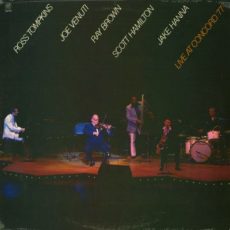
Ross Tompkins was born in Detroit, Michigan on May 13, 1938 and went on to attend the New England Conservatory of Music. This he followed with a move to New York City in 1960 where he worked and recorded with Kai Winding from 1960 to 1967.
During the Sixties he also performed with Eric Dolphy, Wes Montgomery, Bob Brookmeyer & Clark Terry, Benny Goodman, and Bobby Hackett, Al Cohn and Zoot Sims into the Seventies. A move to Los Angeles, California in 1971 found him playing and recording with Louie Bellson, Joe Venuti, and Red Norvo through the 1970s and Jack Sheldon in the 1980s.
He was best known for his longtime association with The Tonight Show Band under the leadership of Doc Severinsen, becoming a member of the band from 1971 until Carson’s retirement in 1992. He recorded for Concord Jazz as a leader in the second half of the 1970s.
He recorded for Concord Records as a leader in the second half of the Seventies decade, and in the eighties and Nineties recorded for Famous Door, Progressive, HD and Arbors record labels, culminating in a dozen albums. As a sideman he recorded 53 albums with J.J. Johnson, Tommy Newsom, Herb Ellis, Snooky Young, Bill Watrous, Joe Newman, Tony Mottola, Howard Roberts, Lorraine FEather, Peanuts Hucko, Red Norvo, Bob Cooper, Harry “Sweets” Edison, Jack Lemmon, Conte Candoli, Polly Podewell and Plas Johnson among others.
Pianist Ross Tompkins passed away of lung cancer at the age of 68 on June 30, 2006.
Sponsored By
Bronze Lens
#preserving genius
More Posts: piano
Daily Dose Of Jazz…
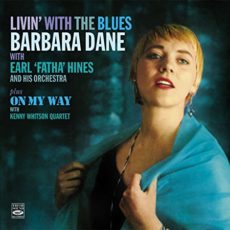
Barbara Dane was born May 12, 1927 in Detroit, Michigan. Out of high school she began singing regularly at demonstrations for racial equality and economic justice and while still in her teens, she sat in with bands around town and won the interest of local music promoters. Getting an offer to tour with Alvino Rey’s band, she turned it down in favor of singing at factory gates and in union halls.
Moving to San Francisco,California in 1949, Dane began raising her own family and singing her folk and topical songs around town as well as on radio and television. When a jazz revival was then shaking the town by the 1950s she became a familiar figure at clubs along the city’s Embarcadero with her own versions of women’s blues and jazz tunes. New Orleans jazz musicians like George Lewis and Kid Ory and locals like Turk Murphy, Burt Bales, Bob Mielke and others regularly invited her onto the bandstand.
Her first professional jazz job was with Turk Murphy at the Tin Angel in 1956. Ebony Magazine did a seven page spread on the alto voiced songstress who would moan of trouble, two-timing men and freedom aided and abetted by some of the oldest names in jazz who helped give birth to the blues, with photos of her performing with Memphis Slim, Willie Dixon, Muddy Waters, Clara Ward, Mama Yancey, Little Brother Montgomery and others.
By 1959 she appeared with Louis Armstrong on the Timex All-Star Jazz Show hosted by Jackie Gleason. She went on to tour the East Coast with Jack Teagarden, appeared in Chicago with Art Hodes, Roosevelt Sykes, Otis Spann and others, played New York with Wilbur De Paris and his band, and appeared on The Tonight Show Starring Johnny Carson as a solo guest artist. She would guest perform on The Steve Allen Show, Bobby Troop’s Stars of Jazz, and Alfred Hitchcock Presents.
In 1961, the singer opened her own club, Sugar Hill: Home of the Blues, on San Francisco’s Broadway in the North Beach district, with the idea of creating a venue for the blues in a tourist district where a wider audience could hear it. There Dane performed regularly with her two most constant musical companions: Kenny “Good News” Whitson on piano and cornet and Wellman Braud, former Ellington bassist.
During the Sixties while working as a solo performer on the coffeehouse circuit Barbara also became an activist in the peace and civil rights movements, touring around the nation and performing at demonstrations and anti-war establishments worldwide and became the first U.S. musician to tour post-revolutionary Cuba.
In 1970 Dane founded Paredon Records with husband Irwin Silber, a label specializing in international protest music. She produced 45 albums, including three of her own, over a 12-year period. The label was later incorporated into Smithsonian-Folkways, a label of the Smithsonian Institution, and is available through their catalog. Arhoolie Records, Tradition Records, Runt Distribution, and DBK Works label have issued a compact discs of her music within the last twenty years. She as well has released her earlier blues and jazz recordings on CD on the Barbara Dane CDs site.
At 90 years old vocalist Barbara Dane has retired from music but has left these accolades in her wake: Jazz critic Leonard Feather wrote “Bessie Smith in stereo,” in the late 1950s, Time Magazine stated “The voice is pure, rich … rare as a 20 karat diamond” and quoted Louis Armstrong’s exclamation upon hearing her at the Pasadena Jazz Festival: “Did you get that chick? She’s a gasser!”
Sponsored By

#preserving genius
Atlanta Jazz Festival…2015
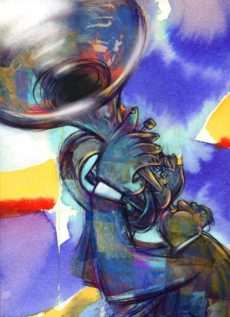
2015 and another year and BADBADNOTGOOD played the Kickoff Party and the festival excitement was upon the city. As folks settled into Piedmont Park Memorial Day Weekend for the annual jazz gathering, it marked the start of another summer of music in Atlanta. The crowd came from near and far as they always do for this traditional free festival.
Once again the staff of the Office of Cultural Affairs put on a fabulous festival with many of Atlanta’s favorites Emrah Kotan, Four Women: A Tribute to Nina Simone Featuring Kathleen Bertrand, Julie Dexter, Rhonda Thomas and Terry Harper, Joe Gransden and His Big Band, Tony Hightower and the Wolfpack ATL. Coupled with the above, festival goers had the pleasure to hear some of the best names in jazz including Alfredo Rodríguez Trio, Arturo O’Farrill & The Afro Latin Jazz Orchestra, Banda Magda, Contemporary Violinist Daniel D., Derrick Hodge, Diane Schuur, Dida Pelled, Fernanda Noronha, Jeff Sparks, Jessie Davis and the Nebraska Jones Experiment, Kenosha Kid, Mad Satta, Marcus Strickland Twi-Life, Mastery, Navy Band Southeast V.I.P. Protocol Combo, Nettwork Trio: Charnett Moffett, Stanley Jordan, and Jeff “Tain” Watts, Otis Brown III, Pharoah Sanders Quartet, Strings, The Rad Trads, Thundercat,.
The Youth Jazz Band Competition winners were Westlake High School Jazz Ensemble taking 1st Place, Tri-Cities High School Jazz Band in 2nd Place, North Atlanta Center for the Arts Jazz Band brought home 3rd Place.
Lil’ John Roberts and His All Star Jam Band held down the Late Night Jazz Jam. #AJF40
#preserving genius
More Posts: festival,forty,free,history,jazz,music,tradition,years