

Daily Dose Of Jazz…
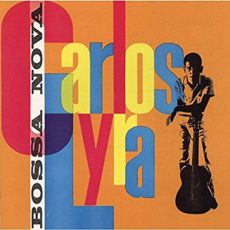
Carlos Lyra was born on May 11, 1939 in Botafogo, Rio de Janeiro, Brazil. His first song to be recorded was Menina (Girl) in 1954, released as a single by Sylvia Telles in 1955, with Foi a noite (It Was The Night)by Antonio Carlos Jobim on the other side of the record. The composers met for the first time because of this single, when Jobim called Lyra, the other side of the record. Both were composing their own music and writing lyrics and created a colloquial and completely new style. Writing about their own experiences and feelings was a completely different lyrical style from most songs written at that time.
His first compositions from 1954 to 1956 included Quando chegares (When you Arrive), Barquinho de Papel (Paper Boat), Ciúme (Jealuosy), Criticando (Criticizing) and Maria Ninguém (Maria Nobody). By 1957 Carlos began collaborating with the lyricist Ronaldo Bôscoli, songs such as Lobo bobo, Saudade fez um samba (Saudade Made A Samba) and Se é tarde me perdoa (If it’s Late Forgive Me).
In 1958 wrote Aruanda and Quem quiser encontrar o amor (Whoever Want To Find Love), with Geraldo Vandré. In 1960 he started to compose together with Vinicius de Moraes, songs as Você e eu (You And Me), Coisa mais linda (Most Beautiful Thing), Sabe você? (Do You Know), Samba do Carioca (Samba From Rio), Maria Moita (Maria Bush) and many others. They wrote together a musical play in 1962 called Pobre Menina Rica (Poor Little Rich Girl Blue).
In 1959 Carlos and Antonio Carlos Jobim, were the first two music composers, together with lyricists Vinicius de Moraes and Ronaldo Boscoli, to be recorded by João Gilberto on his first LP titled Chega de Saudade, (Enough Of Saudade) which was called the first generation of Bossa Nova.
1961 saw Lyra as one of the five founders of Center of Popular Culture aka CPC, where he started to write songs for cinema and theater. He also wrote the song Influência do Jazz (Influence Of Jazz), one of the songs he sang at the Bossa Nova Concert at Carnegie Hall in 1962.
Composer, lyricist, guitarist and vocalist Carlos Lyra, who penned many bossa nova and Música popular brasileira classics, continues to compose, record, and perform today.
Sponsored By

#preserving genius
More Posts: guitar
Daily Dose Of Jazz…
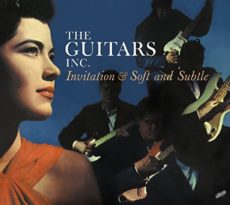
Alton Reynolds Hendrickson was born May 10, 1920 and grew up in Eastland, Texas before moving to the West Coast. In 1940 he worked for Artie Shaw and performed in Fred Astaire ‘s second chorus. By the mid-1940s he was in the coast guard but in the post-war period he played guitar in the bands of Freddie Slack, Ray Linn and Benny Goodman, whose sextet he also belonged to.
As a baritone Hendrickson was recorded on Goodman’s On a Slow Boat to China , which became a big hit in the USA in 1947. The 1950s saw him as a busy studio session player for both film and television soundtracks, The Danny Kaye Show, as well as for pop productions from Columbia Records since 1959. He worked in the productions of The Weavers and The Monkees, with country singer Sheb Wooley and jazz pianist Dodo Marmarosa.
In the field of jazz and popular music his was involved from 1940 to 1986 to 493 recording sessions with Rosemary Clooney, Bing Crosby, Doris Day, Lee Hazlewood, Eartha Kitt, Frankie Laine, Henry Mancini, Ann-Margret, Dean Martin, Ella Mae Morse, Harry Nilsson, Louis Prima, Elvis Presley Shorty Rogers, Bud Shank and Frank Capp’s Juggernaut big band.
Retiring to Oregon in the late Eighties he authored the Encyclopedia of Bass Chords, Arpeggios and Scales and Al Hendrickson Jazz Guitar Solos: Complete Book. Guitarist Al Hendrickson, who also played banjo, mandolin and was a vocalist, passed away on July 19, 2007 in North Bend Oregon.
Sponsored By

#preserving genius
More Posts: guitar
Daily Dose Of Jazz…
Eddie Preston was born in Dallas, Texas on May 9, 1925 and didn’t begin playing in the big bands until after World War II. From 1955 to 1972 he did stints with Lionel Hampton, Ray Charles, Louis Jordan, Duke Ellington, and Count Basie.
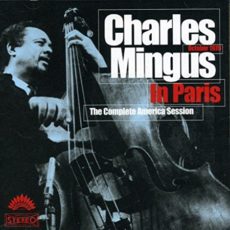
He played with Charles Mingus between 1963 and 1965 and again in 1969–72. During this period in between his working with Mingus, Eddie spent time freelancing with musicians such as Sonny Stitt and Frank Foster. He returned once more to work with Ellington in 1971 and then led a few groups, as well as working with Roland Kirk in 1977 and Archie Shepp in 1979.
Trumpeter Eddie Preston, who never released an album as a leader, passed away on June 22, 2009 in Palm Coast, Florida.

#preserving genius
More Posts: trumpet
Daily Dose Of Jazz…
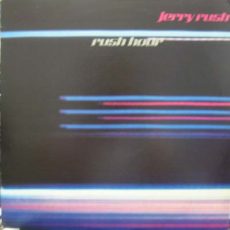
Jerry Rusch was born Jerome A. Rusch on May 8, 1943 in St. Paul, Minnesota and studied at the University of Minnesota from 1962 to 1964. Afterward he played trumpet in an Army Reserve band before moving to Los Angeles, California in 1966.
During his time in Los Angeles Rusch played with the Gerald Wilson Big Band beginning in 1967, then backed Ray Charles from 1972 to ‘73, followed by Clifford Jordan, Joe Henderson, Willie Bobo, Louie Bellson, Teddy Edwards, Frank Foster, and Thad Jones & Mel Lewis.
He played with Joe Haider’s orchestra in Europe from 1982 to 1984. As a leader he recorded five albums, Rush Hour on Inner City Records, Native L.A., Bright Moments and Back Tracks for Jeru and Serenata on Jazzschool Records. As a sideman Jerry recorded extensively; among his credits are work with Charles Kynard, Benny Powell, Stan Kenton, Moacir Santos, Henry Franklin, and Eddie Cleanhead Vinson.
Not limiting himself to jazz he also backed Gladys Knight, the Rolling Stones, Smokey Robinson, Diana Ross, and The Temptations. Though uncredited, he was one of the cornet players in the final parade scene in the 1962 film, The Music Man along with member of the University of Southern California’s marching band, the Spirit of Troy, and many junior high school students from Southern California.
Trumpeter, cornetist and composer Jerry Rusch, who was also credited as Jerry Rush, passed away from liver cancer on May 5, 2003 in Las Vegas, Nevada.
Sponsored By

Voices From The Community
#preserving genius
Daily Dose Of Jazz…
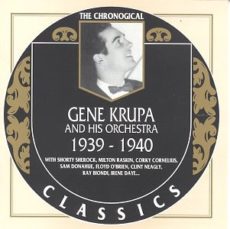
Floyd O’Brien was born May 7, 1904 in Chicago, Illinois and first played trombone with the Austin High School Gang in the 1920s and later in the decade he played with Earl Fuller, Floyd Town, Charles Pierce, Thelma Terry, and Husk O’Hare. Between 1930-31 he worked in a pit band at a theater in Des Moines, Iowa.
O’Brien moved to New York City and played with Mal Hallett, Joe Venuti, Smith Ballew, Mike Durso, Phil Harris, Gene Krupa and Bob Crosby between 1932 and 1942. Relocating to Los Angeles, California in 1943 he played with Eddie Miller, Bunk Johnson, Shorty Sherock, Jack Teagarden, and Wingy Manone.
By 1948 Floyd was back in Chicago performing with with Bud Freeman, Art Hodes and Danny Alvin. He recorded with Freeman as early as 1928 and other recordings include sessions with Eddie Condon, Fats Waller, Mezz Mezzrow, George Wettling, Charles LaVere, Albert Nicholas and Smokey Stover.
Trombonist Floyd O’Brien, whose lone session as a bandleader yielded two singles for Jump Records in 1945 and were also released under Charles LaVere’s name, passed away on November 26, 1968.
Sponsored By

www.whatissuitetabu.com
#preserving genius
More Posts: trombone