

Daily Dose Of Jazz…
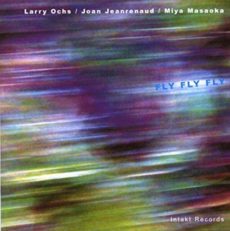
Larry Ochs was born May 3, 1949 in New York City and studied trumpet briefly but concentrated on tenor and soprano saxophones. He has worked as a record producer and founded his own label, Metalanguage Records in 1978, in addition to operating the Twelve Stars studio in California.
A co-founder the Rova Saxophone Quartet, Larry worked in Glenn Spearman’s Double Trio. A frequent recipient of commissions, he composed the music for the play Goya’s L.A. in 1994 and for the film Letters Not About Love, which was named best documentary at SXSW in 1998.
He has played in a trio called Room, and the What We Live ensemble. He formed the group Kihnoua in 2007 with vocalist Dohee Lee and Scott Amendola on drums and electronics, releasing Unauthorized Caprices in 2010.
Avant-garde saxophonist Larry Ochs has released twelve albums as a leader, another twenty-three with Rova and a half dozen with Glenn Spearman, Fred Firth and Maybe Monday, dave Rempis and Darren Johnston. He has performed with Nels Cline, Gerald Cleaver, Donald Robinson, continues to perform and record.
Sponsored By


#preserving genius
More Posts: saxophone
Daily Dose Of Jazz…
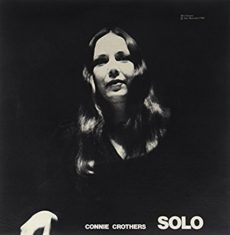
Connie Crothers was born on May 2, 1941 in Palo Alto, California and began studying classical piano at age 9. She went on to major in music and composition at the University of California at Berkeley. While matriculating her teachers put less emphasis on emotional expression and more on procedure, structure and compositional rigor, which did not find a likeable place in her mind.
She subsequently became a student of pianist Lennie Tristano. After Tristano’s death in November 1978, she founded the Lennie Jazz Foundation and recorded a memorial concert album in his honor.
Her debut recording Perception was released in 1974 on the Steeplechase label. She went on to record another twenty albums as a leader over the course of her career and four as a sidewoman. In 1982 she recorded the album Swish with drummer Max Roach for New Artists Records, a label she and Roach founded. She also recorded in groups with, among others, Bud Tristano, Linda Satin, Richard Tabnik and Cameron Brown.
Pianist Connie Crothers, who mainly played in the avant-garde and free jazz genres, passed away of lung cancer in Manhattan, New York City on August 13, 2016.

#preserving genius
More Posts: piano
Daily Dose Of Jazz…
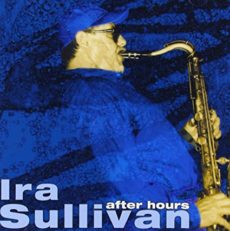
Ira Sullivan was born May 1, 1931 in Washington, D.C. and was taught trumpet by his father, saxophone by his mother and played both in the 1950s Chicago, Illinois with Charlie Parker, Lester Young, Wardell Gray and Roy Eldridge, garnering a reputation as a fearsome bebop soloist. After playing briefly with Art Blakey in 1956, he mastered alto and baritone saxophone before moving south to Florida and out of the spotlight in the early Sixties.
Sullivan was reluctant to travel which limited his opportunities to play with musicians of the first rank, but he continued to play in the Miami area, often in schools and churches. Hanging out with local younger players Jaco Pastorius and Pat Metheny, led to teaching and to broadening of his own musical roots to include the lessons of John Coltrane’s music and elements of jazz rock.
Adding flute and soprano saxophone to his armoury, Ira moved to New York City and in 1980 formed a quintet with legendary bop trumpeter Red Rodney where they worked on new material and fostered young talent to produce some fresh and stimulating music. He and his longtime friend and collaborator jazz pianist and vibraphonist Stu Katz, co-led a multi-night performance with at Joe Segal’s Jazz Showcase in Chicago.
Ira has performed and/or recorded with Red Rodney, Erin McDougald, Rob Block, Art Blakey, Frank Catalano, Kelly Sill, Charles Heath, Eddie Harris, Roland Kirk, Marc Berner, Lin Halliday, J. R. Monterose, Rita Reys and Billy Taylor and numerous others.
Trumpeter, flugelhornist, flautist, saxophonist, and composer Ira Sullivan has recorded as a leader and taught at the Young Musicians Camp each summer at the University of Miami passed away on September 21, 2020, of metastatic pancreatic cancer in his Miami, Florida home at age 89
Sponsored By
Voices From The Community
#preserving genius
More Posts: bandleader,flugelhorn,flute,history,instrumental,jazz,music,saxophone,trumpet
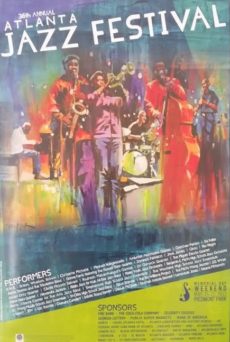
Atlanta Jazz Festival…2013
As Atlanta suffered through one of the worst sports years in the city’s history, the NL East winning Braves lose to the Dodgers, Falcons dreams of the Super Bowl are dashed with a loss to the Jets, the Minnesota Lynx takes the Dream in the WNBA finals and national hopes for the Bulldogs were splattered when they lost to Mizzou. But the shining star of the year was the jazz festival that brought 31 Days of Jazz to neighborhoods venues and greeted passengers at the airport. This was the prelude to the artists that appeared in Piedmont Park, that once again hosted the annual jazz festival from May 25th to the 27th.
Aaron Diehl Quartet, Alexandra Jackson, Ambrose Akinmusire Quintet, Aruán Ortiz, Cécile McLorin Salvant, Dominick Farinacci, Ginou, Gretchen Parlato, Jacob Deaton and the Tribulation Band, Julie Dexter, Jose James, Meshell Ndegeocello: A Dedication to Nina Simone, Miguel Zenón Quartet, Rialto Jazz for Kids, Rialto Youth Jazz Orchestra, Rio Negro, Rudresh Mahanthappa’s Gamak, Tia Fuller, and the Uri Gurvich Quartet.
Benjamin E. Mays High School Jazz Orchestra came in as the 1st Place winner, North Atlanta Center for the Arts Jazz Band took 2nd Place, Stephenson High School Jazz Ensemble was the 3rd Place, Westlake High School Jazz Ensemble was 4th Place, J.C. Young Middle School Jazz Ensemble ranked 5th Place, and Tri-Cities High School Jazz Band had the 6th Place spot in the Youth Jazz Band Competition. The first three opened the main stage performances each day and the final three opened the festivals contemporary stage.
Dionne Farris with the Russell Gunn Quartet held down the Late Night Jazz Jam for the festival goers who didn’t want each day of music to end. #AJF40
#preserving genius
More Posts: festival,forty,free,history,jazz,music,tradition,years
Daily Dose Of Jazz…
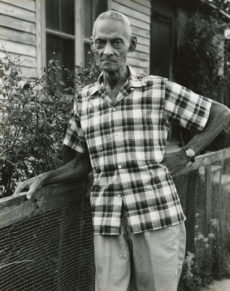
Lawrence Duhé was born April 30, 1887 in La Place, Louisiana. He played with Kid Ory in his youth, and followed Ory to New Orleans, Louisiana. There he played clarinet with Ory, King Oliver, Frankie Duson, and led his own band in Storyville.
Duhé moved to Chicago, Illinois in 1917 and his band became popular in the clubs and dance halls. They played in the stands at the notorious 1919 World Series. During the Roaring Twenties he led Sugar Johnnie’s New Orleans Creole Orchestra comprised of Lil Hardin, Sidney Bechet, King Oliver, Freddie Keppard, tubby Hall and Mutt Carey among others.
By the mid-1920s he had returned to New Orleans and for a time played with Armand J. Piron. After touring with the Rabbit Foot Minstrel Show, Lawrence worked out of Lafayette and New Iberia in Southwest Louisiana with such musicians as Evan Thomas and Bunk Johnson before retiring from music in the 1940s.
Clarinetist and bandleader Lawrence Duhé, passed away in Lafayette, Louisiana in 1960.
Sponsored By

www.whatissuitetabu.com
#preserving genius
More Posts: clarinet