

The Jazz Voyager
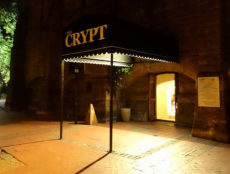
Deplaning on the other side of the big pond, this Jazz Voyager is filled with the anticipation of sitting in a jazz club aptly named The Crypt, situated under a church. Located at 1 Wale St, Cape Town City Centre, Cape Town, 8000, South Africa, it has been a labor of love for its creators, among them the dean of St. George’s Cathedral, a jazz enthusiast whose vision for the cathedral as the people’s church led him to reach out to the broader community through the universal language of jazz.
In celebration of International Jazz Day tomorrow I will be privy to a Tribute to Louis Armstrong with his music performed by trumpeter Eddie Backhouse, vocalists Charlette Dickson and Graham Burton, bassist Wesley Rustin, drummer Jack Momple, Willy Haubrich on trombone & trumpet, Willie Van Zylon saxophones and pianist Derk Blaisse.
At the present time patrons must bring their own alcoholic beverages while the restaurant is re-applying its liquor license, which requires a period of prohibition for the sale of liquor. A per bottle service fee will be charged as follows: Wine/R50 ($3.74), Beer & Ciders/R10 ($0.75), Spirits/R150 ($11.22), Brut/R100 ($7.48). (13.37 South African Rand equals $1.00)
Closed Sunday and Monday it’s hours of operation are from 7:00pm to midnight. Cover Charge: R100 per person. For reservations: sms or whatsapp +27 79 683 4658 or email at info@thecryptjazz.co.za. #jazz voyager
Sponsored By
Voices From The Community

#preserving genius
More Posts: adventure,club,genius,jazz,music,preserving,restaurant,travel,voyager
Daily Dose Of Jazz…
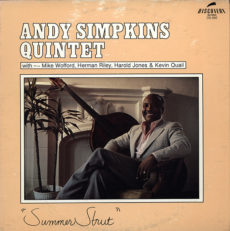
Andrew Simpkins was born on April 29, 1932 in Richmond, Indiana and first became known as a member of the group The Three Sounds, with which he performed from 1956 to 1968. After departing he joined George Shearing until 1974, and from 1979 to 1989 toured with Sarah Vaughan.
In the Seventies he settled in Los Angeles, California and became respected as a top-quality bassist and widely known as a solid and reliable studio musician.He performed with singers Carmen McRae and Anita O’Day, instrumentalists Gerald Wiggins, Monty Alexander, Buddy DeFranco, Don Menza, and Stéphane Grappelli, and many others.
He recorded three albums as a leader and also played acoustic bass on the 1997 Cover Album recording with Pat Boone titled In a Metal Mood: No More Mr. Nice Guy. Throughout his career not only did he record prolifically with The Three Sounds, he recorded with Kenny Burrell, Victor Feldman, Lalo Schifrin and Joe Williams.
Bassist Andy Simpkins passed away of stomach cancer on June 2, 1999 in Los Angeles.
Sponsored By
#preserving genius
More Posts: bass
Daily Dose Of Jazz…
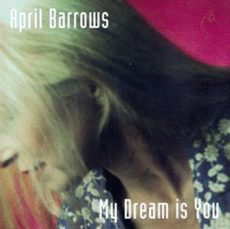
April Barrows was born on April 28, 1954 in Milford, Connecticut and grew up in the San Francisco Bay area where she moved with her family when she was five. The first music she heard came from listening to her mother’s collection of boogie-woogie 78s by such pianists as Meade “Lux” Lewis, Albert Ammons and Pinetop Smith. Singing along with the records and imitating the sounds she learned the formats. She became a record collector herself as a teenager and was always interested in older styles.
She played violin for a few years and in high school sang and played rhythm guitar. Barrows performed duets with a country singer, frequently performing roots music, and learned both steel guitar and electric bass. For a time she had a regular day job as a chemist but her main dream was to become a professional musician.
In the late ’70s she spontaneously quit her job and headed for Nashville where her talents were quickly recognized. She played electric bass in a variety of bands for the next six years working with the Judds’ first band, the Memphis Horns, Vassar Clements, and even Woody Herman. In 1985 she switched her focus and became a songwriter and while she had success writing country, bluegrass, and blues songs, her true love was writing and performing her own new swing tunes.
In addition to her jazz inspirations of Ella Fitzgerald, the Boswell Sisters, Mildred Bailey, Louis Armstrong, Ivie Anderson, Bing Crosby, Ruth Etting, Annette Hanshaw and Cliff Edwards, she listened to Bob Dylan, country music and rock of the ’60s. While continuing in the commercial field, she has recorded as a leader, her debut release of original swing tunes on My Dream Is You followed by her sophomore project All You Need Is the Girl. Vocalist, guitarist and composer April Barrows is currently working on a third project with clarinetist Evan Christopher and cornetist Duke Heitger, and continues to compose and perform.
Sponsored By

#preserving genius
More Posts: electric bass,guitar,vocal

Atlant Jazz Festival…2012
It was May 26th and the 31 Days of Jazz was a success for the city of Atlanta and the neighborhoods and communities that represented. The weekend ran through the 28th the the crowds of jazz fans, enthusiasts and aficionados laid blankets, pitched tents and sat in lawn chairs to enjoy another year in Piedmont Park. Jazz was in the air and the adoring throng waited with anticipation as each act that came to the stage.
The Kickoff Cabaret performers were Jennifer Freeman and Johnny O’Neal with Jason Orr hosting the Late Night Jazz Jam. The 2012 Youth Jazz Band Competition winners opened each day of the festival on two stages and were Benjamin E. Mays Jazz Orchestra taking 1st Place, Woodland High School Jazz Band in 2nd Place, Martin Luther King, Jr. High School Big Band held down 3rd Place, and J.C. Young Middle School Jazz Ensemble was the 4th Place.
Performing over the weekend and following each youth jazz band were Andre Rievers, Cyrus Chestnut Trio, Dwight Andrews, Edy Martinez Jazz Orchestra, Ernest EC3 Coleman, Grace Kelly Quintet, Grégoire Maret, Kathleen Bertrand, Laura Coyle Quintet, Lionel Loueke Trio, Mace Hibbard, Marea Alta, Mausiki Scales & the Common Ground Collective, Melvin Jones, Mushy Widmaier, Nadav Remez / Omer Avital Quintet, Ojeda Penn, Rialto Jazz for Kids, Robert Glasper Experiment, Roy Ayers, Russell Gunn and Elektrik Butterfly, Saunders Sermons, Son Jazzy Orchestra, Tito Puente, Jr. & Orchestra, Tropical Breeze Steel Band, and Yolanda Rabun. #AJF40
#preserving genius
More Posts: festival,forty,free,history,jazz,music,tradition,years
Daily Dose Of Jazz…
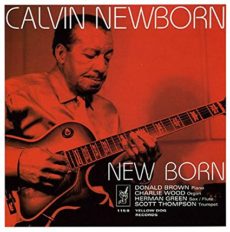
Edwin Calvin Newborn (was born on born April 27, 1933 in Whiteville, Tennessee and is the brother of pianist Phineas Newborn Jr. with whom he recorded between 1953 and 1958. They formed an R&B band, with their father Phineas Newborn Sr. on drums and Tuff Green on bass, trumpeter Willie Mitchell and tenor saxophonist Ben Branch. The group was the house band at the Plantation Inn Club in West Memphis, Arkansas, from 1947 until 1951 and recorded as B. B. King’s band on his first recordings in 1949, and also the Sun Records sessions in 1950.
Calvin gave guitars lessons to Howlin’ Wolf and was friends with Elvis Presley, who frequented his gig at the Plantation Inn Club two nights a week. Presley also used to eat at the Newborns’ house and browse their music store for gospel records. The group left West Memphis in 1951 to tour with Jackie Brenston as the Delta Cats in support of the record Rocket 88. It was considered by many to be the first rock and roll record ever recorded, and was the first Billboard number one record for Chess Records.
Following his R&B period he transitioned into jazz and played with Earl Hines starting in 1959. The early Sixties saw him touring with Lionel Hampton, Jimmy Forrest, Wild Bill Davis, Al Grey, Freddie Roach, Booker Little, George Coleman. Frank Strozier, and Louis Smith. Newborn also worked with Ray Charles, Count Basie, Hank Crawford, Sun Ra, Lou Donaldson, Bobby Hutcherson and David “Fathead” Newman among others. His 1980 album Centerpiece hit No. 35 on the U.S. Billboard jazz albums chart, but much of his earlier material was not reissued on CD until 2005.
Since the 1970s he remained mostly in Memphis, Tennessee, where he played regularly in local clubs well into the 1990s. Guitarist Calvin Newborn currently resides in Jacksonville, FL and continued to perform throughout Northeast Florida until his transition on December 1, 2018, aged 85.
Sponsored By

#preserving genius
More Posts: guitar