

Daily Dose Of Jazz…
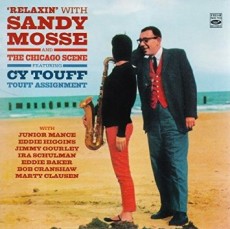
Cy Touff was born Cyril James Touff on March 4, 1927 in Chicago, Illinois. He started on piano at age 6 and went on to play xylophone and saxophone before settling on trumpet.
Serving in the Army from 1944 to 1946, while in the military Touff played trombone. After the war he switched to bass trumpet and worked with Woody Herman and Sandy Mosse among others. He joined Herman’s band in 1953 and in 1954-55 played with a reduced version of the band that also included Richie Kamuca.
Touff and Mosse co-led an octet called Pieces of Eight from the late 1950s into the next decade. He also recorded as a leader for Pacific Jazz, Argo and Mercury record labels. Though he spent most of his life in Chicago, he was also well associated with West Coast jazz.
One of the few jazz musicians known as a bass trumpeter, Cy Touff passed away in Evanston, Illinois on January 24, 2003.

Jazz Is Global – Share
More Posts: trumpet
Daily Dose Of Jazz…
Pierre Michelot was born on March 3, 1928 in Saint-Denis, Seine-Saint-Denis, Paris, France. He studied piano from 1936 until 1938 when he switched to bass at the age of sixteen.
Throughout his career he performed and recorded with Rex Stewart, Coleman Hawkins, Django Reinhardt, Stephane Grappelli, Don Byas, Thelonious Monk, Lester Young, Dexter Gordon, Stan Getz, Bud Powell, Kenny Clarke, Zoot Sims, Dizzy Gillespie, Chet Baker and numerous others.
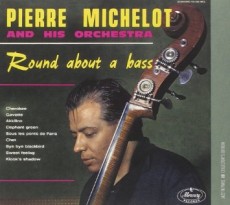
Michelot was a member of the Jacques Loussier Trio, known for the Play Bach album series. In 1957 he recorded the landmark album Afternoon In Paris with John Lewis and Sacha Distel Septet. As a leader he recorded Round About A Bass with an orchestra on the Uni Jazz France label.
Together with Miles Davis, he was responsible for the critically acclaimed soundtrack of Louis Malle’s film Ascenseur pour l’echafaud and also appeared as an unnamed bass player in the movie Round Midnight.
In later life, bebop and hard bop double bassist Pierre Michelot suffered from Alzheimer’s disease and passed away on July 3, 2005.
Give A Gift Of Jazz – Share
More Posts: bass
Daily Dose Of Jazz…
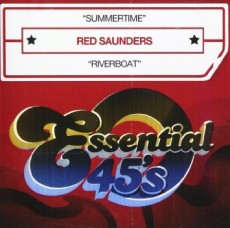
Red Saunders was born Theodore Dudley Saunders on March 2, 1912 in Memphis, Tennessee. Early in his career he played in Milwaukee, Wisconsin and Chicago, Illinois playing with Stomp King. For a time, he worked with Tiny Parham at the Savoy Ballroom in Chicago.
In 1937, the Club DeLisa gave Saunders control of the house band, where he remained almost uninterrupted until the club’s closure in 1958. Among his sidemen were Leon Washington, Porter Kilbert, Earl Washington, Sonny Cohn, Ike Perkins, Riley Hampton, singer Joe Williams and Mac Easton.
Among the arrangers he employed were Johnny Pate and Sun Ra. Despite his regular gig and disinclination to go on the road, Red played with Duke Ellington, Louis Armstrong and Woody Herman, and recorded with Big Joe Turner.
He continued to lead a band at Chicago’s Regal Theater into the Sixties, and played with Little Brother Montgomery and Art Hodes at the New Orleans Jazz Festival in the 1970s. Drummer and bandleader Red Saunders, who also played vibraphone and timpani, passed away on March 5, 1981 in Chicago.
Inspire A Young Mind
More Posts: drums
Daily Dose Of Jazz…
Gene Perla was born on March 1, 1940 in Woodcliff Lake, New Jersey. He studied piano at Berklee School of Music and Boston Conservatory before switching to bass.
In 1969 Perla played with Woody Herman, as well as Thad Jones/Mel Lewis, Sarah Vaughan, Miles Davis, Nina Simone, Jeremy Steig, Elvin Jones and Sonny Rollins in the early Seventies.
During the decade Gene founded PM Records and later headed Plug Records and under his leadership the labels recorded Dave Liebman, Elvin Jones, Steve Grossman, Pat La Barbera and Jerry Bergonzi. Forming the Stone Alliance with Grossman and Don Alias in 1975, he continues to perform.
As a sideman he has recorded several albums with Frank Foster, Elvin Jones and Mickey Tucker. Bassist Gene Perla currently teaches at Lehigh University and the New School of Jazz & Contemporary Music.
Dose A Day-Blues Away
More Posts: bass
Daily Dose Of Jazz…
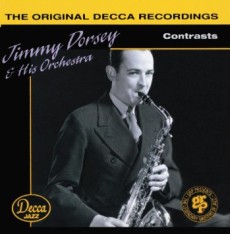
James Dorsey was born on February 29, 1904 in Shenandoah, Pennsylvania. Known as “JD”, he played trumpet in his youth and appeared on stage with J. Carson McGee’s King Trumpeters in 1913 at age nine. He switched to alto saxophone two years later, then learning to double on the clarinet.
With his brother Tommy playing trombone, he formed Dorsey’s Novelty Six, one of the first jazz bands to broadcast. In 1924 he joined the New York City based California Ramblers with Paul Whiteman and Red Nichols, did freelance radio and recording work throughout the 1920s and joined the Ted Lewis band, with whom he toured Europe.
He went on to work with Rudy Vallee and other bandleaders, continued with the Dorsey Brothers Orchestra, appeared on seventy-five radio broadcasts, breaking with his brother changed the band to the Jimmy Dorsey Orchestra with Bobby Byrne, Ray McKinley, Donald Matteson, Skeets Herfurt, and vocalists Bob Eberly and Kay Weber, later hiring Helen O’Connell.
In the fifties he rejoined his brother under the auspices of Tommy Dorsey and His Orchestra featuring Jimmy Dorsey, appeared on Jackie Gleason’s show and got their own weekly variety program Stage Show, produced by Gleason.
Jimmy took over leadership of the orchestra after Tommy’s death but only survived a few months passing away from throat cancer at age 53 in New York City on June 12, 1957.
Jimmy received a gold record for the Herst/Sharpe composition So Rare, made Latin flavored records that topped the charts in 1941, appeared in several movies including their own bio-pic The Fabulous Dorseys, composed the classic tune I’m Glad There Is You, as well as a host of others collaborating with Jimmy Van Heusen, Sonny Burke, Frankie Trumbauer and Babe Russin to name a few.
Saxophonist Jimmy Dorsey is considered one of the most important and influential alto saxophone players of the Big Band and Swing era, had several #1 hits, honored with a U.S. postal stamp, had his recording of Brazil (Aquarela do Brasil) into the Grammy Hall of Fame, and was inducted into the Big Band and Swing Hall of Fame.