

Daily Dose Of Jazz…
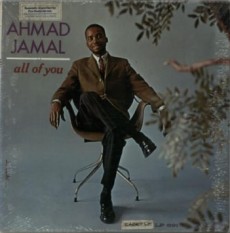
Israel Crosby was January 19, 1919 in Chicago, Illinois and was best known as the double-bassist in the Ahmad Jamal Trio from 1957 to 1962, but recorded eighteen albums with him from 1951 to 1967.
A close contemporary of Jimmy Blanton, Israel has been considered less as a pioneer, but rather for his interactive playing in Jamal’s trio and that of George Shearing. His playing exhibited how easily and fluently he displayed a modern approach to jazz double bass.
He is credited with taking the first recorded bass solo at age 16 on his 1935 recording of “Blues of Israel” with drummer Gene Krupa on the Prestige label. Beyond Jamal, Shearing and Krupa, Crosby performed and recorded with Albert Ammons, Charlie Christian, Vic Dickerson, Roy Eldridge, Herb Ellis, Edmond Hall, Coleman Hawkins, Fletcher Henderson, Horace Henderson, Sam Jones, Meade Lux Lewis, Jess Stacy and Earl Washington.
A consummate sideman, bassist Israel Crosby passed away on August 11, 1962 of a heart attack just two months after joining the Shearing Quintet.

Dose A Day – Blues Away
More Posts: bass
Daily Dose Of Jazz…
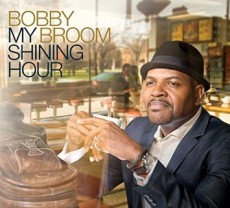
Bobby Broom was born Robert Broom Jr. on January 18, 1961 in New York City and began studying the guitar at age 12, taking lessons in the American Folk music style. A year later, he studied with jazz guitarist Jimmy Carter in Harlem where he took weekly lessons for the next two years.
His interest in jazz began in earnest at age 15 and as a result he began his research, study and practice of the jazz art. Broom attended the Laguardia High School of Performing Arts where he played in the jazz ensemble. He received an award for Outstanding Jazz Improvisation during his senior year.
Broom began his career while still in high school, performing at New York clubs with Charlie Parker’s pianists, Al Haig and Walter Bishop Jr. By 1977 he was playing with Sonny Rollins and Donald Byrd at Carnegie Hall. He went to Berklee School of Music in 1978, then returned to New York the next year in order to pursue his career while attending Long Island University.
At this time he began working in New York as guitarist for Art Blakey and The Jazz Messengers, Dave Grusin, Hugh Masekela and Tom Browne and landed his own recording contract with GRP Records. He earned three DownBeat Critics Poll nods from 2012 to 2014 as one of the world’s foremost jazz guitarists.
He has performed with Max Roach, Stanley Turrentine, Kenny Garrett, Miles Davis, Dr. Lonnie Smith, Charles Earland, Dr. ohn, Ron Carter, Dianne Reeves, Eon Blake, Eric Alexander, Ron Carter and Ramsey Lewis among others. He has recorded as a leader with The Deep Blue Organ Trio, The Bobby Broom Organi-Sation and his trio with Kobie Watkins and Makaya McCraven..
In the mid 1980s Broom relocated and as an educator, Broom began his work in 1982 for Jackie McLean, Director of African American Music at Studies for the Hartt School of Music at the University of Hartford. Over the years he has also been a lecturer/instructor at the American Conservatory of Music, Chicago Musical Colege-Roosevelt University, DePaul University and North Park University. He currently instructs and coaches Chicago area high school students for the Ravinia Festival Organization’s community outreach — Jazz Scholar Program, as well as the Thelonious Monk Institute.
Take A Dose On The Road
More Posts: guitar
Daily Dose Of Jazz…
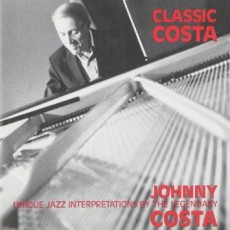
Johnny Costa was born in Arnold, Pennsylvania on January 17, 1922. He learned to play accordion at age 7 and was reading music three years later. He was encouraged by his high school music teacher, Frank Oliver, to learn the piano after discovering he had perfect pitch. Costa graduated from Carnegie Mellon University with degrees in music and education.
After college Johnny began working the same day as the house pianist for a Pittsburgh radio station and television station providing piano and organ music for many programs, eventually teaming with Fred Rogers to arrange and perform the music heard on Mister Rogers’ Neighborhood for which he served as musical director until his death. He insisted on not playing “baby” music, believing children understood good music and each day, his trio, Carl McVicker Jr. on bass and Bobby Rawsthorne on percussion played live in the studio for the taping.
Costa’s debut recording was The Amazing Johnny Costa, on the Savoy label. He gave up his lucrative career and international recognition to stay near family and friends, resigning as musical director of the Mike Douglas Show to perform only in western Pennsylvania for the remainder of his life. Costa appeared along with guitarist Joe Negri on the 1954 Ken Griffin TV series 67 Melody Lane performing After You’ve Gone and Little Brown Jug, with the latter being accompanied by Ken Griffin at the organ.
Pianist Johnny Costa, given the title “The White Tatum” by jazz legend Art Tatum, passed away of anemia on October 11, 1996, at age 74 in Pittsburgh, Pennsylvania. Much of the music heard on Mr. Rogers’ Neighborhood continued to be his and the show’s closing continued to list Costa as its Musical Director.
Give The Gift Of Knowledge

Daily Dose Of Jazz…
Irving Harold Mills was born Isadore Minsky on January 16, 1894 in Odessa, Ukraine and emigrated with his parents and brother to the lower east side of New York City. After his father died in 1905, he worked a number of odd jobs until relocating with his wife to Philadelphia. By 1918 he was working for publisher Leo Feist and his brother Jack was working for music publishing firm McCarthy & Fisher.
In 1919 the brothers founded Jack Mills Music, later renamed Mills Music in 1928. Together the brothers discovered a number of great songwriters, including Sammy Fain, Harry Barris, Gene Austin, Hoagy Carmichael, Jimmy McHugh and Dorothy Fields. He was responsible for greatly advancing and even starting a few of the careers of Cab Calloway, Duke Ellington, Ben Pollack, Jack Teagarden, Benny Goodman, Will Hudson, Raymond Scott and many others. He was instrumental in getting Duke Ellington hired by the Cotton Club.
Although he only sang a little, Irving put together his own studio-recording group, Irving Mills and His Hotsy Totsy Gang. The group was comprised of Tommy and Jimmy Dorsey, Joe Venuti, Eddie Lang, Arnold Brillhardt, Arthur Schutt and Manny Klein. Over the years Glenn Miller, Benny Goodman and Red Nichols would also be members.
Mills was one of the first to record black and white musicians together, using twelve white musicians and the Duke Ellington Orchestra on a recording of St. Louis Blues on one side and a medly of songs called Gems from Blackbird of 1928 with Mills singing with Ellington’s orchestra. One of his most significant innovations was the “band within a band” concept, recording small groups to record hot small group sides for the various dime store labels.
He also started an artist booking company, a publishing subsidiary, record labels that recorded Cab Calloway, Hudson-DeLange Orchestra, Raymond Scott, Adrian Rollini, Barney Bigard, Cootie Williams, Rex Stewart,, Johnny Hodges, Noble Sissle, Frankie Newton, Johnny Hodges, Chu Berry, The Three Peppers, Billy Kyle and other minor jazz and pop acts in New York.
He produced one picture, Stormy Weather for 20th Century Fox in 1943 with Calloway, Lena Horne, Zutty Singleton, the Nicholas Brothers, Bill “Bojangles” Robinson and Fats Waller. Though Hollywood wanted him to produce more film he chose to return to publishing and recording.
Music publisher Irving Mills, who put his name on the compositions of numerous Black musicians including Duke Ellington and Barney Bigard, and whose estate to this day reaps the financial benefit of all the musicians whose music he stole, passed away on April 21, 1985 in Palm Springs, California.
Put A Dose In Your Pocket
Daily Dose Of Jazz…
Thelma Carpenter was born January 15, 1922 in Brooklyn, New York. As a child performer she had her own radio show on WNYC in New York and won an amateur night at the Apollo Theatre in 1938. She would go on to play such 52nd Street clubs as Kell’s Stables and the Famous Door and was discovered by John Hammond.
Carpenter subsequently made her debut as a band vocalist with Teddy Wilson’s short-lived orchestra in 1939, recording Love Grows On the White Oak Tree and This Is The Moment on the Brunswick label. She joined Coleman Hawkins’ orchestra in 1940 and recorded the RCA/Bluebird Records classic album He’s Funny That Way. She followed Helen Humes as Count Basie’s vocalist and over two years recorded several sessions with the band such as More Than You Know, Do Nothing Till You Hear From Me and My Ideal.
Thelma replaced Dinah Shore as vocalist on Eddie Cantor’s radio show for the 1945-46 season, marking the first time that a black artist had become a permanent member of an all-white show without playing a character. She would also sing with Duke Ellington in concerts and on television. She was a top nightclub and major theater attraction for most of her career, performing regularly at such chic clubs as Chez Bricktop in Paris and Rome and the Capitol and Palace Theater on Broadway among others.
As a Broadway performer she appeared with Bill “Bojangles” Robinson, replaced Pearl Bailey in Hello Dolly!, performed along with Avon Long in Shuffle Along, co-starred in Barefoot In The Park and created the role of Irene Paige in Bubbling Brown Sugar. She toured nationally in Bob fosse’s Pippin and was the Good Witch of The North in Sidney Lumet’s film The Wiz. So in demand was she that Fosse and Lumet arranged their schedules so she could do both projects simultaneously. She was the mother of Maurice and Gregory Hines in the film The Cotton Club.
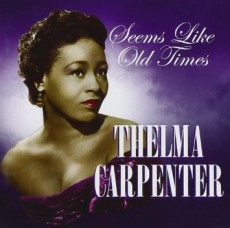
She also had a critically acclaimed album Thinking of You Tonight and Sepia Records posthumously released a 26-song compilation title Seems Like Old Times. Carpenter performed on television with Jackie Gleason, Eddie Condon, Duke Ellington, Diana Ross, Sammy Davis Jr. and Eric Clapton, as well as appearing on the Ed Sullivan, Merv Griffin, Paul Lynde and Cosby shows. Jazz vocalist and actress Thelma Carpenter passed away of cardiac arrest on May 14, 1997 in New York City.
Jazz Is Global – Share
More Posts: vocal