

Daily Dose Of Jazz…
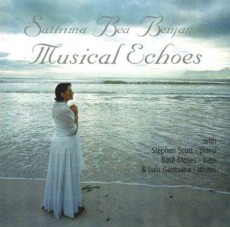
Sathima Bea Benjamin was born Beatrice Bertha Benjamin on October 17, 1936 in Claremont, Cape Town, South Africa. As an adolescent, she first performed popular music in talent contests at the local cinema (bioscope) during the intermission. By the 1950s she was singing at various nightclubs, community dances and social events, performing with notable Cape Town pianists Tony Schilder and Henry February, among others. She built her repertoire watching British and American movies and transcribing lyrics from songs heard on the radio. She discovered Nat King Cole, Billie Holiday, Doris Day and Ella Fitzgerald who greatly influenced her singing style, phrasing and diction.
At 21, she joined Arthur Klugman’s traveling show, Coloured Jazz and Variety, touring South Africa. When the production failed, she found herself stranded in Mozambique where she met South African saxophonist Kippie Moekets. Returning to Cape Town’s now thriving jazz scene in 1959, Sathima met pianist Dollar Brand, later known to the world as Abdullah Ibrahim. She would marry him in 1965 and the same year record with his trio what would have been the first jazz album in South Africa titled My Songs For You, but it was never released.
In the aftermath of South Africa’s 1960 Sharpeville Massacre, Benjamin and Ibrahim left South Africa for Europe, settling in Zurich. Along with bassist Johnny Gertze and drummer Makhaya Ntshoko they worked throughout Germany and Scandinavia, meeting and occasional working with American jazz players, such as, Don Byas, Dexter Gordon, Kenny Drew, Ben Webster, Bud Powell, John Coltrane and Thelonious Monk. The artist who would have the greatest impact on Benjamin’s life, however, was Duke Ellington.
Benjamin met Duke Ellington while he was in Zurich in 1963 asked that he hear her husband’s trio at the Club Africana. Obliging but insisting that she sing for him. Following this encounter, Ellington arranged for the couple to fly to Paris and record separate albums for Sinatra’s Reprise label. Her recording, A Morning in Paris, was thought lost and remained unreleased until 1966. Maintaining her musical relationship with Ellington she performed with his band in the U.S. at the Newport Jazz Festival. He subsequently asked her to join his band permanently but being newly wedded she declined.
Throughout the 1960s, Sathima moved back and forth between Europe and New York City as manager and agent for her husband while raising their son, Tsakwe. Returning to South Africa 1976 she gave birth to a daughter and recorded African Songbird, and then returned to New york City the following year. Launching her own record label, ekapa rpm, to produce, publish and distribute her and Ibrahim’s music, between 1979 and 2002, she released eight of her own albums on ekapa: Sathima Sings Ellington, Memories and Dreams, Windsong, Lovelight, Southern Touch, Cape Town Love, Musical Echoes and Dedications, the last receiving a Grammy nomination.
Benjamin collaborated on these albums with saxophonist Carlos Ward, pianists Stephen Scott, Kenny Baron,, Larry Willis and Onaje Allan Gumbs, bassist Buster Williams and drummers Billy Higgins and Ben Riley. She has been the recipient of South Africa’s Order of Ikhamanga Silver Award, was the feature of a 2010 documentary film Sathima’s Windsong, and has had a co-authorhip of her life Musical Echoes: South African Women Thinking In Jazz.
Sathima Bea Benjamin returned to Cape Town in 2011, where she continued to work as a vocalist until passing away on August 20, 2013, aged 76.

Put A Dose In Your Pocket
More Posts: vocal
Daily Dose Of Jazz…
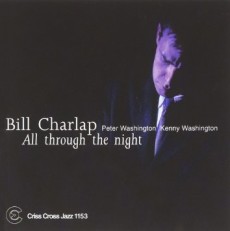
Bill Charlap was born William Morrison Charlap on October 15, 1966 in New York City surrounded by a musical family. His mother was a singer, his father a Broadway composer and his distant cousin was pianist Dick Hyman. He began playing piano at age three and later studied classical music but he has remained most interested in jazz.
Charlap and his mother recorded two duet albums, Love Is Here To Stay and Something To Remember. He’ recorded seven albums as a leader or co-leader for the Blue Note label, including two Grammy nominated CDs: Somewhere, featuring the music of Leonard Bernstein and The Bill Charlap Trio, Live At The Village Vanguard. For Venus Records, the Japanese label, he has recorded two albums as a leader, as well as eight albums as a member of the New York Trio.
He has worked with Gerry Mulligan, Benny Carter, Tony Bennett, Phil Woods, Scott Hamilton Harry Allen, Ruby Braff, Brian Lynch, Warren Vache and numerous others. By the mid-90s, Bill became the musical director of Midnight in the Garden of Good and Evil, A Celebration of Johnny Mercer, part of New York’s JVC Jazz Festival. In 1995 he joined the Phil Woods Quintet.
In 2008, he became part of The Blue Note 7, honoring the 70th anniversary of the label and playing the music of various artists from the label. He has recorded Double Portrait, a piano duets album with his wife Renee Rosnes. Pianist Bill Charlap regularly plays with his trio comprised of bassist Peter Washington and drummer Kenny Washington.
Give A Gift Of Jazz – Share
More Posts: piano
Daily Dose Of Jazz…
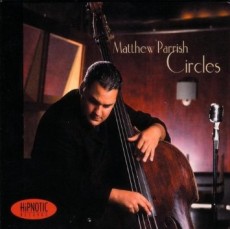
Matthew Parrish was born on October 14, 1969 in central California into a family that loved music that listened to jazz, rock and classical music. He started playing trumpet in middle school but switched to bass just prior to an audition at Rutgers Mason Gross School of the Arts. Accepted into the music program as a n acoustic bass student in jazz studies.
Matthew’s career began in Philadelphia during his teens and early twenties playing with Shirley Scott, Mickey Roker, Bobby Durham, Cecil Payne, Johnny Cole, Harry “Sweets” Edison, Jimmy Oliver, Danny turner and fellow youngsters Orrin Evans and Byron Landham. He went on to tour with Al Grey and performing with Clark Terry, Marion McPartland, Dr. Lonnie Smith, Lou Donaldson, Joe Cohn, Savion Glover and Bill Charlap.
He has continued to pursue his career playing and/or recording in the bands of Greg Osby, Jon Jang, James Newton, Stefon Harris, and Regina Carter. A gifted composer and arranger Parrish has recorded his own compositions on his debut album Circles on the Hipnotic Records label as well as on the recordings by David Leonhardt, Denise Montana, Ben Schacher and Carter.
With several milestones under his belt having performed with Dee Dee Bridgewater, Wynton Marsalis, James Williams, Paquito D’Rivera and Etta Jones to name a few more, he currently tours around the world with Freddy Cole, Houston Person and Vana Gierio. With his own band he gives concerts in Philadelphia, featuring Amazonian performers and is no stranger to the club scene in New York, Boston and DC. As an educator he teaches and mentors young children through adult age in assemblies, master classes and lectures throughout the United States.
Inspire A Young Mind
More Posts: bass

Daily Dose Of Jazz…
Lee Konitz was born October 13, 1927 in Chicago, Illinois. At age 11, he received his first instrument, a clarinet, but later dropped the instrument in favor of the tenor saxophone. He eventually moved from tenor to alto. His greatest influences at the time were the swing big bands, in particular Benny Goodman, who prompted him to take up clarinet. However, on the saxophone he was improvising before ever learning to play any standards.[1]
Konitz began his professional career in 1945 with the Teddy Powell band replacing Charlie Ventura. A month later the band parted ways and between 1945 and 1947 he performed off and on with Jerry Wald. In 1946 he first met pianist Lennie Tristano, working in a small cocktail bar with him. He went on to work through the Forties with Claude Thornhill, Gil Evans and Gerry Mulligan.
He played with Miles Davis on a couple of gigs in 1949 and recorded with him on the album The Birth of the Cool. Though his presence in the group angered some unemployed black musicians Davis rebuffed their criticisms. The same year his debut as leader also came in a session that would be titled Subconscious-Lee, release some six years later.
By the early 1950s, Lee recorded and toured with Stan Kenton, but through the decade he recorded as a leader. In 1961, he teamed up with Elvin Jones and Sonny Dallas to record a series of standards on Motion, followed by duets project utilizing sax and trombone, two saxophones, saxophone and violinist Ray Nance or guitarist Jim Hall..
In 1971 Konitz contributed to the film score for Desperate Characters, performed at the Woodstock Jazz Festival, has performed or recorded with Dave Brubeck, Ornette Coleman, Charles Mingus, Gerry Mulligan, Elvin Jones, Brad Mehldau, Charlie Haden, Grace Kelly, Gary Peacock, Bill Frisell, Joey Baron and Paul Motian, among numerous others.
In addition to his bebop and cool jazz releases alto saxophonist Lee Konitz has become more experimental as he has grown older, has released a number of free and avant-garde jazz albums , all of which have amassed over some one hundred and twenty to date as a leader. He has recorded some fifty albums as a sideman and continues to perform and tour, often playing alongside many far younger musicians.
Alto saxophonist Lee Konitz died during the COVID-19 pandemic from complications brought on by the disease on April 15, 2020.
Dose A Day – Blues Away
More Posts: saxophone
Daily Dose Of Jazz…
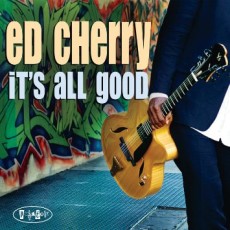
Ed Cherry was born in New Haven, Connecticut on October 12, 1954. Moving to New York City, the guitarist began a long association with Dizzy Gillespie playing in his quartet, big band and the United Nation Orchestra from 1978 until shortly before the trumpeter’s death in 1993. During this tenure he was a part of the Grammy winning recording Live At Royal Festival Hall.
Ed recorded his debut album as a leader in 1993 titled First Take and was a part of the recording session for Paquito D’Rivera’s Havana Café. His sophomore project A Second Look was released in 1995.
As an educator Cherry has taught guitar at Essex Community College in Newark, New Jersey, at the Henry Street Settlement in New York City, has been a faculty member at Montclair State University, School of Fine and Performing Arts for J.O.Y. (Jazz Opportunity for Youth) and is currently a staff member at Jazzmobile in New York City.
When not leading his own groups he is in the studio holding down sideman duties working with Paquito D’ Rivera, Jon Faddis, John Patton, Hamiet Bluiett, Henry Threadgill, Mark Weinstein, C.I. Williams and Paula West to name a few. He has recorded several albums as a leader, more than a dozen as a sideman and continues to perform with his current trio.
Take A Dose On The Road
More Posts: guitar