


Daily Dose Of Jazz…
Graham Peter Hall, generally known as GP Hall was born July 15, 1943 in Hampton Hill, London, UK. Schooled in classical, flamenco and jazz, he went on to develop his skills as a guitarist in the British blues boom of the late 1960s. As a teenager, he played in the Odd Lot Band and set up the Odd Lot Club as a venue for their music, which in turn attracted more established bands and players for concerts.
As he became better known, Hall went on to play at more celebrated London venues including The Roundhouse, the Middle Earth club and took up residency at the 100 Club. He supported the likes of Deep Purple, The Hollies, and Chris Farlowe and played on stage with original American blues heroes John Lee Hooker and Sonny Boy Williamson.
In the early 1970s he studied with renowned flamenco guitarist Manitas de Plata and subsequently became involved in more avant-garde work, writing, producing and performing. GP was commissioned by the South Hill Park Arts Centre to write The Estates which was a large and complex musical piece. Scored for a large ensemble, it was recorded and released on album by Prototype Records in 1972. It was his debut recording.
At around this time, Hall’s promising career was cut short by personal trauma. This led to alcoholism, depression, periods of homelessness, loss of confidence and self worth. It would be more than a decade before he returned to music. During the 1980s he began returning to music but it was a slow process to becoming sober.
He would go on to compose, record and release seventeen albums to various labels as well as his own self-releases over the next thirty-three years. His last self-released album in 2019 is titled Be Strong. Guitarist, composer and improviser GP Hall continues to explore the realms of music.

More Posts: bandleader,composer,guitar,history,improviser,instrumental,jazz,music
Daily Dose Of Jazz…
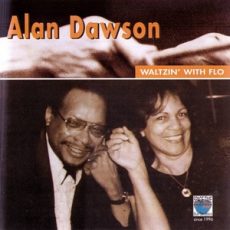
Alan Dawson was born on July 14, 1929 in Marietta, Pennsylvania and raised in Roxbury, Massachusetts. Serving in the U.S. Army during the Korean War, he played with the Army Dance Band while stationed at Fort Dix from 1951 to 1953. During his service, Dawson explored the post-bop era by performing with pianist Sabby Lewis. After being discharged from the army, Dawson toured Europe with Lionel Hampton.
In early 1960, he resided in Boston, Massachusetts for a regular engagement with bassist John Neves and pianist Leroy Flander. He was an early teacher of drummers Tony Williams, Joseph Smyth, Terri Lyne Carrington, Julian Vaughn, Vinnie Colaiuta, Steve Smith, Kenwood Dennard, Gerry Hemingway, Jeff Sipe, Billy Kilson, Joe Farnsworth, Bob Gullotti, and many others.
Dawson began teaching at Berklee College of Music in 1957. He suffered a ruptured disc in 1975 which led to him halting his touring schedule, to leave Berklee and limit his teaching to his home in Lexington, Massachusetts.
While teaching, Dawson also maintained a prolific performing and recording career. He was the house drummer for Lennie’s on the Turnpike in Peabody, Massachusetts, from 1963 through 1970. Throughout the 1960s he recorded almost exclusively with saxophonist Booker Ervin on Prestige Records. In 1968, he replaced Joe Morello in the Dave Brubeck Quartet and continued until 1972. His performance credits also included stints with Bill Evans, Sonny Rollins, Jaki Byard, Sonny Stitt, Dexter Gordon, Lee Konitz, Quincy Jones, Charles Mingus, and Tal Farlow.
Drummer Alan Dawson died of leukemia on February 23, 1996. He was 66.
Daily Dose Of Jazz…
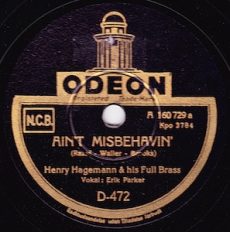
Erik Parker was born July 13, 1918 in Århus, Denmark. By 1938 he became a member of the Svend Asmussen Orchestra and from 1939 to 1945 was involved in Leo Mathisen’s Orchestra, where he performed both as an instrumentalist and a vocalist.
He worked as a club manager, and from 1945-1951 he was an actor. In 1953 he emigrated to the United States, where he settled in Los Angeles, California where he became a restaurateur and trumpet teacher.
Throughout his career he was a member of the All Danish Starband, Henry Hagemann & His Full Brass, Henry Hagemann’s Sextet, Kai Ewans And His Swinging 16, Leo Mathisens Band, Leo Mathisens Orkester, Leo Mathisens Ønskeorkester, and Roger Henrichsen Trio.
Trumpeter and vocalist Erik Parker, who is considered one of the most significant Danish jazz musicians and a distinguished representative of golden age jazz, died in 2003.
Daily Dose Of Jazz…
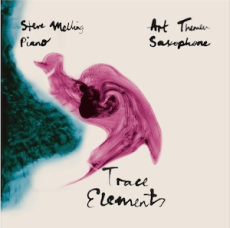
Steve Melling was born on July 12, 1959 and brought up in Preston, Lancashire, UK and began classical piano lessons at age 9. Two years later he began teaching himself jazz at around 11 years old. His first introduction to professional jazz musicians was when he asked the members of the Stan Tracey Quartet to autograph one of their vinyl albums at a Preston gig when he was 17. This fortuitous encounter would eventually lead him back to playing with them, Stan, Art Themen, Bryan Spring and Dave Green later in his career and always learn from the experiences.
Steve went on to study at Goldsmiths’ College in London, joined the National Youth Jazz Orchestra around that time and began playing professionally in the late Seventies, touring with Harry Beckett and Elton Dean. In 1986 received the first Pat Smythe Memorial Trust Award.
The Nineties had him playing regularly at Ronnie Scott’s with his trio and recording with Alan Skidmore, Claire Martin and Peter King. Melling recorded his own album Trio Duo Solo for Ronnie Scott’s Jazz House label. He was commissioned by the Appleby Jazz Festival and wrote and directed a set for an 11-piece group. He joined The New Couriers, worked with Georgie Fame and played with the European Jazz Ensemble.
Steve was commissioned by the National Youth Jazz Orchestra to arrange a piece by Stan Tracey for an album to mark their 50th Anniversary and the album was launched at Ronnie Scott’s in early 2016. The same year he moved to Derbyshire and has spent much time composing, working on his own original compositions. He is also teaching and working with local and national jazz musicians.
Pianist and composer Steve Melling remains in demand in Britain and Europe.
More Posts: bandleader,composer,history,instrumental,jazz,music,piano
Daily Dose Of Jazz…
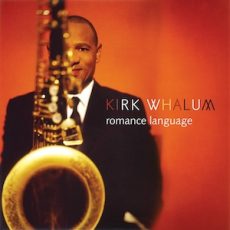
Kirk Whalum was born July 11, 1958 in Memphis, Tennessee into a musical family, singing in his father’s church choir. He got his love of music from his piano teacher grandmother and two uncles who performed with jazz bands around the country. After graduating from Melrose High School he attended Texas Southern University where he was a member of the renowned Ocean of Soul Marching Band.
By 1986 he performed at Jean-Michel Jarre’s giant concerts Rendez-Vous Houston and Rendez-Vous Lyon. Whalum would go on to record with Jevetta Steele, Luther Vandross and tour with Whitney Houston, soloing on her single I Will Always Love You.
Kirk has worked on a number of film scores, including for The Prince of Tides, Boyz n the Hood, The Bodyguard, Grand Canyon, Cousins and contributed to the 2008 documentary film Miss HIV. As a leader he has recorded a series of well received albums and has twelve Grammy nominations and his first Grammy award in 2011 for Best Gospel Song.
He is the inaugural Jazz Legend honoree of the National Museum of African American Music in Nashville, Tennessee, joined the faculty of Visible Music College and received a Brass Note on Historic Beale Street, both in Memphis.
More Posts: bandleader,flute,history,instrumental,jazz,music,saxophone,songwriter