


Daily Dose Of Jazz…
June Richmond was born July 9, 1915 in Chicago, Illinois. She became one of the very first black singers to be featured regularly with a white band when she performed with Jimmy Dorsey’s Orchestra in 1938.
An enthusiastic vocalist who was excellent on blues but also effective on ballads, June was a popular attraction during the swing era although never a major name. She worked with Les Hite early on in California, toured with Jimmy Dorsey, was with Cab Calloway in 1938 and then became best known for her association with Andy Kirk’s Orchestra during 1939-42.
Richmond became a solo act after leaving Kirk and then from 1948 on mostly worked in Europe, at first based in France and then later on in Scandinavia. Her only recordings as a leader were a self-titled album on the Barclay label, four numbers in 1951 with Svend Asmussen and four songs on the album “Jazz In Paris” with the Quincy Jones Orchestra in 1957.
Vocalist June Richmond, who gained fame during the swing era, died of a heart attack at the age of 47 on August 14, 1962 in Gothenburg, Sweden.
>
More Posts: vocal
Daily Dose Of Jazz…
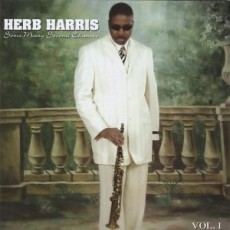
Herb Harris was born in Washington D.C. on July 8, 1968. He began his musical journey on clarinet at age 12. Upon entering high school, he switched to alto saxophone, playing the instrument in the marching band, and then switched to tenor saxophone at age 17.
His interest in jazz peaked when he heard a recording of John Coltrane’s Giant Steps. Early on, he admired the sound and style of Dexter Gordon, followed by Sonny Rollins, Sonny Stitt and Charlie Parker.
Upon graduating high school, Harris spent several years of study at Florida A&M University. It was while attending the university that Harris met and jammed with Marcus Roberts, eventually playing with Roberts, touring the States and Europe and recording with him on Deep in The Shed.
Harris also spent a short period in the Nineties with the Wynton Marsalis Septet with whom he toured the States, Europe, and South America. He has appeared on the soundtrack “Tune In Tomorrow”, was featured in the group of saxophonists dubbed the “Tough Young Tenors” on the album “Alone Together”, was a member of the second edition of the Jazz Futures, and saxophonist Herb Harris embarked on his first tour as a leader in the spring of 2002. He continues to perform, tour, compose and record.
More Posts: saxophone
Daily Dose Of Jazz…
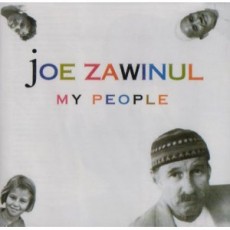
Joe Zawinul was born Josef Erich Zawinul on July 7, 1932 grew up in Vienna, Austria. Classically trained at the Konservatorium Wien, he played in various broadcasting and studio bands before emigrating to the U.S. in 1959 on a music scholarship to Berklee College of Music in Boston.
He went on to play with trumpeter Maynard Ferguson, where he first met Wayne Shorter after having had an influence in hiring him. Shorter left soon thereafter for Art Blakey’s group and Joe departed ways to tour and record with Dinah Washington for two years.
First coming to prominence in 1961 with saxophonist Cannonball Adderley, and during his nine-year stint composed the hit songs “Mercy, Mercy, Mercy”, “Walk Tall” and “Country Preacher”, the latter a tribute to Jesse Jackson
In the late 60s Zawinul played with Miles Davis, becoming one of the creators of jazz-fusion and one of the first to use electric pianos and synthesizers. He composed the title track on the album In A Silent Way and “Pharaoh’s Dance” on the landmark album Bitches Brew that occupied the whole of side one.[1]
In 1970, Zawinul co-founded Weather Report with Wayne Shorter bringing relatively open group improvisation with their fourth album Mysterious Traveller being their breakthrough. For the next fifteen years they would experience unparallel success with his composition “Birdland” being covered by the likes of Quincy Jones and the Manhattan Transfer and Jefferson Starship among others and winning him three Grammy awards.
Joe recorded 74 albums as a leader, sideman and collaborator; has been named Keyboardist” 28 times by the readers of Down Beat magazine, had several musicians honor him in song, written symphonies and performed and toured up until his hospitalization for a rare skin cancer where he died on September 11, 2007.
More Posts: piano
Daily Dose Of Jazz…
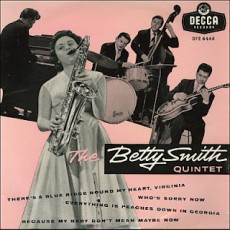
Betty Smith was born on July 6, 1929 in Sileby, Leicestershire, England. She studied the saxophone as a young child and began playing the alto saxophone when she was nine in Archie’s Juveniles, not concentrating on jazz until her early teens.
1947 saw Smith touring the Middle East with pianist Billy Penrose, and then with Ivy Benson’s evening gown clad Girls’ Band, playing for off duty Nuremberg trials officials, and in 1948 with Rudy Starita’s All Girls Band to play for the troops.
Women jazz musician were rare in the Fifties, but Betty, by then playing tenor, proved herself in Freddy Randall’s Dixieland/Chicago styled band. She would be heard swinging, improvising and playing hotter jazz than her colleagues as they toured around Britain.
Following a tour of the U.S. the breakup of Randall’s band, and Betty forming a quintet in 1957, she returned to the States and toured with Bill Haley’s Comets. She worked fronting the Ted Heath Orchestra as a vocalist, got numerous radio and television jobs and had her own program on Radio Luxembourg.
She would meet trumpeter Kenny Baker, form the sextet “Best of British Jazz” and be the band’s only saxophonist for the remainder of her career until she got sick in 1985. She continued to sing and play the piano until a week before her death on January 21, 2011 in Kirby Muxloe, Leicestershire, England.
Daily Dose Of Jazz…
Tanya Kalmanovitch was born in Fort McMurray, Alberta on July 5, 1970 and learned to play the viola as a child and would go on to master the violin. She attended and graduated in 1992 from Juilliard School with a degree in viola performance and soon after debuted her jazz chops with the Turtle Island String Quartet.
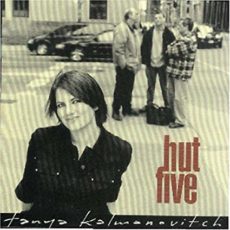
Her 2003 debut recording with her quartet Hut Five was hailed by the Montreal Gazette as “an exceptional recording, one of the more engaging recordings heard in some time” and was garnished with a number of stars by DownBeat magazine. Actively performing in New York City since 2004, Tanya has been named “Best New Talent” by All About Jazz New York, while Time Out New York identified her from a small pool of suspects as “the Juilliard-trained violist who’s been tearing up the scene”.
Tanya has performed with Mark Turner, Benoît Delbecq, Mark Helias, Dominique Pifarély, Andy Laster, Tom Rainey, Ernst Reijseger, Mat Maneri, and the Turtle Island String Quartet, Martin Hayes, John Cage and Shujaat Husain Khan. She has travelled frequently to India where she has studied Karnatic music with violinist Lalgudi G. J. R. Krishnan and veena player Karaikudi S. Subramanian while conducting doctoral dissertation research on jazz exotica.
Teaching regularly at the Guildhall School of Music and Drama in London UK, the Koninklijk Conservatorium in Den Haag NL, and as a member of the faculty of the department of Creative Improvisation at Boston’s New England Conservatory, she also conducts workshops on improvisation.
She is a founding member of the Brooklyn Jazz Underground, a collective of ten independent bandleaders based in New York City. She is also the Canadian representative to the International Association of Schools of Jazz, a founding member of the Jazz String Caucus of the International Association for Jazz Education, and a mentor to the Sisters in Jazz Program. Violist and violinist Tanya Kalmanovitch now lives in the spaces between modern jazz, classical music and free improvisation as she continues to compose, perform and educate.