

Daily Dose Of Jazz…
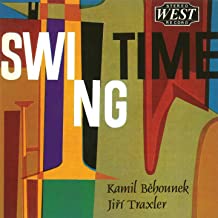
Kamil Běhounek was born on March 29, 1916 in Blatná, Czech Republic and was an autodidact on accordion, having learned to play by imitating recordings and BBC broadcasts. While studying law in Prague he began performing in clubs and recorded his first solo accordion date in 1936. By the late 1930s, he was working with the Blue Music Orchestra, Rudolf Antonin Dvorsky, Jiří Traxler, and Karel Vlach.
In 1943, he was forcibly compelled by the Nazis to go to Berlin and make arrangements for the bands of Lutz Templin and Ernst van’t Hoff. Upon returning to Czechoslovakia in 1945, he used some of these arrangements for his own band, then returned to Germany the following year, where he continued arranging for bandleaders such as Adalbert Luczkowski, Willy Berking, Heinz Schönberger, and Werner Müller.
He played with his own ensemble, including in Bonn, Germany and after 1948 he performed in West Germany at American soldiers’ clubs. Between 1968 and 1977 he recorded several albums of folk music but continued to play swing with his own groups. He also wrote an autobiography, Má láska je jazz (Jazz is my Love), which was published posthumously in 1986.
Bohemian accordionist, bandleader, arranger, composer, and film scorer Kamil Běhounek, who occasionally played tenor saxophone, passed away on November 22, 1983 in Bonn, Germany.

More Posts: accordion,arranger,bandleader,composer,film scorer,history,instrumental,jazz,music,saxophone
Daily Dose Of Jazz…
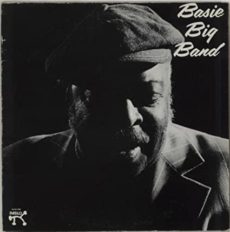
Bill Hughes was born William Henry Hughes in Dallas, Texas on March 28, 1930. His family moved to Washington, D.C., when he was nine years old where his father worked at the Bureau of Engraving and played trombone in the Elks Club marching band. He began learning to play the trombone around age twelve and was performing in Washington jazz venues by the age of sixteen. One of the clubs was the 7T Club, where he met and performed with saxophonist and flutist Frank Wess.
While students at Howard University, Hughes and Wess played in the Howard Swingmasters, along with bassist Eddie Jones. Though interested in music he originally wanted to pursue a career as a pharmacist and graduated from the University’s School of Pharmacy in 1952 and began working at the National Institutes of Health.
His career plans changed the following year when Wess, a member of the Count Basie Orchestra, suggested that Count Basie invite him to join the band. Also asked to join the Duke Ellington Orchestra, he declined and in 1953, he joined the Basie band where he already knew members Frank Wess, Eddie Jones, and Benny Powell. He played in a three-piece tenor trombone section with Powell and Henry Coker until 1957, when he decided to take a break from touring in order to help raise his family.
During this hiatus, Bill worked for the United States Postal Service and played trombone at the Howard Theater as well as with some small groups in Washington. A few years after returning to the band in 1963, he switched from the tenor to the bass trombone. In 2003 he took over leadership of the band following the death of Grover Mitchell. He retired from the band in 2010 and spent the last years of his life in Staten Island, New York with his wife and three children. On January 14, 2018 trombonist Bill Hughes passed away at the age of 87.
More Posts: bandleader,history,instrumental,jazz,music,trombone
Daily Dose Of Jazz…
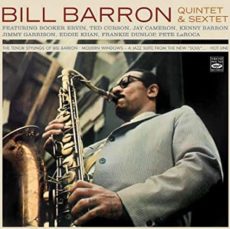
William Barron, Jr. was born on March 27, 1927 in Philadelphia, Pennsylvania where he spent his formative years. Moving to New York City in 1958 and came to the jazz world’s attention when he first appeared on a Cecil Taylor recording in 1959, later recorded extensively with Philly Joe Jones, after which he co-led a fine post-bop quartet with Ted Curson.
His younger brother, pianist Kenny appeared on all of the sessions that the elder Barron led. Other musicians he recorded with included Charles Mingus and Ollie Shearer.
Barron spent much of the remainder of his career as an educator, directing a jazz workshop at the Children’s Museum in Brooklyn, teaching at City College of New York, and becoming the chairman of the music department at Wesleyan University.
His day job made it possible for him to consistently record non-commercial music for Savoy, recording that label’s last jazz record in 1972, and Dauntless and Muse. The Bill Barron Collection is housed at the Institute of Jazz Studies of the Rutgers University Libraries,
Tenor and soprano saxophonist William Barron Jr., who never compromised his music or received much recognition, passed away in Middletown, Connecticut on September 21, 1989.
More Posts: bandleader,history,instrumental,jazz,music,saxophone
Daily Dose Of Jazz…
Andy Raphael Thomas Hamilton, MBE was born March 26, 1918 in Port Maria, Jamaica, and learned to play saxophone on a bamboo instrument. He formed his first band in 1928 with friends who were influenced by American musicians such as Duke Ellington and Count Basie and by the Kingston-based bands of Redver Cook and Roy Coburn.
While in the U.S. he worked as a cook and farm laborer but also held short jazz residencies in Buffalo and Syracuse, New York. Returning to Jamaica, he worked as musical arranger for Errol Flynn at his hotel The Titchfield, and on his yacht the Zaka.
Hamilton emigrated to the United Kingdom in 1949 as a stowaway and eventually lived in Birmingham and worked in a factory, while at night he played jazz with his own group, the Blue Notes formed with fellow Jamaican pianist Sam Brown in 1953. He would go on to play local gigs, promote numerous Jamaican bands like Steel Pulse, and established a regular weekly venue in Bearwood, inviting visiting musicians such as Joe Newman, Al Casey, Teddy Edwards, Art Farmer, Harry Sweets Edison, and David Murray.
In 1988 EndBoards Production produced a documentary called Silver Shine about Andy Hamilton’s migration to the UK and the hurdles experienced in growing his music career, the changing musical taste of Windrush generation and their descendants. The documentary features Andy’s Band the Blue Notes with lead vocalist Ann Scott; his first youth band The Blue Pearls, Tony Sykes, Millicent Stephenson, his children Graeme and Mark.
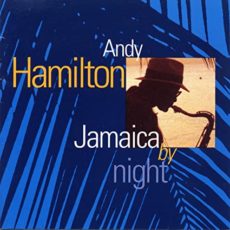
Having recovered from a diabetic coma in 1986, he celebrated his 70th birthday in 1988 playing at his regular venue, The Bear, performed at the Soho Jazz Festival, and in 1991 at the age of 73, Hamilton made his first-ever recording with Nick Gold, Silvershine on World Circuit Records. It became the biggest selling UK Jazz Album of the Year, The Times Jazz Album of the Year, and one of the 50 Sony Recordings of the Year. It was followed two years later by Jamaica at Night, which led to Caribbean and European concerts and national tours. Playing regularly until his death, his 90th birthday concert featured Courtney Pine, Sonny Bradshaw, Myrna Hague, Lekan Babalola, Nana Tsiboe, son Mark and The Notebenders.
Saxophonist Andy Hamilton, appointed Member of the Order of the British Empire (MBE) in the 2008 New Year Honours among other awards, continued to play, teach and promote music even as he approached his 94th birthday, passing away peacefully on June 3, 2012.
More Posts: bandleader,history,instrumental,jazz,music,saxophone
Daily Dose Of Jazz…
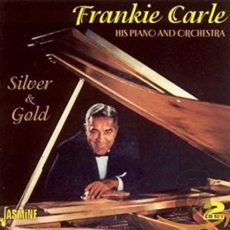
Frankie Carle, born Francis Nunzio Carlone on March 25, 1903 in Providence, Rhode Island. The son of a factory worker who could not afford a piano, he practiced on a dummy keyboard devised by his uncle, pianist Nicholas Colangelo, until he found a broken-down instrument in a dance hall. By 1916, now a teenager, he began working with his uncle’s band as well as a number of local bands around the state. To overcome prejudice against Italians he changed his name to Carle.
In the Thirties, he started out working with a number of mainstream dance bands that included the Mal Hallett Orchestra, had his own orchestra and at one time was billed in an ad for a night club as America’s Greatest Pianist. Joining Horace Heidt and His Musical Knights in 1939, Frankie later became co-leader of the band. His popularity during his time with Heidt’s band allowed him to leave the band in 1944 and form his own band, The Frankie Carle Orchestra and his daughter, Marjorie Hughes, sang with his band. During World War II, with his orchestra, he recorded a couple of V-Disc in a program of the U.S. War Department that featured his new compositions Moonlight Whispers and Sunrise Serenade. Some eleven years later he disbanded, embarked on his solo career in 1955 and until the 1980s, maintained a close following of loyal fans.
He had early exposure on the radio as a pianist for The Four Belles, a singing group distributed by the World Broadcasting System. In the mid-1940s, he and singer Allan Jones starred in the Old Gold Show on CBS radio and was also featured on the shows Pot o’ Gold, Treasure Chest, and The Chesterfield Supper Club. Over the course of his career, he recorded some four-dozen albums, composed over two-dozen popular romantic dance melodies. Pianist and bandleader Frankie Carle, whose #1 hit Sunrise Serenade sold over a million copies, passed away on March 7, 2001.
More Posts: bandleader,composer,history,instrumental,jazz,music,piano