

Daily Dose Of Jazz…
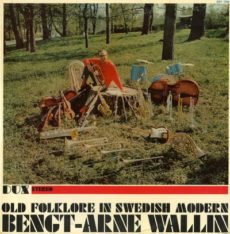
Bengt-Arne Wallin was born on July 13, 1926 in Linköping, Sweden and was also active under the pseudonym Derek Warne. He began his musical path with a homemade accordion. He then took up the trumpet and by the Forties he was playing trumpet in Linköping, followed by time spent in Gothenburg playing with Malte Johnsson’s Orchestra and in Stockholm Seymour Österwall at Nalen (National Palace) from 1951-1952.
In the years that followed from 1953-1965 he played in Arne Domnérus’s big band and between 1955 and 1965 was also in Harry Arnold’s radio band, after which he put the trumpet on the shelf.
Bengt took a position as an educator in 1972 and for the next twenty-one years he taught at the Music School of Stockholm. By the late 1990’s he started playing the trumpet again, now with his group Five to Five .
For the production show from Barnrike he was awarded the international radio prize Triumph Varieté. He went on to compose music for a variety of musicals and a larger number of television productions, such as The Magic Box. He was also the conductor of various major bands.
Trumpeter, composer, arranger, educator Bengt Arne Wallin, who was also trained in aeronautics, passed away November 23, 2015 in the Sollentuna Parish of Stockholm County, Sweden.
Sponsored By


#preserving genius
More Posts: trumpet
Daily Dose Of Jazz…
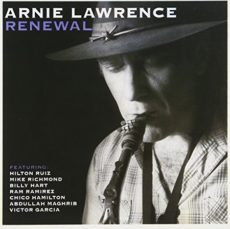
Arnie Lawrence ,was born Arnold Lawrence Finkelstein on July 10, 1938 in Brooklyn, New York. He studied clarinet in his youth before switching to saxophone and from the age of 12 he was playing in clubs in the Catskills, and by age 17 was performing at Birdland, at one point working a double bill with John Coltrane.
He played with Charles Mingus, Thad Jones, Maynard Ferguson, Clark Terry and Duke Pearson but did not make his first recordings until 1966, playing on Chico Hamilton’s The Dealer. Working for several years with Hamilton and becoming a soloist on The Tonight Show from 1967 to 1972, Arnie made his first records as a leader in 1968.
In the early 1970s Lawrence played with Willie Bobo, then joined Blood, Sweat & Tears in 1974. He did a world tour with Liza Minnelli in 1978–79, and released a few more records under his own name before touring with Louie Bellson and Elvin Jones in the early 1980s. He composed a symphony he titled Red, White and Blues, which was premiered by an orchestra in Williamsburg, Virginia. It featured himself, Dizzy Gillespie and Julius Hemphill all soloing in the performance.
Putting on his educator hat he taught from the middle of the 1970s, working as an artist in residence in Kentucky and Kansas. By 1986 he had stopped recording and touring and founded the New School for Jazz and Contemporary Music in New York City. Among the program’s students were Roy Hargrove, Brad Mehldau, Larry Goldings, John Popper, Peter Bernstein and Spike Wilner of Smalls Jazz Club. Moving to Israel in 1997, where he founded the International Center for Creative Music, an education facility open to both Jewish and Arab students. He played regularly in Israel and owned his own nightclub called Arnie’s Jazz Underground.
Suffered from lung and liver cancer late in life, alto saxophonist Arnie Lawrence passed away on April 22, 2005, in Jerusalem, Israel and Palestine, as both claim the city as their capital.
Sponsored By

Voices From The Community
#preserving genius
More Posts: saxophone
Daily Dose Of Jazz…
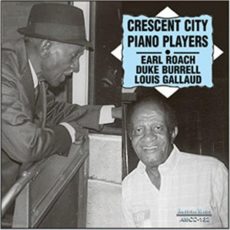
Duke Burrell was born on born July 9, 1920 in New Orleans, Louisiana and worked throughout his career in the Crescent City. He performed and recorded with Louis Jordan, Johnny Otis and on the final recordings of clarinetist Barney Bigard and the Pelican Trio along with Barry Martyn. He would reunite with Bigard for an Ellington segment recording with bassist Bobby Stone, drummer Louis Bellson and trumpeter Ray Nance.
By 1973 Duke became a bandleader and the following year formed the Louisiana Shakers that included Sammy Rimington, Sam Lee, McNeil Breaux and Teddy Edwards in the quintet lineup. He went on to lead four recording sessions between 1973 and 1976.
Pianist, composer, arranger and bandleader Duke Burrell passed away on August 5, 1993 in Los Angeles, California.
Sponsored By

www.whatissuitetabu.com
#preserving genius
More Posts: piano
Daily Dose Of Jazz…
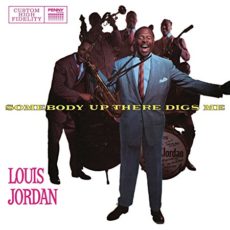
Louis Thomas Jordan was born on July 8, 1908 in Brinkley, Arkansas where his father was a music teacher and bandleader for the Brinkley Brass Band and the Rabbit Foot Minstrels. Losing his mother young, he studied music under his father, starting out on the clarinet, then piano and ultimately landed on the saxophone as his primary instrument. In his youth he played in his father’s bands instead of doing farm work when school closed. During his early career period he played the piano professionally, but alto saxophone became his main instrument. However, he would become even better known as a songwriter, entertainer and vocalist.
He briefly attended and majored in music at Arkansas Baptist College in Little Rock, but after a period with the Rabbit Foot Minstrels and with other local bands like Bob Alexander’s Harmony Kings, he went to Philadelphia and then New York. By 1932, Jordan was performing with the Clarence Williams band, and when he was in Philadelphia he played clarinet in the Charlie Gaines band.
1936 saw him joining the Savoy Ballroom orchestra, led by the drummer Chick Webb. A vital stepping-stone in his career, Louis introduced songs as he began singing lead, and often singing duets with up and comer Ella Fitzgerald. They would later reprise their partnership on several records, by which time both were major stars. In 1938, Webb fired Jordan for trying to persuade Fitzgerald and others to join his new band.
He became famous as one of the leading practitioners, innovators and popularizers of jump blues, a swinging, up-tempo, dance-oriented hybrid of jazz, blues and boogie-woogie. Jordan’s band also pioneered the use of the electronic organ.
Jordan was a talented singer with great comedic flair, and he fronted his own band for more than twenty years. He duetted with some of the biggest solo singing stars of his time, including Bing Crosby, Ella Fitzgerald and Louis Armstrong. An actor and a major black film personality, he appeared in dozens of “soundies” or promotional film clips, made numerous cameos in mainstream features and short films, and starred in two musical feature films made especially for him.
With his dynamic Tympany Five bands, Jordan mapped out the main parameters of the classic R&B, urban blues and early rock-and-roll genres with a series of highly influential 78-rpm discs released by Decca Records. These recordings presaged many of the styles of black popular music of the late 1940s, 1950s and 1960s and exerted a strong influence on many leading performers in these genres.
Known as The King of the Jukebox for his crossover popularity with both black and white audiences of the swing era, Louis was a prolific songwriter who wrote or co-wrote many songs that stayed in the top of the Billboard charts and that were influential classics of 20th-century popular music.
Pioneering alto saxophonist, pianist, clarinetist, singer, actor, songwriter and bandleader Louis Jordan, one of the most successful black recording artists of the 20th century, passed away on February 4, 1975 at age 66 in Los Angeles, California.
Sponsored By

#preserving genius
Daily Dose Of Jazz…
Bill Trujillo was born on July 7, 1930 in Los Angeles, California and started clarinet lessons at the age of four, then switched to tenor saxophone after seeing Lester Young perform with Count Basie in Los Angeles. His mother, a dance teacher at the famous Palomar Ballroom, regularly took him and his older brother to hear big bands when they were in residence at the Palomar, the Paramount, and other popular LA show places.
Learning to read music before he could read words and after Lincoln High School, where his friend and classmate was Lennie Niehaus played, Trujillo started his long professional career at the age of 16 with the West Coast based Glenn Henry Band. The band also boasted a young trombone player named Jimmy Knepper. During the ’40s, Bill played with Alvino Rey and other West Coast groups. In 1953, he joined Woody Herman with whom he remained until the following year when Bill Russo beckoned he joined the quintet but then playing in Chicago. Eventually finding the Windy City too cold, he returned to L.A. where he played in the orchestras of Charlie Barnet and Jerry Gray, and gigged with small groups.
At the behest of his longtime friend Lennie Niehaus, Trujillo joined Stan Kenton band in 1958, however, road trips often lasting a year or more put too much of a strain on his young family. Moving to Las Vegas, Nevada in 1960 he played with Nat Brandywynne and he has been there ever since. He became a mainstay in show orchestras at the Tropicana, Flamingo, Thunderbird and the Dunes playing behind Frank Sinatra, Ella Fitzgerald, Peggy Lee and many other. After a labor dispute in 1989 dried up this source of work, he returned to playing in big bands and small groups throughout the country.
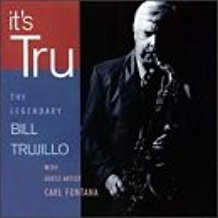
In 1999 he led his debut album It’s Tru followed by his 2006 It’s Still Tru with Carl Fontana on the TNC label. As an educator, saxophonist Bill Trujillo teaches clarinet, flute, and all saxophones while continuing to perform in Las Vegas.
Sponsored By
#preserving genius