

Daily Dose Of Jazz…
Nicole Glover was born on July 18, 1991 in Portland, Oregon. Her journey in music began when her father introduced her to improvised music at a young age. She began playing the clarinet at the age of ten, transitioning to tenor saxophone the following year. Blossoming in high school, she was one of 19 students from across the nation to be selected for the Next Generation Jazz Orchestra national tour. The performances had her playing with Bobby Watson, Julian Lage and with Wynton Marsalis at the Monterey Jazz Festival.
After studying at William Paterson University, Nicole returned to Portland in 2011 and was invited to record on Esperanza Spaulding’s Grammy winning album Radio Music Society. She has since performed and recorded with George Colligan, Alan Jones Storyline Sextet, Thomas Barber’s Spiral Road and the Kerry Politzer Quintet, as well as her own jazz trio. Not limiting herself to jazz, her work as a member of Ural Thomas and Pain, won them Willamette Weekly’s Best New Band of 2013 and received an Emmy Award for their feature episode of Oregon Art Beat, and they have opened for Parliament Funkadelic and Booker T. Jones.
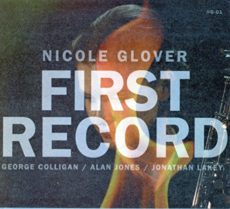
In 2015, Nicole released her debut album First Record featuring George Colligan on piano and trumpet, bassist Jonathan Lakey and Alan Jones on drums. A move to New York City in 2017 has seen her recording and touring with Gene Perla, Steve Wilson, Rodney Green, Winard Harper, Jeff “Tain” Watts, Bill Goodwin, Mulgrew Miller, Kenny Garrett, Geoffrey Keezer, Bennie Maupin, Bobby Watson, Mike Clark, Bill Stewart, Mel Brown, Rob Scheps, Terell Stafford, Helen Sung, Boris Kozlov, Dana Hall, and Scotty Barnhart. Tenor saxophonist Nicole Glover continues to perform and record across musical genres and expand her career.
Sponsored By


#preserving genius
More Posts: saxophone
Daily Dose Of Jazz…
Chico Freeman was born Earl Lavon Freeman Jr. on July 17, 1949 in Chicago, Illinois to saxophonist Von Freeman. His initial outing on his musical path came from his brother Everett who introduced him to the trumpet and began playing, inspired by Miles Davis. In 1967 he attended Northwestern University on scholarship for mathematics and played the trumpet in the school, but did not begin playing the saxophone until his junior year.
Changing his major to music, he graduated in 1972, proficient playing saxophone, trumpet, and piano. After graduation, Freeman taught at the Association for the Advancement of Creative Musicians School of Music in Chicago and started taking classes as a graduate student at Governors State University, earning a master’s degree in composition and theory. Though focused on jazz during this period he also played blues in local clubs with Memphis Slim and Lucky Carmichael.
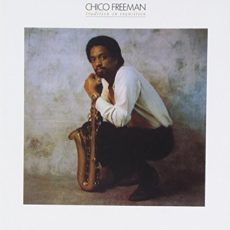
1976 saw the release of his debut album as a leader, Morning Prayer and moving to New York City the next year he widened his musical influences. He would experience his most productive years of his career, releasing albums such as No Time Left, Tradition in Transition and The Outside Within which earned him Record of the Year from Stereo Review. Coming to prominence in the late 1970s Chico was part of a movement including Wynton Marsalis of modern players steeped in the traditions of jazz.
He went on to record for independent labels India Navigation and Contemporary Records enlisting the talents of Wynton Marsalis, Bobby Hutcherson and Cecil McBee. He formed the band Guataca with Hilton Ruiz, Ruben Rodriguez, Yoron Israel and Giovanni Hidalgo and released Oh By the Way… in 2002. Freeman has toured internationally, both with his band as well as with Chaka Khan, Tomasz Stanko, Celia Cruz and Tito Puente.
His electric band Brainstorm brought together Delmar Brown on vocals and keyboards, percussionist Norman Hedman, bassist Chris Walker, and Archie Walker on drums. By the end of the Nineties he was producing Arthur Blythe’s album NightSong and beginning his teaching role at New School University.
Tenor saxophonist, bass clarinetist and trumpeter Chico Freeman, who was a recipient of the New York Jazz Award, continues to compose, perform and educate.

Daily Dose Of Jazz…
René Urtreger was born July 16, 1934 in Paris, France and began his private piano studies at the age of four, and then at the Conservatory. He studied with an orientation toward jazz, playing in a small Parisian club, the Sully d’Auteil, conducted by Hubert Damisch. The Sully boasted an orchestra of talented students including Sacha Distel and Louis Viale.
In 1953, Urtreger won first prize in a piano contest for amateurs, and from that moment decided to be a professional musician. 1954 saw him accompanying saxophonist Don Byas and trumpeter Buck Clayton in a Parisian concert. Their collaboration in the “Salon du Jazz” became one of the most highly requested French performances by the American musicians that toured the French capital.
After serving in the military from 1955 to 1957, René would play in a club on the left bank of the Seine, the famous Club Saint-Germain and again he collaborated with Miles Davis and Lester Young. His work so impressed the latter that he accompanied Young for a short tour of Europe in 1956, however the following year in December, he was part of Davis’s group which recorded the soundtrack to the film Ascenseur pour l’échafaud (Elevator to the Gallows).
The late 1950s had him working with Lionel Hampton, Stan Getz, Chet Baker, Dexter Gordon, Sonny Rollins and Ben Webster, among others. His canon of jazz work is still widely regarded as sensitive with a full, dense sound of swing. The Academie du Jazz of France formally recognized his accomplishments in 1961 with the Prix Django Reinhardt for outstanding jazz artist of the year. This win subsequently led to him providing soundtracks for films by Claude Berri and others.
Reappearing on the Paris jazz scene he resumed his career as a small-ensemble accompanist with Lee Konitz, Aldo Romano or Barney Wilen. He was featured at “Le Jazz Cool, Le Jazz Hot: A Celebration of Modern Jazz in Los Angeles and France” at the Getty Museum in Los Angeles, California in 2007. Pianist René Urtreger is currently 83 years of age and continues to perform.
Sponsored By

Voices From The Community
#preserving genius
More Posts: piano
Daily Dose Of Jazz…
Randy Bernsen was born on July 15, 1954 in Needham, Massachusetts. He began his professional career in the mid-1970s , playing guitar with local groups. He collaborated with the rock band Blood, Sweat & Tears on their 1977 tour, where he was second guitarist alongside Mike Stern until he left the band.
Randy went on to work with Jaco Pastorius, Herbie Hancock, Bob James and Peter Erskine. His debut album as a leader came in the form of Music for Planets, People & Washing Machines on the MCA , label in 1986, that received critical acclaim from Down Beat and Guitar Player.
1987 saw Bernsen releasing his sophomore project Mo ‘Wasabi with Wayne Shorter, Michael Brecker, Marcus Miller, Steve Gadd, Toots Thielemans and Bobby Economou supporting his effort. Once again he received great praise from among others, JazzIn and USA Today. His third MCA project however did not hold up to the standard.
Spending some time touring Asia and composing TV music, he settled in Fort Lauderdale, Florida and then joined Joe Zawinul’s band in 1992, replacing Scott Henderson. This move gave him the opportunity to record of Zawinul Syndicate’s Lost Tribes album.
Picking up a house gig at a Fort Lauderdale club resulted in Bernsen’s next CD in 1997 titled Live at Tavern 213, that featured excellent improvisation by the guitarist, bassist Pete Sebastian and drummer John Yarling. This led to a Mexico tour in 1998 with violinist/vocalist Nicole Yarling, saxophonist Richard Brookens, bassist Javier Carrion, and drummer Archie Pena that ultimately yielded Bernsen’s 2001 CD Live in San Miguel de Allande. Performing with his own band, recording 6 albums as a bandleader, guitarist Randy Bernsen continues to pursue his music career.
Sponsored By
www.whatissuitetabu.com
#preserving genius
More Posts: guitar

Daily Dose Of Jazz…
Kenneth Napper was born July 14, 1933 in London, England. He started out on learning to play the piano as a child, then picked up the bass as a student at Guildhall School of Music. Entering the British military in the early 1950s, he played and recorded with Mary Lou Williams in 1953 while on leave. After completing his term of duty, he went on to play with Jack Parnell, Malcolm Mitchell, Vic Ash, and Cab Calloway.
During the late Fifties and early 1960s Kenny was the house bassist at Ronnie Scott’s Jazz Club for several years and played with many British and American jazz musicians. These musicians include Alan Clare, Ronnie Scott, Stan Tracey, Tubby Hayes, Tony Kinsey, Tony Crombie, Jimmy Deuchar, John Dankworth, Pat Smythe, Phil Seamen, Zoot Sims, Carmen McRae, and Paul Gonsalves.
By the late Sixties he worked with Ted Heath, Tony Coe, John Picard and Barney Kessel, as well as with Gonsalves, Tracey, and Dankworth. In 1970 he played with Stephane Grappelli prior to a move to Germany where he played with Kurt Edelhagen from 1970 to 1972. While residing there, Napper focused more on composition and arrangement and then in the late Seventies he moved to the Netherlands.
Through the remainder of the decade and and the Eighties he put down his bass, arranged for radio ensembles, was the staff arranger and conductor for the 50 piece Metropole Orchestra, and then directed his attention to teaching at the Royal Conservatory in The Hague. At 83 years of age, double-bassist arranger, composer, conductor and educator Kenny Napper, it is assumed he has retired and returned to the United Kingdom.
Sponsored By

#preserving genius
More Posts: bass