

Daily Dose Of Jazz…
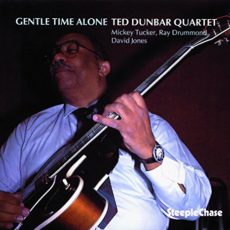
Earl Theodore Dunbar was born on January 17, 1937 in Port Arthur, Texas. He became interested in jazz at the age of seven and in the 1950s he joined several groups while studying pharmacy at Texas Southern University and during that period he became influenced by Wes Montgomery.
He trained as a pharmacist at Texas Southern University, but by the 1970s only did pharmacy work part-time. Dunbar was also a trained numerologist and had studied other aspects of mysticism. At one point he received accolades from Ebony and Down Beat.
In 1966 Ted moved to New York City and gained more experience. In 1972 he became one of the first jazz professors at Rutgers University and taught Kevin Eubanks, Vernon Reid and Peter Bernstein, as well as many others. He published four volumes on jazz.
He recorded five albums as a leader and another fifteen albums with Gene Ammons, Kenny Barron, Richard Davis, Gil Evans, Curtis Fuller, Albert Heath, Willie Jackson, Charles McPherson, David “Fathead” Newman, Don Patterson, Bernard Purdie, Sam Rivers, Johnny “Hammond” Smith, McCoy Tyner and Tony Williams among others. Guitarist and educator Ted Dunbar passed away on May 29, 1998 of a stroke in New Brunswick, New Jersey.

Jazz Is Global – Share

#preserving genius
More Posts: guitar
Daily Dose Of Jazz…
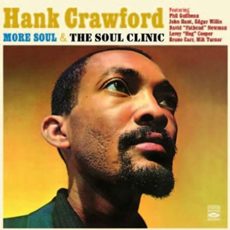
Phillip Guilbeau was born on January 16, 1926 in Lafayette, Louisiana. Like many of his fellow musicians he took up the trumpet and during World War II served in the Navy, Honorably discharged in 1945 he moved to Detroit, Michigan and successfully became a session player. Throughout his career he recorded on hundreds of albums including sessions with Count Basie, Big Joe Turner, David “Fathead” Newman, Otis Redding, Frank Sinatra, Quincy Jones, soloist on Hank Crawford’s recording of What A Difference A Day Makes from his Soul Clinic album and with Ray Charles, he was the soloist on the landmark 1961 album Genius + Soul = Jazz.
By the Seventies Phil moved to Washington, DC and recognizing the evolution of the music, moved into the new sound called funk. He became the trumpeter and manager of the group The Young Senators, the top-rated R&B group in the area after the release of their hit, that Guilbeau penned, The Jungle. With the success of this single they were asked to tour as the backing group of Eddie Kendricks, and recorded his seminal album My People… Hold On with them. The album included what is widely considered the first ever Disco song, Girl You Need A Change Of Mind.
As a manager, Gilbeau would go on to discover another group called Black Heat, get them to Atlantic Records and record three albums before they disbanded. After a lifetime career of playing jazz, funk and rhythm & blues music that spanned five decades, trumpeter and composer Phil Guilbeau passed away on September 5, 2005 in Florida.
Sponsored By

Voices From The Community
#preserving genius
More Posts: trumpet
Daily Dose Of Jazz…
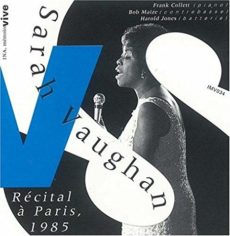
Bob Maize was born on January 15, 1945 in San Diego, California. He played piano from age seven and switched to bass at 13 and began playing professionally. After moving to San Francisco, California in 1963, he worked in the house bands of many jazz clubs in the city, including Soulville and Bop City.
He played with Sonny Stitt, Philly Joe Jones, Vince Guaraldi, Mose Allison, Herb Ellis, Monty Alexander, Anita O’Day, Emily Remler, and Jon Hendricks. He also did a stint in a rock band as a bass guitarist.
A move to Los Angeles, California in the 1970s saw him working with Scott Hamilton, Dave McKenna, and Tal Farlow. Following this, Maize worked with Horace Silver in 1983-84, recorded with Eiji Kitamura on the Concord label, for whom he recorded regularly as a sideman, and toured Japan with Sarah Vaughan in 1985. He continued to play as a sideman in West Coast clubs into the new millennium.
Double bassist Bob Maize, never led a recording session and passed away on November 20, 2004 in Los Angeles.
Give A Gift Of Jazz – Share
#preserving genius
More Posts: bass
Daily Dose Of Jazz…
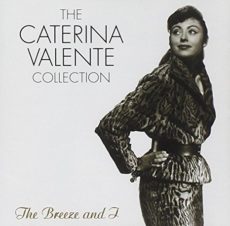
Caterina Valente was born on January 14, 1931 in Paris, France into an Italian artist family, her father, a well-known accordion player and her mother, a musical clown. In 1953, she made her first recordings with Kurt Edelhagen and soon afterwards achieved success with songs such as Malagueña, The Breeze and I,] and Dreh dich nicht um with the Werner Müller orchestra. In 1955, she was featured on The Colgate Comedy Hour with Gordon MacRae.
By the mid 1960s Valente was working with Claus Ogerman and recording his arrangements and compositions and sometimes conducted in both Italian and English on the Decca and London labels. She guest appearances on the NBC Kraft Music Hall television program and on the Dean Martin Show, the CBS variety series The Entertainers alongside Carol Burnett and Bob Newhart.
She has recorded some seven dozen albums around the world in the United States, Brazil, Peru, Argentina, Columbia, United Kingdom, Japan, Australia, Germany and South Africa. Caterina has been nominated for a Grammy and won 15 awards in Austria, Italy, the US, Italy, Brazil, France and Germany. She recorded Cole Porter’s I Love Paris, that sold nearly a million copies in 1954, her jazz album A Briglia Sciolta recorded in 1989 was her best selling album worldwide and has been reissued under the titles Fantastica and Platinum Deluxe and in 2001 released her album Girl Talk with harpist Catherine Michel..
Over the years of her career she has recorded or performed with Louis Armstrong, Chet Baker, Perry Como, Ella Fitzgerald, Benny Goodman, Woody Herman, the Tommy Dorsey Orchestra, Sy Oliver, Buddy Rich and Edmundo Ros.
Vocalist, guitarist, dancer and actress Caterina Valente who had yet to retire from show business at the age of 85, finally left the spotlight and is living a quiet life at 91.
Inspire A Young Mind
#preserving genius
Daily Dose Of Jazz…
Quentin “Butter” Jackson was born January 13, 1909 in Springfield, Ohio. His brother-in-law Claude Jones, who played with McKinney’s Cotton Pickers taught him to play the trombone. During the Thirties he played with Zack White, McKinney’s Cotton Pickers and the Don Redman Orchestra.
The Forties saw Butter, as he was affectionately known, working with Cab Calloway and then Lucky Millinder, taking occasional solos with those groups, and in the early days was a ballad singer. In 1949 he became a fixture in the Duke Ellington Orchestra, becoming his best wa-wa trombonist utilizing the plunger mute. This relationship, that included recordings, lasted until 1960, both as a soloist and in the ensembles.
Jackson went on to tour of Europe and recorded with Quincy Jones, then performed and recorded with Count Basie for two years and recorded notable work with Charles Mingus in 1962-63, followed by a return to Ellington and worked with the big bands of Louie Bellson and Gerald Wilson. By the 1970s he was working with the Mel Lewis/Thad Jones Orchestra until near the end of his life.
A consummate sideman he recorded with Dorothy Ashby, Kenny Burrell, Ella Fitzgerald, Johnny Hodges, Leon Thomas, Dizzy Gillespie, Ray Charles, Aretha Franklin, Louis Armstrong, Milt Jackson, Herbie Mann, Freddie McCoy, Wes Montgomery, Shirley Scott, Jimmy Smith, Clark Terry, Billy Strayhorn, Randy Weston and Dinah Washington, who did a version of Bessie Smith’s Trombone Cholly on her album Dinah Sings Bessie Smith, enlisting Jackson on the horn, under the title “Trombone Butter”.
Trombonist Quentin Jackson, whose only session as a leader resulted in four titles in 1959 that were reissued by Swing, passed away on October 2, 1976 in New York City.
Sponsored By

www.whatissuitetabu.com
#preserving genius
More Posts: trombone