

Daily Dose Of Jazz…
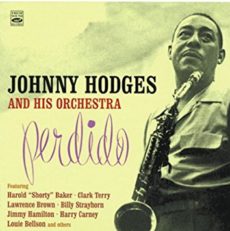
Sonny Greer was born on December 13, 1895 in Long Branch, New Jersey. He played with Elmer Snowden’s band and the Howard Theatre Orchestra in Washington, D.C. before joining Duke Ellington, whom he met in 1919. He was Ellington’s first drummer, playing with his quintet, the Washingtonians, before moving with Ellington into the Cotton Club.
As a result of his job as a designer with the Leedy Drum Company of Indiana, Greer was able to build up a huge drum kit worth over a considerable $3,000 at the time, including chimes, a gong, timpani, and vibes.
A heavy drinker and a pool-hall hustler, often needing to retrieve his drums from the pawnbroker, in 1950 Ellington responded to his drinking and occasional unreliability by taking a second drummer, Butch Ballard, with them on a tour of Scandinavia. Sonny became enraged and the subsequent argument led to their permanent estrangement.
Greer continued to play, mainly as a freelance drummer, working with musicians such as Johnny Hodges, Red Allen, J. C. Higginbotham, Tyree Glenn, and Brooks Kerr. He appeared in films, briefly led his own band and never recorded as a leader. He was part of a tribute to Ellington in 1974, which achieved great success throughout the United States.
Drummer, percussionist and vocalist Sonny Greer passed away on March 23, in 1982.
Sponsored By

More Posts: drums,percussion,vocal
Daily Dose Of Jazz…
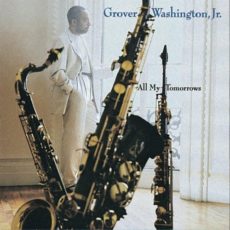
Grover Washington Jr. was born on December 12, 1943 in Buffalo, New York. His mother was a church chorister and his father was a saxophonist and collected old Jazz gramophone records, which put music everywhere in the home. Growing up he listened to Benny Goodman, Fletcher Henderson, and others like them. At the age of eight his father gave him a saxophone and he practiced and would sneak into clubs to see famous Buffalo blues musicians.
Leaving Buffalo he played with a Midwest group called the Four Clefs and then the Mark III Trio from Mansfield, Ohio. Then drafted into the U.S. Army he met drummer Billy Cobham, who as a mainstay in New York City, he introduced Washington to musicians around the city. After leaving the Army, he freelanced around New York City, but eventually landed in Philadelphia in 1967. The first two years of the Seventies decade provided his first recording sessions on Leon Spencer’s debut and sophomore albums on Prestige Records, together with Idris Muhammad and Melvin Sparks.
His big break came when alto saxophonist Hank Crawford couldn’t make a recording date with Creed Taylor’s Kudu Records and Grover took his place. This led to his first solo album, Inner City Blues in which he displayed his talent on the soprano, alto, tenor, and baritone saxophones.
His rise to fame with his first three albums established him as a force in jazz and soul music, but it was his fourth album in 1974, Mister Magic, that became his major commercial success. The album crossed over all the charts and with guitarist Eric Gale in tow again for the 1975 follow-up album Feels So Good proved both could reach #10. A string of acclaimed records brought Washington through the 1970s, culminating in the signature piece Winelight in 1980, in which he collaborated on Just The Two Of Us with Bill Withers and dedicated Let It Flow to Dr. J of the Philadelphia 76ers. The album went platinum, won two Grammy awards for Just the Two Of Us and Winelight and was nominated for both Record and Song Of The Year.
During the late 1980s and early 1990s Washington gave rise to Kenny G, Walter Beasley, Steve Cole, Pamela Williams, Najee, Boney James and George Howard. Over the course of his career he performed and recorded with Kathleen Battle, Kenny Burrell, Charles Earland, Dexter Gordon, Urbie Green, Eddie Henderson, Masaru Imada, Boogaloo Joe Jones, Gerry Mulligan, Don Sebesky, Johnny “Hammond” Smith, Mal Waldron and Randy Weston.
On December 17, 1999 while waiting in the green room after performing four songs for The Saturday Early Show, at CBS Studios in New York City, saxophonist Grover Washington Jr. collapsed. He was pronounced dead at about 7:30 pm at St. Luke’s-Roosevelt Hospital and his doctors determined he had suffered a massive heart attack. He was 56. In tribute, a large mural of him, part of the Philadelphia Mural Arts Program, is just south of the intersection of Broad and Diamond streets.

Give The Gift Of Knowledge
Daily Dose Of Jazz…
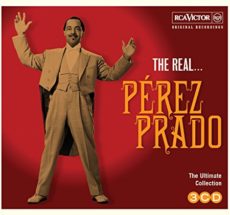
Dámaso Pérez Prado was born on December 11, 1916 in Matanzas, Cuba to a school teacher and a journalist. He studied classical piano in his early childhood, later playing organ and piano in local clubs. For a time, he was pianist and arranger for the popular Cuban band Sonora Matancera and worked with Havana casino orchestras for most of the 1940s.
In 1949 he moved to Mexico to form his own band and record for RCA Victor. Specializing in mambos, the upbeat adaptation of the Cuban danzón, Perez stood out with their fiery brass riffs, strong saxophone counterpoints and his signature grunt ¡Dilo! (Say it!). In 1950 arranger Sonny Burke heard Qué Rico El Mambo while on vacation in Mexico and recorded it back in the United States as Mambo Jambo. The single was a hit, which caused Pérez to launch a US tour, his appearances were 1951 sell-outs and he began recording US releases for RCA Victor.
Prado composed several famous songs Caballo Negro, Lupita, and Mambo no.8 among others, reached #1 with a cha-cha-chá arrangement of Cherry Pink and Apple Blossom White, held the spot for ten consecutive weeks and sold a million copies. The song went on to be danced to by Jane Russell in the 1954 movie Underwater!, and in 1958 his final #1 hit Patricia scaled the Jockeys and Top 100 charts and was introduced onto the Billboard Hot 100.
His popularity outside the Latino communities in the United States came with the peak of the first wave of interest in Latin music during the 1940s, 1950s and early 1960s. He performed in films in the United States, Europe and Mexico until his success waned, his association with RCA ended and music made way for rock and roll and pop music.
The early Seventies saw Prado returning to Mexico City to continue a healthy career in Latin America. He toured and continued to record material released in Mexico, South America and Japan. Revered as one of the reigning giants of the music industry he was a regular performer on Mexican television, was featured in a musical revue titled Sun, and his final United States concert to a pack house was in Hollywood in 1987.
During his lifetime, at one time or another, Ollie Mitchel, Alex Acuña, Maynard Ferguson, Pete Candoli, Beny Moré, Johnny Pacheco, Armando Peraza, Mongo Santamaría, Luisito Jorge Ballan Garay lll performed as part of his orchestra. His music has appeared in the films La Dolce Vita, Goodbye Columbus, Space Cowboys and on television shows The Simpsons, and HBO’s Real Sex series.
With persistent ill health plaguing him for the next two years, pianist, composer, arranger and bandleader Pérez Prado passed away of a stroke in Mexico City, Mexico on September 14, 1989, aged 72.
Put A Dose In Your Pocket
More Posts: piano
Daily Dose Of Jazz…
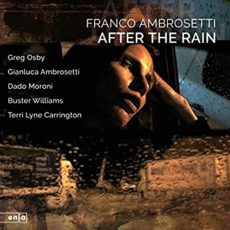
Franco Ambrosetti was born December 10, 1941 in Lugano, Switzerland and received classical piano training, but is a self-taught trumpeter. He matriculated through school and holds a Masters Degree in economics from the University of Basel. He frequently worked professionally with his father, a saxophonist who once played sax opposite Charlie Parker, in a group that also included George Gruntz, among others.
Ambrosetti has recorded with both American and European musicians and performed at jazz festivals and concerts with Kenny Clarke, Dexter Gordon, Phil Woods, Cannonball Adderley, Joe Henderson, Michael Brecker, Mike Stern, Hal Galper and Romano Mussolini, among others.
He has recorded some two-dozen albums as a leader most notably on the Enja Record label and another eighteen as a sideman. Trumpeter, flugelhornist and composer Franco Ambrosetti continues to perform, record and tour.
Sponsored By

More Posts: flugelhorn,trumpet
Daily Dose Of Jazz…
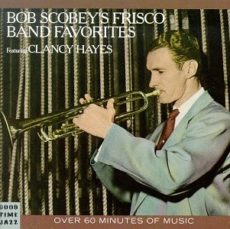
Robert Alexander Scobey, Jr. was born on December 9, 1916 in Tucumcari, New Mexico. He began his career playing in dance orchestras and nightclubs in the 1930s and by 1938 was working as second trumpeter for Lu Watters in the Yerba Buena Jazz Band. 1949 saw him leading his own band under the name Bob Scobey’s Frisco Band and the following year secured a three-year residency at the Victor & Roxie’s, which expanded their popularity.
Clancy Hayes joined the band to sing, play banjo bringing his own compositions such as Huggin’ and a Chalkin‘. The collaboration recorded over two hundred tracks until he left in 1959 to follow a solo career. The Frisco Band broadcasted in 1952 and 1953 on Rusty Draper’s television show. In 1953 Louis Armstrong sang with the band and the following year blues singer Lizzie Miles began recording and touring with the band, a relationship that lasted three years.
Beginning in 1955 Scobey and his band played San Quentin Prison, the roadhouse Rancho Grande, recorded for Verve Records and RCA Victor,. and toured colleges and universities, recorded many student favorites on the album College Classics.
Bob opened the Club Bourbon Street in Chicago, Illinois in 1959, and began suffering with stomach issues while touring in 1960. Trumpeter Bob Scobey passed away of cancer on June 12, 1963. His wife produced a biography titled He Rambled!, arranged for his band to form again and record some blues songs, and saw to the reissuing of his albums.

More Posts: trumpet