


Daily Dose Of Jazz…
John Martin Tchicai was born on April 28, 1936 in Copenhagen, Denmark to a Danish mother and a Congolese father. The family moved to Aarhus where he studied violin in his youth, but in his mid-teens began playing clarinet and alto saxophone, focusing on the latter. By the late 1950s he was travelling around northern Europe, playing with many musicians.
A move to New York City in 1963, found Tchicai joining Archie Shepp’s New York Contemporary Five and the New York Art Quartet. He played on John Coltrane’s Ascension album and Albert Ayler’s New York Eye and Ear Control, both influential free jazz recordings. Following his work in New York, he returned to Denmark in 1966, and shortly thereafter focused most of his time on music education.
John formed the small orchestra Cadentia Nova Danica with Danish and other European musicians, collaborating with Musica Elletronica Viva and performed in multi-media events. He was a founding member of the Amsterdam’s Instant Composers Pool in 1968, and in 1969 took part in the recording of John Lennon’s Unfinished Music No. 2: Life with the Lions.
On August 30, 1975, his appearance at the Willisau Jazz Festival was recorded with Swiss pianist Irène Schweizer and released later that year as Willi The Pig. Tchicai returned to a regular gigging and recording schedule in the late 1970s. In the early 1980s he switched to the tenor saxophone as his primary instrument. In 1990 he was awarded a lifetime grant from the Danish Ministry of Culture.[3]
Tchicai relocated to Davis, California in 1991, where he led several ensembles. He was awarded a National Endowment for the Arts fellowship in 1997, was a member of Henry Kaiser and Wadada Leo Smith’s Yo Miles band, a loose aggregation of musicians exploring Miles Davis’ electric period.
In 2001 he returned to Europe to live near Perpignan in southern France. On June 11, 2012, free jazz alto and tenor saxophonist and composer John Tchicai suffered a brain hemorrhage in an airport in Barcelona, Spain. While recovering he passed away on October 8, 2012, aged 76.

Take A Dose On The Road

Daily Dose Of Jazz…
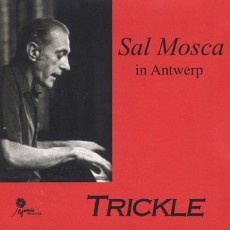
Sal Mosca was born April 27, 1927 in Mount Vernon, New York and studied piano with Lennie Tristano. After playing in the United States Army Band during World War II, he studied at the New York College of Music under the G.I. Bill.
Mosca began working with Lee Konitz in 1949 and also worked with Warne Marsh. He spent much of his career teaching and was relatively inactive since 1992; however, new CDs were released in 2004, 2005, and 2008.
Pianist Sal Mosca, who predominately performed in the cool jazz and post-bop genres, passed away on July 28, 2007 in White Plains, New York.
Give The Gift Of Knowledge
More Posts: piano
Daily Dose Of Jazz…
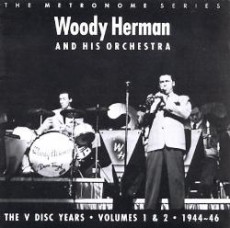
Dave Tough, born April 26, 1907 in Oak Park, Illinois was sometimes Davie or Davey Tough. His decision to become a drummer was not supported by his family or community, so he ventured from his upper-middle class world to the evolving jazz scene of Chicago’s Southside, breaking both cultural and musical boundaries.
Dave worked Bud Freeman, Woody Herman, Eddie Condon, Red Nichols, Red Norvo, Tommy Dorsey, Bunny Berigan and Benny Goodman. Appearing as the poet-drummer character Dick Rough in the Autobiographical Novel of Kenneth Rexroth, he played at Chicago’s legendary Green Mask,
In the later 1920s, Tough floated between Nice and Paris doing freelance work, touring and recording throughout Europe mostly on the Tri-Ergon label in the early Thirties. During this overseas period he worked loosely with George Carhart and while in Paris he had extensive sessions with Mezz Mezzrow.
Though without official record,he spent portions of 1942-44 in the Navy playing behind Shaw’s Naval Band. He only led one album, a small-sided release by the Jamboree label. Although he had varied successes, one being with the Artie Shaw band, Dave also had difficulties with alcoholism and illness that caused him to lose a number of prominent jobs.
Although he was not known as a bebop drummer, he was a fan and admired the drumming of Max Roach. He was not a flashy, crowd-pleasing drummer like Gene Krupa or Buddy Rich, he was widely admired by other musicians for his taste and subtle rhythmic drive. Dixieland and swing drummer Dave Tough, described as the most important of the drummers of the Chicago circle in the 1930s and 1940s, passed away from a cerebral trauma after falling down on a Newark, New Jersey street on December 9, 1948 at age 41. He was inducted into the Big Band and Jazz Hall of Fame in 2000.
Put A Dose In Your Pocket
More Posts: drums
Daily Dose Of Jazz…
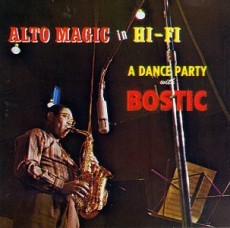
Earl Bostic was born in Tulsa, Oklahoma on April 25, 1912. He turned professional at the age of 18 when he joined Terence Holder’s Twelve Clouds of Joy. He then performed on the riverboats of New Orleans with Frank Marable before graduating from Xavier University.
He worked with territory bands as well as with Arnett Cobb, Hot Lips Page, Rex Stewart, Don Byas, Charlie Christian, Thelonious Monk, Edgar Hayes, Cab Calloway and others His first recording session was with Lionel Hampton in 1939 along with Charlie Christian, Clyde Hart and Big Sid Catlett. In 1938, and again in 1944, Earl led the house band at Smalls Paradise and while there he doubled on guitar and trumpet. During the early 1940s, he was a well-respected regular at the famous jam sessions held at Minton’s Playhouse.
Forming his own band in 1945, Bostic made his first recordings as a leader on the Majestic label. In the late Forties turned to rhythm and blues and had his biggest hits with Temptation, Sleep, You Go To My Head, Cherokee and his signature hit Flamingo. At various times his band included Keter Betts, Jaki Byard, Benny Carter, John Coltrane, Teddy Edwards, Benny Golson, Blue Mitchell, Tony Scott, Cliff Smalls, Sir Charles Thompson, Stanley Turrentine, Tommy Turrentine and others who rose to prominence in jazz.
He would go on to record Jazz As I Feel It with Shelly Manne, Joe Pass and Richard “Groove” Holmes. He wrote arrangements for Paul Whiteman, Louis Prima, Lionel Hampton, Gene Krupa, Artie Shaw, Hot Lips Page, Jack Teagarden, Ina Rey Hutton and Alvino Rey. His songwriting hits include Let Me Off Uptown that was performed by Anita O’Day and Roy Eldridge, and Brooklyn Boogie, which featured Louis Prima and members of the Booklyn Dodgers.
During the early 1950s Earl lived in Addisleigh Park in St. Albans, Queens before moving to Los Angeles, California where he opened his club, the Flying Fox. Suffering a heart attack he concentrated on writing arrangements. Alto saxophonist Earl Bostic, whose recording career encompassed small group swing-based jazz, big band jazz, jump blues, organ-based combos and a string of commercial successes, passed away October 28, 1965 from a heart attack while performing with his band in Rochester, New York. He was inducted into the Oklahoma Jazz Hal of Fame in 1993.
Uplift Someone’s World
More Posts: saxophone
Daily Dose Of Jazz…
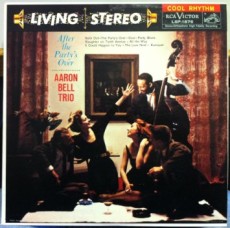
Aaron Bell was born Samuel Aaron Bell on April 24, 1921 in Muskogee, Oklahoma. As a child, he played piano and went on to learn brass instruments in high school. He attended Xavier University where he began playing bass, graduating in 1942 and joining the Navy until 1946.
After his discharge he became a member of Andy Kirk’s band and the next year enrolled at New York University to complete his Master’s degree. Aaron then joined Lucky Millinder’s band followed by gigging with Teddy Wilson.
During the 1950s, Bell appeared on Billie Holiday’s album Lady Sings The Blues and recorded with Lester Young, Stan Kenton, Johnny Hodges, Cab Calloway, Carmen McRae and Dick Hyman. Leaving Haymes in 1960 he took a chair opposite drummer Sam Woodyard in the Duke Ellington Orchestra.
He left Ellington in 1962 to spend time with Dizzy Gillespie before taking pit musician jobs on Broadway. He also recorded with Johnny Griffin, Sonny Stitt and Randy Weson as well as recording as a leader. Bell and Ellington collaborated once more in 1967, on a tribute to Billy Strayhorn. He held a residence at the La MaMa Experimental Theatre Club in New York City from 1969 to 1972.
Aaron was also an educator and began teaching at Essex College in Newark, New Jersey in 1970, remaining there until 1990. During this period he also toured with Norris Tumey, Harold Ashby and Cat Anderson. In the 1980s he returned to piano playing, and retired from active performance in 1989. Double bassist Aaron Bell passed away on July 28, 2003.
Jazz Is Global – Share
;
More Posts: bass