

Daily Dose Of Jazz…
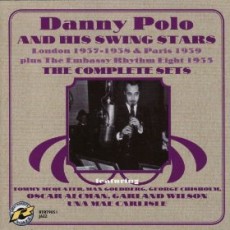
Danny Polo was born on December 22, 1901 in Toluca, Illinois. His father was also a clarinetist and he learned to play from a young age, working in marching bands from age eight. During his youth Polo played with Claude Thornhill as a duo.
In the 1920s, Polo played with Elmer Schoebel, Merritt Brunies, Arnold Johnson,, Ben Bernie, Jean Goldkette and Paul Ash. 1927 saw him in Europe with Dave Tough, playing with several Continental bandleaders including Ben Firman, Lud Gluskin, George Carhart, Ben Berlin and Arthur Briggs. From 1930-1935 he played with Ambrose & His Orchestra, then returned to the U.S. in December of that year.
In 1938, Danny returned to Britain to play with Ambrose again, and worked with Ray Ventura in Paris in 1939. Late that year he moved back to the States for good and spent the early Forties working with Joe Sullivan, Jack Teagarden, worked on the Bing Crosby film Birth of the Blues and with Claude Thornhill again.
The clarinetist led his own Midwestern territory band, Danny Polo and His Jive Five, for a time, then returned to play with Thornhill once more in 1947. He recorded two sessions as a leader with His Swing Stars, which include Alix Combelle, both in Europe, in 1938-39. He also played in several experimental sessions with Miles Davis around 1947-48. While performing with Thornhill, Danny Polo became ill, and passed away rather suddenly on July 11, 1949 in Chicago, Illinois.

Inspire A Young Mind
More Posts: clarinet
Daily Dose Of Jazz…
Cameron Brown was born December 21, 1945 in Detroit, Michigan. He started studying music at age 10, first on piano, later on clarinet. But, drawn to the bass, he found himself playing a tin bass in a student dance band. As an exchange student in Europe, he worked with George Russell’s sextet and big band for one year.
Brown went on to play with Don Cherry, Aldo Romano, Booker Ervin and Donald Byrd. In 1966 he returned to the States to matriculate and graduate in 1969 from Columbia College, Columbia University with a degree in sociology.
In 1974, Cameron met Sheila Jordan, gigged with free jazz pioneers Roswell Rudd and Beaver Harris, joined Archie Shepp’s quintet in 1975 and recorded with Harris and The 360 Degree Music Experience around that time.
The Don Pullen/George Adams Quartet had Brown and drummer Dannie Richmond helping to develop into an intense and rewarding partnership that lasted during the 1980s. In addition to this quartet, he played with Art Blakey’s Jazz Messengers, and various groups led by Rudd, and Richmond. He has performed and recorded with Ted Curson, Lee Konitz, Chet Baker, Joe Lovano, Mal Waldron, Ricky Ford, Steve Grossman, Betty Carter, John Hicks, Etta Jones and Jane Ira Bloom, to name a few.
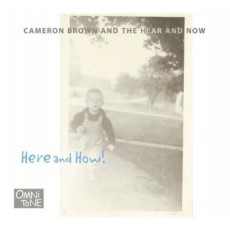
Cameron has appeared on more than 80 recordings as a sideman and his first recording as a leader after nearly 40 years of performing, was published in 2003 with his group The Hear and Now featuring Dewey Redman.
In addition to playing gigs and touring nationally and internationally, he is an educator currently teaching jazz double bass at Green Meadow Waldorf School in Chestnut Ridge, New York, offers private lessons and substitute teaches music theory classes at The New School for Jazz and Contemporary Music in New York City.
v
Dose A Day – Blues Away
More Posts: bass
Daily Dose Of Jazz…
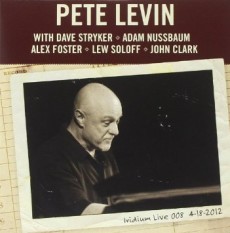
Pete Levin was born December 20, 1942 in Brookline, Massachusetts and his first instrument as a teenager was a French horn. He studied at Boston University and received a master’s degree from Juilliard School of Music in New York City. In the early 1970s he joined the Gil Evans Orchestra as a French horn player. At the time, he was experimenting with synthesizers. Over time Gil Evans incorporated his synthesizer sound into the compositions and his role changed to a full-time keyboardist for the next fifteen years. Leaving the Gil Evans Orchestra he followed with an eight-year association with Jimmy Guiffre.
Levin plays the Hammond organ, clavinet and moog synthesizer. He has produced several albums as a bandleader and has released a collaborative album with his brother, bassist Tony Levin, as a tribute to and styled after the works of Oscar Pettiford and Julius Watkins. He has performed for film and television scores including Missing In Action, Lean On Me, Silver Bullet, Red Scorpion,, The Color of Money, Maniac, Spin City, America’s Most Wanted and Star Trek.
He has worked with Carla Bley, Brubeck Brpthers, Hiram Bullock, Jimmy Cobb, Billy Cobham, Willie Colon, Miles Davis, Rachelle Ferrell, Bryan Ferry, Gregory Hines, Thad Jones/Mel Lewis Band, Annie Lennox, Chuck Mangione, Charles Mingus, Gerry Mullligan, Salt-n-Pepa, David Sanborn, John Scofield, Wayne Shorter, Paul Simon, Lew Soloff, Vanessa Williams and Lenny White among others.
He was awarded the Army Commendation Medal for writing the official military band arrangement of the U.S. Infantry song. Jazz keyboardist and horn player Pete Levin continues to perform, record and tour.
Take A Dose On The Road
More Posts: french horn
Daily Dose Of Jazz…
Jacques Lesure was born on December 19, 1962 in Detroit, Michigan. He began playing guitar when he was ten years old, attended Renaissance High School and Interlochen Arts Academy every summer. Started playing in church, he played with the Clark Sisters for many years. He went on to attend Wayne State University.
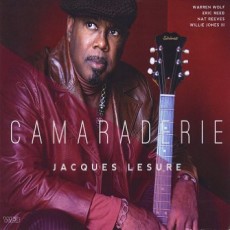
Signed to WJ# Records, owned by Willie Jones III, he is label mates with Eric Reed and Warren Wolf. He has performed with Kenny Burrell, Oscar Brown Jr., Jimmy Smith, Stanley Turrentine, Freddy Cole, Wynton Marsalis, George Benson, Jack McDuff, Les McCann, Carmen Lundy, Oliver Lake, Paula West and the list goes on and on.
In a career that has spanned 30 years to date, he has collaborated in the creation of and performed in stage plays, movie scores and special projects for television. Active in the Los Angeles, California community where he resides, as an educator he mentors many up and coming musicians. He is the Musical Director for the Living Legends Foundation, President of the African-American Jazz Caucus, is an Artist Teacher for the Monk Institute, Music LA and The Dolo Coker Jazz Foundation, and a national adjudicator, judging student competitions nationwide. Guitarist Jacques Lesure continues to perform and tour with his group and as a sideman.
Give The Gift Of Knowledge
More Posts: guitar
Daily Dose Of Jazz…
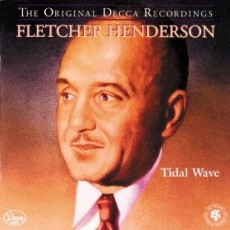
Fletcher Henderson was born James Fletcher Hamilton Henderson, Jr. on December 18, 1897 in Cuthbert, Georgia. The home he grew up in, known as the Fletcher Henderson House, is now a historic site. He attended Atlanta University in Atlanta, Georgia graduating in 1920, leaving with the nickname “Smack” due to his college baseball hitting skills. Moving to New York City he enrolled at Columbia University to pursue a masters degree in chemistry but found job prospect lean so he chose music to make a living.
During the early to mid-Twenties Fletcher was the recording director of the fledgling Black Swan record label, provided solo piano accompaniment for many blues singers, and led the backing group for Ethel Waters during one of her national tours. In 1922 he formed his own band with Don Redman arranging the charts, took residency at the Club Alabam, then at the Roseland Ballroom, and quickly became known as the best Black band in New York. When Louis Armstrong joined his orchestra in 1924 for a year, he saw the richer potential for jazz band orchestration. As an arranger, Henderson came into his own from 1931 into the mid-1930s.[2]
His bands included Howard Scott, Coleman Hawkins, Charlie Dixon, Kaiser Marshall, Buster Bailey, Elmer Chambers, Charlie Green, Ralph Escudero, Don Redman, Henry “Red” Allen, Joe Smith, Rex Stewart, Tommy Ladnier, Doc Cheatham, Roy Eldridge, Benny Carter, Chu Berry and Sun Ra among many others.
After about 1931, his arrangements became influential. In addition to his own band, he arranged for Teddy Hill, Isham Jones, and Benny Goodman, the latter always giving him credit. After sustaining a concussion in a car accident his success began to wane but Goodman along with John Hammond bought Henderson’s arrangements to support him during his illness.
By 1939, Fletcher disbanded his orchestra and joined Goodman’s, first as pianist and arranger and then working full-time as staff arranger. He re-formed bands of his own several times in the 1940s, toured with Ethel Waters again in 1948–1949, suffered a stroke in 1950 resulting partial paralysis that ended his piano playing.
He was responsible for bridging the gap between Dixieland and swing, establishing the formula for swing music by breaking the band into section that would play n call-and-response style and riffs. He also played a key role in bringing improvisatory jazz styles from New Orleans and other areas of the country to New York City, where they merged with a dance-band tradition that relied heavily on arrangements written out in musical notation.
Pianist, composer, arranger and bandleader Fletcher Henderson passed away in New York City on December 29, 1952. He was one of the most prolific and influential black musical arrangers and bandleaders in jazz history ranked along with Duke Ellington.
Put A Dose In Your Pocket
More Posts: piano