

Daily Dose Of Jazz…
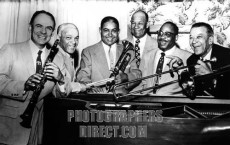
Wallace Bishop was born February 17, 1906 in Chicago, Illinois and started on drums as a teenager, studying under Jimmy Bertrand. His first professional gig was with Art Sims and his Creole Roof Orchestra in Milwaukee in 1926. Around this time he also played with Jelly Roll Morton, Bernie Young, Hughie Swift, Richard M. Jones and Tommy Dorsey.
Often addressed as “Bish”, from 1928 to 1930 he played with Erskine Tate followed with the Earl Hines Orchestra from 1931-1937. By the 1940s he was playing with Jimmie Noone, Coleman Hawkins, Don Redman, Phil Moore, Foots Thomas, John Kirby and Sy Oliver among others.
While touring Europe with Buck Clayton in 1949, Wallace elected to remain there, and found work both with noted European jazz musicians and with touring or expatriate Americans, including Bill Coleman, Don Byas, Ben Webster, Kid Ory, Milt Buckner, Buddy Tate and T-Bone Walker. Bishop recorded only two pieces as a bandleader in 1950, with a trio, but he continued to record regularly into the 1970s.
Wallace Bishop, a subtle and supportive jazz drummer who was one of the finest drummers of the swing era, passed away on May 2, 1986 in Hilversum, Holland.
Daily Dose Of Jazz…
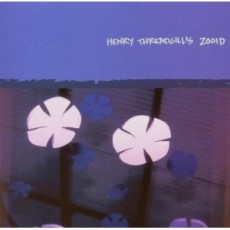
Henry Threadgill was born February 15, 1944, in Chicago, Illinois and first performed as a percussionist in his high school marching band before taking up the baritone saxophone and later a large portion of the woodwind instruments. He soon settled upon the alto saxophone and flute as his main instruments.
He was one of the original members of the legendary AACM – Association for the Advancement of Creative Musicians in Chicago, working under the guidance of Muhal Richard Abrams before leaving to tour with a gospel band. In 1967, he enlisted in the Army, playing with a rock band in Vietnam through 1968. Discharged in 1969 he returned to Chicago, formed a trio that eventually became “Air”, one of the most celebrated and critically acclaimed avant-garde jazz groups of the 1970s and 1980s.
Threadgill had moved to New York City and began pursuing his own musical visions, exploring musical genres in innovative ways with his first nonet X-75. In the early Eighties, Threadgill created the Henry Threadgill Sextet, his first critically acclaimed ensemble as a leader, with two drummers as a single unit. He has recorded three albums under X-75 for About Time Records, reformed his sextet and released three albums on the Novus label.
Since the 90s Threadgill has continued to compose, create, perform and record music with various group configurations such as “Very Very Circus” and “Zooid” utilizing electric guitars, French horn, Latin percussion, accordion, cello and tuba.
Daily Dose Of Jazz…
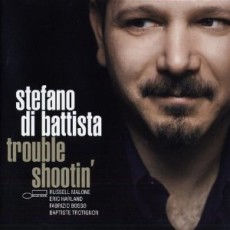
Stefano di Battista was born on February 14, 1969 in Rome Italy. He began studying the saxophone at the age of 13 years in a band made up primarily of boys. It was during this period that he discovered the fun of making music. By the time he was sixteen he had become interested in jazz and the sound of Art Pepper and found his mentor, Massimo Urbani.
Enrolling in The Conservatory, Stefano perfected his technique with classical tradition, graduated with honors and by twenty-one was playing in groups of various configurations. 1992 finds him playing the Calvi Jazz Festival and is invited to perform in Paris. Traveling between Rome and Paris he lands two engagements, is hired to play with the National Jazz Orchestra and his career takes off.
Di Battista put out “Volare”, his debut as a leader in 1997, has toured with the Elvin Jones Jazz Machine as well as performing with Jimmy Cobb, Walter Booker, Nat Adderley, Laurent Cugny, Aldo Romano, Jacky Terrasson and many others. The alto and soprano saxophonist continues to record, perform and tour both as a leader and sideman.
More Posts: saxophone
Daily Dose Of Jazz…
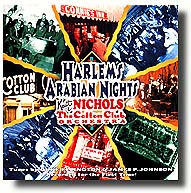
Keith Nichols was born on February 13, 1945 in Ilford, Essex, UK and took his first music lessons at age five on piano and accordion. As a youth he was a child actor and an award-winning accordionist, Great Britain Junior Champion in 1960.
He turned professional after graduating from Gulldhall School of Music, touring with the Levity Lancers for seven years playing trombone, piano and tuba. From the early 70s he has performed in concert ragtime at London’s South Bank, came to the U.S. in 1976 with Richard Sudhalter’s New Paul Whiteman Orchestra, recorded three solo albums for EMI and is a frequent sideman for the label and formed the Midnite Follies Orchestra focusing on the music of Duke Ellington and Cab Calloway.
He has gigged and recorded with Bing Crosby, arranged for the New York Jazz Repertory Company, Dick Hyman and the Pasadena Roof Orchestra, and has worked with Harry Gold, Digby Fairweather and Claus Jacobi.
The multi-instrumentalist, arranger and award-winning accordionist in his youth continues to perform and record prolifically in the UK, America and Europe with projects based in ragtime, and lectures at the Royal Academy of Music.
Daily Dose Of Jazz…
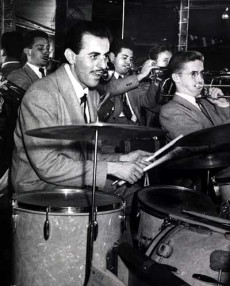
Arthur Mardigan was born February 12, 1923 in Detroit, Michigan. As early as 1942 age 19 he was playing drums with Tommy Reynolds prior to a two-year stint in the Army. After his discharge he worked extensively on the New York City jazz scene, playing and recording with George Auld, Charlie Parker, Dizzy Gillespie, Dexter Gordon, Kai Winding, Wardell Gray and Fats Navarro.
In the 1950s he went on tour with Woody Herman and Pete Rugulo, he recorded as a leader of a sextet that included Al Cohn in 1954 for The Jazz School, recorded with Stan Getz also in 1954 and then moved back to Detroit. There he played with Jack Brokensha in 1963, returning to work with Getz near the end of his life. Drummer Art Mardigan passed away on June 6, 1977 in his hometown of Detroit.
More Posts: drums