

Daily Dose Of Jazz…
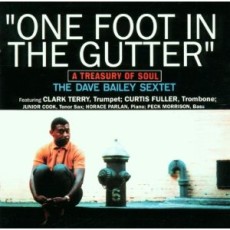
Samuel David “Dave” Bailey was born on February 22, 1926 in Portsmouth, Virginia. He studied drumming in New York City at the Music Center Conservatory following his stint in the Air Force in World War II.
Dave played with Herbie Jones from 1951-53, and later with Johnny Hodges, Charles Mingus, Lou Donaldson, Curtis Fuller, Billy Taylor, Art Farmer, Ben Webster, and Horace Silver. Between 1954 and 1968 he played on several recording sessions led by Gerry Mulligan, and during the 60s he also played with Clark Terry, Kenny Dorham, Lee Konitz, Cal Tjader, Roger Kellaway and Bob Brookmeyer.
In 1957 and 1958 he performed at the Newport Jazz Festival and appeared in the documentary “Jazz on a Summer’s Day”. He recorded and released “One Foot In The Gutter” in 1960 on the Spanish label Lonehill Jazz. He followed up that recording with another “Gutter” release of the recording “Two Feet In The Gutter”. Although he is not commonly credited for his role in helping popularize the bossa nova in the ’60s, Bailey learned the rhythm while touring South America in 1959 and helped many American drummers master the sound.
A solid swing and bop drummer, Dave retired from music in 1969 and became a flight instructor. From 1973 he worked in music education in New York and among other pursuits, he served as executive director of The Jazzmobile in New York City.
More Posts: drums
Daily Dose Of Jazz…
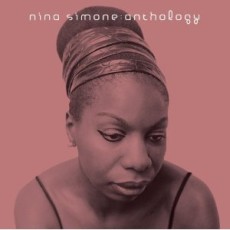
Nina Simone was born Eunice Kathleen Waymon on February 21, 1933 in Tryon, North Carolina, the sixth of eight children. She began playing piano at age three and demonstrating a talent with the instrument, she performed at her local church but her concert debut, a classical recital, was given when she was twelve. With the financial assistance of her mother’s employer, Nina was able to take piano lessons, graduated from high school and studied at Julliard School of Music.
Her ambition to become the first black concert pianist was thwarted by the realities of poverty, racial prejudice and denial for full scholarship at the prestigious Curtis Institute of Philadelphia. So changing direction she began playing in a small club in Philadelphia to fund her continuing musical education to become a classical pianist, and was required to sing. Approached by Bethlehem Records, she recorded her debut album “Little Girl Blue” in which “I Loves You, Porgy” became a smash hit in 1958.
Her original style arose from a fusion of gospel and pop songs with classical music accompanied with her expressive jazz-like singing in characteristic low tenor injecting as much of her classical background to give it more depth and quality.
A vocal civil rights activist, Simone’s music became highly influential in the fight black people faced for equal rights at this time in America and was a source of inspiration and enjoyment for her generation, continuing to be for those that follow.
Nina Simone, singer, songwriter, pianist and arranger widely associated with jazz passed away quietly in her sleep after a long battle with breast cancer on April 21, 2003 in Carry-le-Rouet, Bouches-du-Rhone, France. She recorded over forty albums, mostly between 1958 and 1974 but left a legacy of music that has influenced generations of artists from Cat Stevens and Van Morrison to Talib Kweli and Mos Def to Christina Aguilera, Mary J. Blige and John Legend.

Daily Dose Of Jazz…
Bobby Jaspar was born February 20, 1926 in Liege, Belgium and at a very young age learned to play piano and clarinet. He later took up the tenor saxophone and flute that became his working instruments. Bobby took his first steps in the jazz world with the Bop Shots band but in 1950, Jaspar moved to Paris, played and recorded with the best musicians of the era and met his future wife, Blossom Dearie.
In 1956, Jaspar was persuaded to try his luck in the U.S. where his reputation in jazz circles had preceded him. He played and recorded with J. J. Johnson, Kenny Burrell, Miles Davis, John Coltrane, Toshiko Akiyoshi, Donald Byrd and many others.
In 1961/1962, Jaspar returned to Europe for a year for a series of concerts and a number of recordings. With his colleague, Belgian guitarist Rene Thomas, they formed a successful quintet and in some sessions, this was expanded to a powerful sextet with American trumpeter Chet Baker.
Bobby Jaspar, tenor saxophonist and flautist of the hard bop and cool jazz genres, died from a heart attack in New York City on February 28, 1963 at age 37.
Daily Dose Of Jazz…
Johnny Dunn was born on February 19, 1897 in Memphis, Tennessee and learned to play trumpet as a youth. He attended Fisk University in Nashville and had a solo act in Memphis before he was discovered by W.C. Handy and traveling to New York with him in 1917. After a three-year association featured playing cornet, Johnny joined Mamie Smith’s Jazz Hounds, recording with her band before leaving a year later to lead his Original Jazz Hounds.
During the 1920s he ventured to Europe with the Will Vodery band, recorded with Noble Sissle in France, played and recorded with Willie “The Lion’ Smith and memorable sessions with Jelly Roll Morton in New York, had a hit song “Sergeant Dunn’s Bugle Call Blues”.
By the 30s Dunn was working steadily in Europe and often residing there for periods of time in the Netherlands. He was among the best of the musicians playing in the immediate pre-jazz years and he influenced many of his contemporaries. Overshadowed though he was by the arrival of Louis Armstrong, Dunn was still an able and gifted player, showing subtle power and using complex patterns that never descended into mere showmanship.
His stylistic roots became outmoded during the 30s but his decision to remain in Europe and his early death on August 20, 1937, in Paris, meant that his reputation never suffered and is recognized as having been a highly accomplished trumpeter.
More Posts: trumpet

Daily Dose Of Jazz…
Harold de Vance Land was born on February 18, 1928 in Houston, Texas but was raised in San Diego, California. He started playing tenor saxophone at 16 and made his first recording as leader of the Harold Land All-Stars in 1949 for Savoy Records. By 1954 he had joined the Clifford Brown/Max Roach Quintet but due to family problems he moved to Los Angeles in 1955. There he led his own groups, played with Curtis Counce, and co-led groups with Bobby Hutcherson, Blue Mitchell and Red Mitchell.
Harold developed his hard bop playing with the Max Roach/Clifford Brown band into a personal, modern style. His tone was strong and emotional, yet displayed a certain fragility that made him easy to recognize. From the 1970s onwards his style showed the influence of John Coltrane.
In the early 1980s through to the early 1990s he worked regularly with the Timeless All Stars, a group consisting of Cedar Walton, Buster Williams, Billy Higgins, Curtis Fuller, and Bobby Hutcherson and sponsored by the Timeless jazz record label. Land also toured with his own band during this time, often including his son on piano and usually featuring Bobby Hutcherson and Billy Higgins as well. During these years he played regularly at Hop Singh’s in Marina Del Ray in the L.A area and the Keystone Korner in San Francisco.
As an educator he was a professor at the University of California, Los Angeles joining the Jazz Studies Program in 1996 teaching instrumental jazz combo. Tenor saxophonist Harold Land became a major contributor to hard bop and post bop jazz history, passing away from a stroke on July 27, 2001 at age 73.
More Posts: saxophone