

Daily Dose Of Jazz…
Arthur Prysock was born on January 2, 1929 on Spartanburg, South Carolina but was raised on a farm in North Carolina. He left home at 16, moved to Hartford, Connecticut and found work with an aircraft company during World War II until they discovered he was underage. He then found a day job as a cook, singing around town at night with a band.
In 1944 bandleader Buddy Johnson signed the baritone as a vocalist, singing on several Johnson hits on Decca Records and became a mainstay of the live performance circuits. By 1952 Prysock went solo, signed with Decca, recorded “I Didn’t Sleep a Wink Last Night” and in 1960s covered Ray Noble’s ballad “The Very Thought Of You” and “It’s Too Late Baby, It’s Too Late”. Signing with Verve Records he recorded “Arthur Prysock & Count Basie” and “A Working Man’s Prayer”.
In the seventies, he had a surprise disco hit with “When Love Is New” and in 1985, recorded his first new album in almost a decade, “Arthur Prysock” He gained further attention for his tender, soulful singing on a beer commercial, “Tonight, Tonight, Let It Be Lowenbrau”.
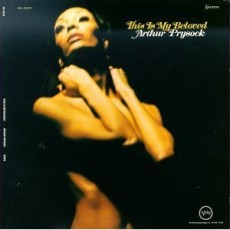
Over the course of a prolific 43-year career, Arthur, who had been influenced by Billy Eckstine, was seen primarily in front of big bands. He recorded nearly 60 albums for Mercury, Old Town, Milestone and Decca record labels, including the orated “This Is My Beloved”. In 1995 he received the Pioneer Award from the Rhythm and Blues Foundation.
His tender music has been a staple of jazz radio in the wee hours of the morning, and of cheek-to-cheek dancing in smoke-filled cocktail lounges. Arthur Prysock, the baritone romantic crooner that never lost his vocal strength, rich resonance or his deep, velvety tones, passed away on June 21, 1997.
More Posts: vocal
Daily Dose Of Jazz…
Al McKibbon was born January 1, 1919 in Chicago, Illinois but grew up in Detroit, Michigan from the age of two. Attending Cass Tech, the high school that gave the world jazz greats Gerald Wilson, J.C. Heard, Wardell Grey and other, Al focused his training on the bass, which at the time, the bass was coming into its own as a jazz instrument and replacing the tuba.
In 1947, after working with Lucky Millinder, Tab Smith, J.C. Heard, Coleman Hawkins, and as a singer with the Ted Bruckners band, replaced Ray Brown in Dizzy Gillespie’s band. He joined Miles Davis’ nonet in the Fifties recording with him as well as Earl Hines, Count Basie, Johnny Hodges, Thelonious Monk, George Shearing, and Cal Tjader, with whom McKibbon is credited with interesting Cal in Latin music while a member of Tjader’s group.
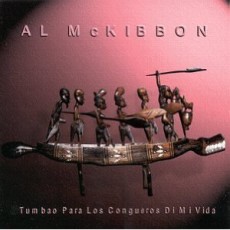
McKibbon, always highly regarded among his peers, was the chosen bassist for the “Giants of Jazz”, and continued to perform until 2004. In 1999, at age 80, he recorded his first album as a leader “Tumbao Para Los Congueros Di Mi Vida” and garnered a Grammy nomination for Best Latin Jazz Performance.
Al McKibbon, double bassist, singer and self taught dancer, who played a Jacob Steiner bass made in 1650, best known for his work in bop, hard bop, and Latin jazz, passed away on July 29, 2005.
More Posts: bass
Daily Dose Of Jazz…
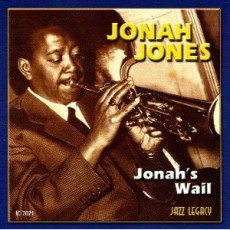
Jonah Jones was born Robert Elliott Jones in Louisville, Kentucky on December 31, 1909. He started playing alto sax at the age of 12 in the Booker T. Washington Community Center band in Louisville before quickly transitioning to trumpet where he excelled immediately. Jones began his career in the 1920s playing on a riverboat named “Island Queen” which plied between Kentucky and Ohio.
By 1928 he joined with Horace Henderson, later worked with Jimmie Lunceford, had an early and successful collaboration with Stuff Smith from 1932-1936, and by the Forties he was working in big bands like Benny Carter’s and Fletcher Henderson. He would spend most of the decade with Cab Calloway’s band that later became a combo.
Starting in the 1950s he had his own quartet and began concentrating on a formula that gained him wider appeal for a decade. The quartet consisted of George “River Rider” Rhodes on piano, John “Broken Down” Browne on bass and “Hard Nuts “Harold Austin on drums. The most mentioned accomplishment of this style is perhaps their version of “On The Street Where You Live”. This effort succeeded and he began to be known to a wider audience. This led to his quartet performing on “An Evening With Fred Astaire” in 1958 and winning a Grammy Award for Best Jazz Performance by a group in 1960.
Jonah went on to become a sensation in France, returned to more “core” jazz work with Earl Hines, played in the pit orchestra for the stage play Porgy and Bess starring Cab Calloway, was inducted into the Big Band and Jazz Hall of Fame in 1999. Trumpeter Jonah Jones passed away on April 29, 2000.
Daily Dose Of Jazz…
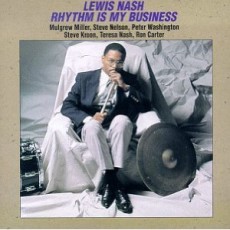
Lewis Nash was born December 30, 1958.Growing up in Phoenix, Arizona he was encouraged into jazz by his high school band teacher. By the age of 18, the drummer was a first call sideman for visiting musicians to Phoenix, and received the call to move to New York and join Betty Carter’s band at the age of 22.
he became a highly in-demand sideman during this period, and since his tenure with Carter, has gone on to record and tour with some of the most important and highly regarded jazz musicians of all time. Among them were Tommy Flanagan, Dizzy Gillespie, Sonny Stitt, Oscar Peterson, Sonny Rollins, Ron Carter, Hank Jones, Nancy Wilson, McCoy Tyner, Wynton Marsalis, Joe Williams and the list goes on and on.
A renowned master stylist, particularly in be-bop and post-bop styles, Nash is at home in a wide range of stylistic territory, including funk, free, and Latin based jazz styles. He is known for his seemingly endless depth of melodic vocabulary, drawing from all eras of jazz percussion, while adding his own unmistakably identifiable approach to the construction of his comping figures and soloing. His versatility has made him one of the foremost brush stylists of his generation.
Nash is also passionate and dedicated to jazz education, and has fostered the careers of a long list of younger players. He is in high demand as a clinician and educator at schools, workshops and major educational jazz festivals worldwide. He formed his own group in the late 1990s and currently leads several groups of varying instrumentation, from duo to septet, as well as a member of Blue Note 7.
More Posts: drums
Daily Dose Of Jazz…
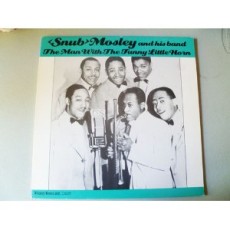
Snub Mosley was born Lawrence Leo Mosley on December 29, 1905 in Little Rock, Arkansas. Playing trombone in high school after graduation he joined Alphonse Trent’s territory band from 1926 to 1933. Following this he played with the Jeter-Pillars Orchestra in 1934, Claude Hopkins from 1934-35, was band mates with Fats Waller and Louis Armstrong with the Luis Russell Orchestra 1936-37. In addition, he led his own groups before settling in New York City.
Though Mosley spent most of his career on trombone, he also invented an instrument called the slide saxophone, which had both the slide portion of a trombone and a saxophone mouthpiece. The instrument is prominently featured in his 1940 recording The Man With The Funny Little Horn. From 1940 to 1978 he recorded for Decca, Sonora, Penguin, Columbia and Pizza record labels.
Trombonist Snub Mosley passed away quietly on July 21, 1981 at his home at 555 Edgecombe Avenue in Harlem, New York City.
More Posts: slide saxophone,trombone