

Daily Dose Of Jazz…
Jim Lanigan was born on January 30, 1902 in Chicago, Illinois. Learning piano and violin as a child, he played piano and drums in the Austin High School Blue Friars before specializing on bass and tuba.
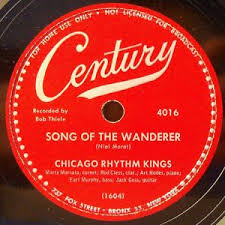
A member of the Austin High Gang, he played with Husk O’Hare in1925), the Mound City Blue Blowers and Art Kassel from 1926 to 1927, the Chicago Rhythm Kings, the Jungle Kings, and the 1927 McKenzie and Condon’s Chicagoans recordings.
From 1927 to 1931 he was with Ted Fio Rito and worked in orchestras for radio, including NBC Chicago. Performing sideman duties in the 1930s and 1940s with Jimmy McPartland, Bud Jacobson’s Jungle Kings, Bud Freeman, and Danny Alvin, he began to concentrate more on music outside of jazz at that time. He played with the Chicago Symphony Orchestra from 1937 to 1948, and did extensive work as a studio musician.
Bassist and tubist Jim Lanigan, who never recorded as a leader, played reunion gigs for the Austin High Gang, passed away on April 9, 1983.
More Posts: history,instrumental,jazz,music,tuba
Daily Dose Of Jazz…
Charlie Holmes was born on January 27, 1910 near Boston, Massachusetts and began playing alto saxophone at age 16 and emulated the style of his childhood friend, Johnny Hodges.
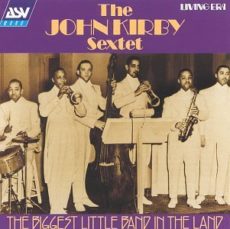
Beginning his professional career a week later, after moving to New York City Charlie worked for a variety of groups, including Luis Russell in 1928. Between 1929 and 1930 he recorded with Red Allen. He would work with Russell again a few times and in 1932 joined the Mills Blue Rhythm Band. He was in John Kirby’s Sextet, Cootie Williams’ Orchestra, and Louis Armstrong’s band for much of the next two decades.
Leaving music in 1951, Holmes did not return for twenty years then worked in Clyde Bernhardt’s Harlem Blues & Jazz Band. He later played for the Swedish band Kustbandet. He never acted as a leader in any recording or group.
Alto saxophonist Charlie Holmes, best known for composing Sugar Hill Function, not only performed during the swing era but also played clarinet and oboe for the Boston Civic Symphony Orchestra, passed away on September 19, 1985 in Stoughton, Massachusetts.
More Posts: composer,history,instrumental,jazz,music,saxophone
Daily Dose Of Jazz…
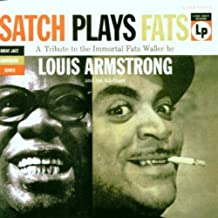
Arthur Crawford Wethington was born on January 26, 1904 in Chicago, Illinois and graduated from the Chicago College of Music. Working under pianist Lottie Hightower in the mid-1920s, he then took a position in Carroll Dickerson’s band in 1928. 1929 saw this ensemble playing with Louis Armstrong in New York City.
Between 1930 and 1936 Crawford played with the Mills Blue Rhythm Band, recording several times with the group. He recorded with Edgar Hayes in 1937 and also worked with Cab Calloway, Red Allen, and Adelaide Hall.
After 1937 Wethington quit performing full-time but was active as a music teacher, and in the 1960s he took work in New York City as a supervisor for a transit line power plant.
Saxophonist and educator Crawford Wethington, who was never recorded as a leader, passed away on September 11, 1994 in White Plains, New York.
More Posts: educator,history,instrumental,jazz,music,saxophone

Daily Dose Of Jazz…
Teddy McRae was born in Waycross, Georgia on January 22, 1908 but was raised in Philadelphia, Pennsylvania. Playing with local ensembles, including one composed of family members, when he was young. He played with June Clark in 1926 before his move to New York City to form his own band.
Through the Thirties he played with Charlie Johnson, Elmer Snowden, Stuff Smith, Lil Armstrong, and Chick Webb, the last as both a soloist and arranger. After Webb’s death he was musical director for the orchestra during its tenure under the leadership of Ella Fitzgerald from 1939 to 1941. He recorded in the decade with Benny Morton, Teddy Wilson, and Red Allen.
In the 1940s McRae worked in the orchestras of Cab Calloway, Jimmie Lunceford, Lionel Hampton, and Louis Armstrong; he also served as Armstrong’s musical director during his period with that band. He wrote tunes for Artie Shaw and formed his own band in 1945.
He and Eddie Wilcox formed their own short~lived R&B label, Raecox, in the 1950s. Teddy recorded with Champion Jack Dupree in 1955-56, and recorded a few sides for Groove Records in 1955 and Moonshine Records in 1958.
Tenor saxophonist and arranger Teddy McRae, who was also known as Teddy (Mr. Bear) McRae, or simply as Mr. Bear, passed away on March 4, 1999.
More Posts: arranger,bandleader,history,jazz,music,saxophone
Daily Dose Of Jazz…
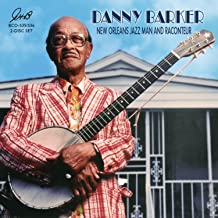
Daniel Moses Barker was born on January 13, 1909 in New Orleans, Louisiana to a family of musicians, the grandson of bandleader Isidore Barbarin and nephew of drummers Paul Barbarin and Louis Barbarin. He took up the clarinet and drums before switching to a ukulele that his aunt got him, and then to banjo. One of Barker’s earliest teachers in New Orleans was fellow banjoist Emanuel Sayles, with whom he would record.
Barker began his career as a musician in his youth with his streetband, the Boozan Kings, and toured Mississippi with Little Brother Montgomery. 1930 saw him moving to New York City where he switched to the guitar. Through the decade he played with Fess Williams, Billy Fowler and the White Brothers, Buddy Harris, Albert Nicholas, Lucky Millinder, and Benny Carter in 1938. During his time in New York, he frequently played with West Indian musicians, who often mistook him for one of them due to his Creole style of playing.
From 1939 to 1946 he frequently recorded with Cab Calloway, and started his own group featuring his wife Blue Lu Barker after leaving Calloway. In 1945 he recorded with pianist Sir Charles Thompson, and saxophonists Dexter Gordon and Charlie Parker. In 1947 he was back with Lucky Millinder and Bunk Johnson. He returned to working with Al Nicholas in 1948 and in 1949 rejoined efforts with his wife in a group.
During the 1950s Danny was primarily a freelance musician, but did work with his uncle Paul Barbarin from 1954 to 1955. In the mid-1950s he went to California to record again with Albert Nicholas; performed at the 1960 Newport Jazz Festival with Eubie Blake. In 1963 he was working with Cliff Jackson, and then in 1964 appeared at the World Fair leading his own group. Sometime in the early 1960s he formed a group he called Cinderella. The following year he returned to New Orleans and took up a position as assistant to the curator of the New Orleans Jazz Museum.
In 1970 he founded and led a church-sponsored brass band for young people ~ the Fairview Baptist Church Marching Band. The Fairview band launched the careers of a number of professional musicians who went on to perform in brass band and mainstream jazz contexts, including Leroy Jones, Wynton Marsalis, Branford Marsalis, Kirk Joseph, Nicholas Payton, Shannon Powell, Lucien Barbarin, Dr. Michael White and others. In later years the band became known as the Dirty Dozen Brass Band.
He played regularly at many New Orleans venues from the late 1960s through the early 1990s, in addition to touring. Beyond overcoming the obstacles of segregation, banjoist Danny Barker, who also sang and played guitar and ukulele, authored two books and was an amateur landscape artist; and who suffered from diabetes throughout most of his adult life, passed away from cancer in New Orleans on March 13, 1994 at age 85.
More Posts: bandleader,banjo,guitar,history,instrumental,jazz,music,ukulele,vocal